

 Chronicle Editor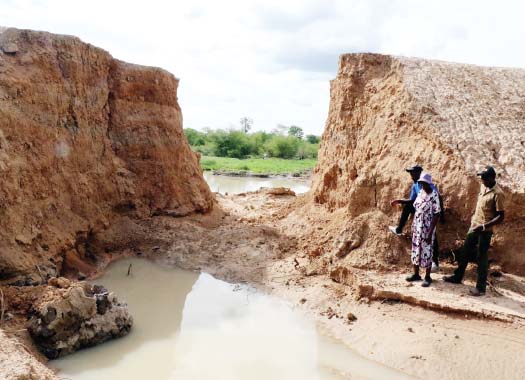
Raymond Jaravaza, [email protected]
LAST week in the quiet village of Makhwatheni in Nkayi, the heavens opened up, promising a respite from the relentless drought.
Gogo Savi Sibanda, a matriarch of the land, watched with a hopeful heart as the rains descended, envisioning a season when her livestock would no longer thirst. Yet, the skies’ gift soon turned into a cruel twist of fate.
The Makhwatheni Dam, a lifeline for the community, swelled with the downpour, only to succumb to the same tragic fate it met two decades prior.
The dam’s walls, unable to withstand the overflow, crumbled into the night of Thursday, 28 December 2023, leaving behind a barren gulf where water once stood.
“We woke up to an empty dam after its wall collapsed following days of heavy rains and as you can see, all the water was lost.
The dam burst its banks about 20 years ago and we have been struggling to get drinking water for our livestock all these years until the dam was constructed again last year by the government. This would have been the first year for the new dam to harvest water from the rainy season and we were so excited that our cattle, goats and donkeys would not have to go for long distances in search of water in the dry season but all that hope is gone. We are back to square one,” lamented Gogo Sibanda.
The collapse not only shattered the dam but also the dreams of a community that had envisioned a future of self-sufficiency and prosperity. The dam was more than a reservoir; it was the cornerstone of a series of projects aimed at combating the harsh effects of climate change and securing a sustainable livelihood for the villagers.
Now, the people of Makhwatheni face the grim reality of a lost harvest and the daunting task of rebuilding. Mduduzi Sibanda, a local farmer, had placed his hopes on the waters of the dam to pivot towards irrigation farming, a strategy to outmaneuver the unpredictable rains. But with the dam’s demise, those plans have been washed away, leaving the community to grapple with the uncertainties of a changing climate.
“This area is generally very dry and depending on rain-fed agriculture is very risky so we had shifted our focus on irrigation. I had cleared a piece of land close to the dam where I intended to grow maize.
“The government had listened to our pleas to construct Makhwatheni Dam after twenty years since the dam wall collapsed and just as we thought that we would reap the benefits of the new dam, it broke its banks again.
“We want to ask the authorities to allocate resources so that the dam wall is repaired without delay.
“The Member of Parliament, Honourable Sithembiso Nyoni had promised to source irrigation equipment for us so that we can start nutrition gardens close to the dam so our plea is for the dam to be fixed as soon as possible,” said Sibanda.
The construction of new dams across the country is a fulfillment of the Second Republic’s 2018 election manifesto to boost agriculture production and productivity for better livelihoods as the country charges towards an upper-middle-income economy by 2030.
The deliberate boost in agriculture production has also seen the country attain a US$8, 2 billion agricultural economy in a record 18 months after launching the Agriculture and Food Systems Transformation Strategy in 2020.
25-year-old Mbongeni Sibanda is based in South Africa and coming home for the festive season holidays to see for himself the new Makhwatheni Dam gave him renewed hope that buying cattle as a source of wealth was a noble idea as the livestock would not die from drought.
“Over the years I have watched my father’s cattle die each year from drought but seeing the new dam gave me hope that I can also start buying cattle of my own and start investing back at home.
“Cattle are a good source of wealth for people like us who are based in another country and having a dam nearby means that their chances of survival in winter and the drier months are very high. I will wait and see if the dam is repaired quickly before making a decision to buy one or two cows,” said Mbongeni.
Matabeleland North Provincial Affairs and Devolution Minister, Honourable Richard Moyo, said the collapsed dam was wholly funded by the Government thus remains a priority project that is meant to alleviate the plight of villagers in the area thus resources would be channeled to repair the damaged dam wall.
“The government took a deliberate decision to address water challenges in areas such as Nkayi by constructing a number of dams in different wards and it’s unfortunate that one of the dams collapsed but that will not stop the efforts to address the water problems in the area.
“My team will assess the damage at the dam together with other stakeholders such as engineers from ZINWA (Zimbabwe National Water Authority) and a decision will be made thereafter but let me assure the villagers that addressing water challenges in their area remains government’s top priority,” said Minister Moyo.


 Online Reporter