admin
admin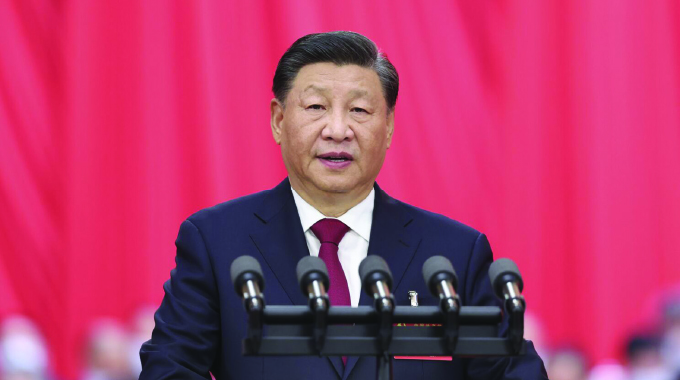
Elliot Ziwira
Senior Writer
In a democracy, the people matter, in a way, even more than the country, for “the country is its people”, and “the people are the country”, hence developmental strategies should be hinged on the people as they wield the power to influence representation.
The people, who are in the majority, should always come first since the essential “principle of governance” is solving the bread and butter issues that affect the masses, an indispensable feature of Marxism.
This was one of the major takeaways from the recently held 20th National Congress of the Communist Party of China (CPC), a philosophy which resonates with President Mnangagwa’s closing remarks at the 7th Zanu PF National People’s Congress in Harare.
Both congresses held in Beijing and Harare, respectively, in the same month, may have come and gone, but the persistent word remained unity, with the ultimate winner being the people, the owners of the revolution.
In his report to the CPC Congress on October 16, titled “Hold High the Great Banner of Socialism with Chinese Characteristics and Strive in Unity to Build a Modern Socialist Country in All Respects”, General Secretary Xi Jinping – also the People’s Republic of China president, highlighted the significance of the people in the CPC’s “theoretical innovation”.
He underscored that the CPC, which, with 96 million members, is the largest Marxist governing party in the world, should forefront the people in all its endeavours to remain in their favour.
“This country is its people; the people are the country,” General Secretary Xi affirmed, adding, “As the Communist Party of China has led the people in fighting to establish and develop the People’s Republic, it has really been fighting for their support. Bringing benefit to the people is the fundamental principle of governance.”
Correspondingly, on October 29, President Mnangagwa implored delegates to the 7th National People’s Congress to remain “immersed in the people”.
He emphasised that as a revolutionary party, Zanu PF, the fish, should remain absorbed in the people, who have always been the life-supporting water over the years.
As enshrined in the ethos that shaped the liberation struggle, without which the country’s independence would not have been possible, the masses should be the beneficiaries of the party’s ideas, he pointed out.
“It is the people who are galvanised, moved and organised by our ideas towards transforming, modernising, industrialising and growing our economy. As it was during the liberation struggle, we remain like fish and the people our water,” the President said.
“Therefore, let us continue to be immersed among the people.”
Such wise counsel from two servant leaders from two great nations, makes of the phenomenal role that the people play in a democracy; a democracy informed by the realities of struggle.
As Diamond (2009), avers, some of the key elements of a democratic government include a political system that makes it possible to elect and replace the government through free and fair elections, the active participation of the people as citizens, and a rule of law in which the laws and procedures apply equally to all.
In concurrence, Diamond (2009) and Montesquieu (1689, 1755 cited in Held, 2006) maintain that the people’s will, as citizens or through their representatives, are major cogs in a democratic society.
In view of the same, Fanon (1967) notes that if the people are given political education they will understand the most complex of situations.
Since they are not impervious to political teaching, the people “understand perfectly the most complicated problems” (Fanon, 1967: 151), hence intellectual revolutionaries “ought to uplift the people; develop their brains, fill them with ideas, change them into human beings” (ibid: 158-159).
The masses are always in the know on what they want and aspire for. What they only need is political consciousness through inspiration and ideological schooling.
Because of the inherent nature of selfishness in some of them, intellectuals alone fall short in changing outcomes for the common good, and on their own the people cannot change the status quo, owing to cynicism among them. Hence, there must be informed interfaces, starting with that section of the people, less cynical than the others.
Armed with ideological vision, as Kwame Nkrumah points out in his Consciencism philosophy, the people become aware that they neither belong to politicians nor to political parties, but to the nation. In other words, they belong to each other.
In his report to the CPC Congress, President Xi maintained that “whole-process people’s democracy” is democracy in its “broadest”, “most genuine” and “effective” form.
There is nothing that beats a people’s democratic dictatorship led by the working class and informed by a coalition of workers and farmers, he highlighted, saying “all power of the state in China belongs to the people.”
“We must firmly stay on the path of socialist political advancement with Chinese characteristics, uphold the unity between Party leadership, the running of the country by the people, and law-based governance, and ensure the principal position of the people, so as to give full expression to their will, protect their rights and interests, and spark their creativity,” he said.
Three crucial elements are raised above on the harmony required in nation-building.
Firstly, the leadership must uphold unity. Secondly, the people must be central in the running of the country. And, thirdly, their rights and interests should always be protected for their creativity to be stimulated.
It is in the expression of the will of the people that democracy thrives.
However, without knowing who they are, and their role in shaping their destiny the people can do more harm to themselves than good.
To mitigate that, institutions through which the people “run the country” should be strengthened.
General Secretary Xi said the CPC would encourage the people to “orderly” participate in political issues, and ensure their “ability to engage in democratic elections, consultations, decision-making, management, and oversight in accordance with the law.”
Guided by the law, confident in their self-worthiness, ideologically grounded, and inspired by exemplary servant leadership, the people will be motivated to be inventive and creative. This in turn will lead to the consolidation and development of “a lively, stable, and united political atmosphere.”
A united and stable political atmosphere is the hallmark of people-centred governance, and a prerequisite for development. So, how do the people exercise state power?
They do so through representation.
Montesquieu (1689-1755) puts it all in context when he asserts, “As in a country of liberty, every man who is supposed a free agent ought to be own governor; the legislative power should reside in the whole body of the people.
“But since this is impossible in large states, and in small ones is subject to many inconveniences, it is fit the people should transact by their representatives what they cannot transact by themselves” (cited in Held, 2006: 66).
Therefore, the people are a crucial component in a democracy, as such, it is from them that the Legislature and the Executive derive power. They both need the people as much as the masses require representatives for their transactions.
Acknowledging the importance of “consultative democracy” in the practice of whole-process people’s democracy, General Secretary Xi said the CPC would ensure that the people exercise state power through congresses.
“We will support and ensure the people’s exercise of state power through people’s congresses, and we will ensure that people’s congresses at all levels are formed through democratic elections, responsible to the people, and subject to their oversight,” he said.
Empowered people’s congresses and their standing committees have the power to legally enact laws, exercise oversight roles, make decisions and appoint and remove officials.
This is why President Mnangagwa implored delegates to the Zanu PF 7th National People’s Congress to return to the people, whom they represented at the Congress, and tell them that their party was “strong, alive and unstoppable.”
And that it was fulfilling the “historic mission” they entrusted it to achieve socio-economic and political freedom through creation of equal opportunities for all Zimbabweans aimed at eradicating poverty.
“Go and tell the people that Zanu PF is fulfilling the historic mission of total socio economic and political liberation and Independence. Under Zanu PF, the Second Republic will continue to diligently empower our communities,” said the President.
President Xi caps it all: “Ideological work is about forging the character of a country and the soul of a nation. The core socialist values have immense power to rally the people’s support and pool their strength.”
Indeed, no country exists without the people!



 Online Reporter