

 dyton mupawaenda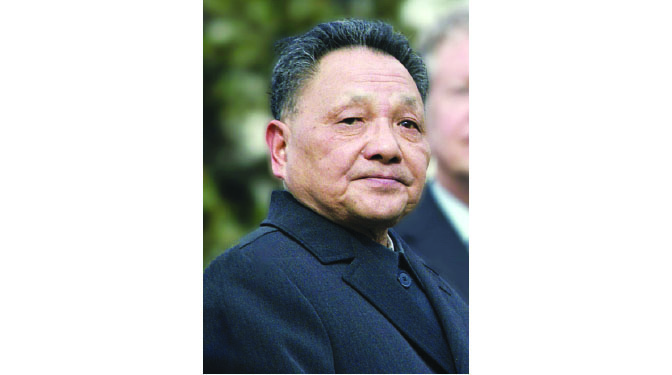
Gibson Nyikadzino-Correspondent
Many development practitioners, politicians, economists and ordinary citizens have spoken a lot about what development is.
Their contributions have remained valid on the developmental agenda; despite the prism they frame it from.
Today in Zimbabwe, the National Development Strategy 1 (NDS1) and the adopted United Nations’ Sustainable Development Goals (SDGs) underscore the need for combined and collective attempts to see the fruition of all development initiatives.
There are, however, some issues that are brought into the equation of development that include the issue of what are termed “development indicators”.
In many jurisdictions, social indicators of development include education, health, employment rates and gender equality. Therefore, to some, to measure development and progress, these social development indicators need to be fulfilled.
Some jurisdictions raise the issue of development as measured on efforts that relate to the growth of Gross National Product (GNP) per head and other related concepts.
When many analyses have been made, there is one idea that the World Bank put forth generally that has been used to understand what development is.
In the view of the World Bank, on many occasions, development is positive change or good progress.
However, rarely have we seen development being understood from an organisational point of view.
It is imperative to note that there are societies that have abundant resources, both natural and human, but their standard of living does not reflect that.
In particular, this case has been linked for a long period of time to Africa.
The continent, endowed with precious minerals, good climate and fertile lands, has remained poor.
It does not mean the leaders on the continent are disinterested in “development”. It means they have the desire to champion development for their constituencies and people, but their efforts are being undermined by one aspect: organisation!
The China of Deng
It is through the organisation of society that the world is witnessing tremendous growth in the People’s Republic of China (PRC).
In less than four decades after the death of Chairman Mao in 1976, from 1978 his successor, Deng Xiaoping, introduced reforms that made the PRC the world’s second biggest economy today.
Credit goes to the organisation of China’s society where over one billion people shared common values to make their country a 21st century development power.
Deng presided over the economic reforms of the post-Mao years that produced dramatic growth, profound social transformation, and, eventually, a market economy.
When the PRC of Chairman Mao economically stumbled, there were political influences that affected the economy.
To Deng, the way forward was to separate politics from the economy and the economy from politics, with the objective of being able to maintain a capital driven economy that incentivised people who worked hard without political interventions.
While the West condemned the political system of China under Deng, as they do today under President Xi Jinping, the former managed to highlight that in China’s development trajectory that it did “not matter if it is a white cat or a black cat; as long as it can catch mice, it is a good cat.”
Ingenious ideas are rare, and only a small minority of people can come up with them.
One key idea to appreciate from Deng is that under his leadership, he brought a change of paradigm in the model that administered the PRCs economy.
Today, the PRC is a huge technological economy that has been organised well by its leaders for the benefit of its people and these benefits have been extended to other parts of the world.
Adopt West’s organisation?
Politically and economically, a lot of what the Western world does can be loathed.
The military interventions in sovereign countries, the use of coercive measures to force weaker or equal status states to comply with their demands and also the promulgation of unorthodox material in school material, like that “men can get pregnant” are some of the abhorred practices.
Neoliberalism has become so corruptive and corrosive in this era that the West can be willing to go to war, kill thousands and displace millions, only for the sake of profit.
It does not respect human life as sacrosanct. This is something the conservative African society at large frown at.
However, it is also key to note that, in terms of social, political and economic infrastructure, Western systems, despite their vile nature, work better than some in other parts of the world because of how they are organised.
The Western world is organised based on the collective interests of lobbyists, politicians, businessmen and ordinary people.
In most cases, their common denominator is that while individuals may not benefit as the corporate man, if they work hard, they can become successful and their effort can be rewarded.
This organisation is key for the success of one society, and also differentiates it from another.
Organised, working systems
Despite having abundant resources, it can be attributed that Africa is behind in terms of its developmental goals, and at times the continent is attempting to use modern information communication technologies to leapfrog and play catch-up in the game of development in a world that has been disrupted by technology.
Sometimes the failure of the African man to compete with the Occident and Orient world is premised on organisation.
The failure for African countries to match their resources and the desired standard of living for their people is because societies have not been organised in some instances to have working systems that extend the benefits for everyone.
To have efficient systems, Africans do not need to replicate Western or Eastern methods, but base their organisation on the values that proclaimed their victory and independence.
It is an impossibility for a Westerner or Easterner to formulate and think of organisation in the framework of an African.
If that is, on what basis does an African intend to think and organise society using another civilisational prism?
It is time for the implementation of African ideas in our development agenda so that our societies are organised on the basis of what informs our relevant past.
Call to organisation
In 2025, the NDS1 blueprint will be replaced by its successor document, the NDS 2. Before NDS2 is introduced, the success of its forerunner as a development policy needs to be assessed from the view of how our societies were organised, or are organised.
Economically, socially and politically, more introspection needs to be done to ensure that the implementation of every developmental blueprint improves the living standards of the people.
The societal values of Zimbabwe’s organisational capacity are found in collectivism.
The collective organisation that was used by the liberation fighters and the masses is the template that can be used to establish our own development today.
It is because of this ability to organise that today we see both those born pre and post 1980 enjoy the liberty that was ushered by our organised forebears.
It should also be remembered that new forms of organisation are emerging from information technology, there are digital revolutions that are presenting new opportunities for Africans, and Zimbabweans, to ride on and prove their ability and capacity to be organised and provide solutions to developmental challenges we face.
Some have argued that the fundamental driver of human progress is not raw materials, but technological solutions to problems.
As we attempt to ensure organisation, technology ought to be accommodated as by its nature it is both a non-excludable good and a non-rival good.
Zimbabweans, remember we are one. This is homeland!



 Online Reporter