admin
admin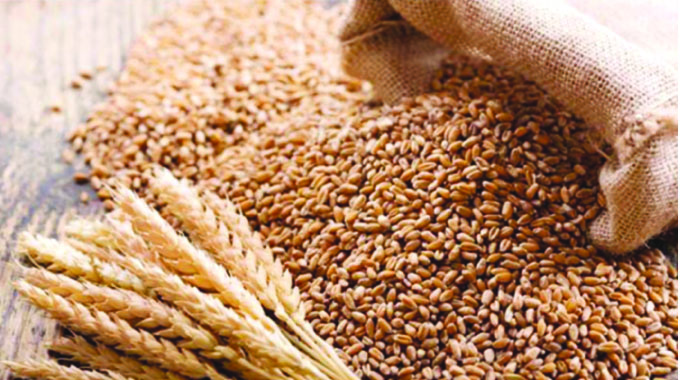
Obert Chifamba
Agri-Insight
HARVESTING of the early planted winter wheat will soon be starting.
Expectations are running high that the country will attain a bumper 600 000 tonnes of the cereal from the 121 000 hectares that were planted.
So far, reports on the condition of the crop countrywide are indicating that it is faring quite well even though it is at various stages of growth in different places, thanks to the different times at which it was planted.
Still, everything seems to be pointing towards the successful attainment of the projected mega yields barring unforeseen circumstances.
This therefore makes it crucial to eliminate all possible forms of threats to the big harvest that the country so eagerly expects to score and repeat the feat of the past two seasons when the country was flour self-sufficient.
It is exciting to note that all stakeholders are giving the matter all the attention it deserves and pulling out all stops to ensure nothing frustrates the growing expectations of a rewarding season.
The Environmental Management Agency (EMA) is hammering on the need for farmers to construct fire guards around their farms with each day that comes and make sure the crop is safe in the event of runaway veld fires.
Remember the fire season started on July 1 and sporadic incidences of fires have since been recorded.
The construction of fire guards is something the farmer should feel obliged to do every season to safeguard both crops, property, livestock and even human lives.
Just recently, the department of Migratory Pests and Biosecurity Control acting chief director Mr Shingirai Nyamutukwa hinted that there were escalating reports of quelea bird sightings in the primary wheat-growing regions, posing a significant threat to the anticipated bumper harvest. He said the concentration of the quelea birds in these crucial wheat-growing areas was a cause for concern, as their insatiable appetite and destructive feeding habits had the potential to severely impact the yield and quality of the wheat crop.
Mr Nyamutukwa duly urged farmers to be proactive in their approach to managing the quelea threat by closely monitoring their fields and actively scouting for the roosting points of the birds.
Farmers must promptly report quelea sightings to the designated local focal persons, as this will enable a quick mobilisation of the necessary resources and the instituting of targeted action to address the quelea infestations.
The country is anticipating a substantial wheat harvest this season, with projections indicating a bumper crop of 600 000 tonnes from the planted 121 000 hectares.
“This significant wheat production target can only be realised if the appropriate interventions are put in place to effectively manage the bird infestations that have been observed, especially as the wheat crop reaches the soft dough stage, which is particularly attractive to these pests,” observed Mr Nyamutukwa.
And to effectively address the threat posed by the quelea birds and safeguard the anticipated bumper wheat harvest, the authorities have outlined a comprehensive pest control strategy involving the deployment of both motorised sprays and drone technology.
Essentially, the use of motorised spraying equipment will allow for the efficient and widespread application of control chemicals in the identified roosting areas of the quelea birds. This ground-based method will enable the targeted delivery of the necessary pesticides and other control measures to the specific locations where the birds have been congregating.
Furthermore, the deployment of drones will provide a valuable aerial perspective, allowing for the rapid mapping and monitoring of the quelea bird populations across the wheat-growing regions.
This aerial surveillance will enable the timely detection of roosting sites and guide the precise targeting of control efforts.
It does not require rocket science for anyone to realise that by combining the capabilities of motorised sprays and drone technology, the authorities are bent on ensuring that the multifaceted approach to addressing the quelea bird infestations is effective.
This strategic concentration of efforts on the wheat-growing strongholds will also ensure that the control measures are targeted where they are most needed, optimising the chances of protecting the crop and ultimately securing the projected 600 000-tonne wheat harvest.
It is worth-noting that Government is doing all it can to turn challenges experienced in the past wheat seasons into enablers towards ramping up production, as the country adopts a wheat based food security approach.
Government has moved to ring-fence 100 megawatts of electricity for wheat production to ensure there are no disruptions to irrigation scheduling while the Zimbabwe National Water Authority (Zinwa) has also come to the party by introducing seasonal billing opposed to the monthly billing that it used to do. Zinwa also ensured there was enough water to sustain around 140 000ha.
On the one hand, Government also made sure farmers had ready access to enough seed, chemicals, fertilisers and finance either from some of its various financial institutions or private sector.
That did not end there but was also extended to coordinated monitoring and evaluation, mechanisation, insurance, joint ventures and migratory pest surveillance through use of drones.
All these efforts demonstrate how wheat is at the epicentre of national food security amid growing efforts by Government to promote the production of the cereal in all of the country’s 10 provinces.
It is clear that with the right policies in place and the right commitment from policymakers, scientists and donors, sustainable intensification of wheat production will be able to alleviate food insecurity. Fast forward to the impeding harvesting season and Government is moving to make sure not a single grain of the cereal is put to waste.
It is refreshing to note that the country is not leaving anything to chance especially on the backdrop of predictions that there will be La Nina weather this coming season, which can easily influence the rains to come even earlier than usual. If such an eventuality happens and the wheat is still in the fields, then it will be total disaster.
Coming hot on the heels of a cropping season ruined by an El Nino-inspired drought, the 2024 winter wheat season must be allowed to give its full potential so that the cereal can help boost food security.
It is not a secret that food preferences among the country’s various population demographics are shifting every day with many taking up choices that are no longer related to the traditional staple diet but new ones.
Wheat, rice and potato products are fast emerging as some of the new options citizens are taking up ahead of maize products.
Such a development will obviously lift pressure from the little maize quantities that were realised in the 2023/24 farming season and ensure there is some stability in the food security matrix.
The move by Government to mobilise 310 combine harvesters and 108 dryers makes a bold statement on the commitment to ensure all grain is put to good use and not allowed to go to waste.
By availing combine harvesters for leasing, Government intends to guarantee a seamless and timely reaping of the valuable wheat crop and save it from possible early rains or rampant veld fires that seem to have forcibly become a perennial feature of the country’s dry season in recent times.



 Online Reporter