

 admin
admin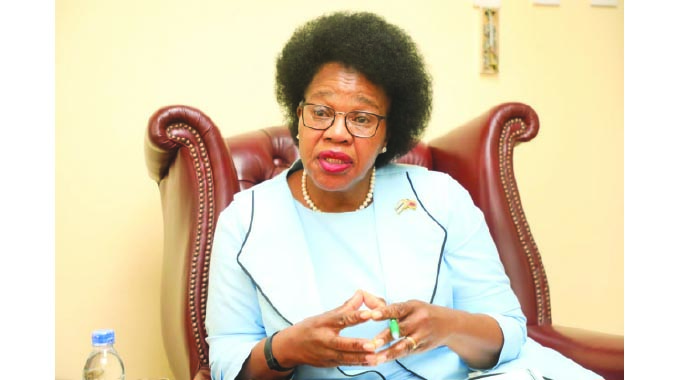
Ahead of the continent’s Agenda 2063, issues of education, free movement of goods and services, women and youth empowerment, sustainable development and socio-economic transformation have taken centre stage for continental development. Zimpapers Politics Hub’s Gibson Nyikadzino (GN), had an interview with Batswana Ambassador to Zimbabwe, Mrs Sarah Sithabile Molosiwa (SSM), on Africa Day commemorations in the context of the Zimbabwe-Botswana bilateral co-operation. Below are excerpts of the interview:
GN: Africa commemorated the 61st anniversary of the founding of the OAU now AU with a remarkable Agenda 2063. What does this mean within the context of Zimbabwe-Botswana relations?
SSM: I want to appreciate the leadership of our two principals, Presidents Emmerson Mnangagwa and Mokgweetsi Masisi. They have given us mandates as embassies of our respective countries to make sure that we articulate ourselves towards contributing to the two countries’ transformation. My coming here was premised on seeing our two governments working hand-in-hand to ensure Zimbabwe and Botswana become regional trade and investment centres. We should remember that no one is an island. There are Memoranda of Understanding (MoUs) that we have signed with Zimbabwe for our bilateral relations and cooperation in various sectors. At the end of it all, these MoUs are meant to address issues of food security, women and youth empowerment and poverty eradication in our communities.
GN: Any measure of these interactions in terms of percentages?
SSM: Interactions between Zimbabwe and Botswana have improved since 2018 when our two Presidents came into office that trade relations have been activated, not only in terms of entrepreneurship, but trade diversified through other sectors of the economy; agriculture, education, health. The numbers and percentages have not been high, as you know, South Africa within the region is cosmopolitan, and she takes higher numbers.
GN: What are the challenges and how will they be addressed to improve numbers? Is there a primary sector you think of?
SSM: Economic challenges, our governments and in the communities, everyone is willing and ready to find ways of eradicating poverty among ourselves. The only way we can do it is by engaging in ventures that generate income. We see cross-border activities that are mainly carried out by informal traders, they activate trade at that level between the two countries. Though cross-border trading contributes to poverty eradication, it also has its challenges like crime. But there are always loyal and delinquent children. So, our countries are doing well to promote trade despite existing challenges.
GN: How have you been dealing with the empowerment of women and youths in Botswana?
SSM: Botswana has considered issues that relate to women to be among areas of concern especially in relation to the recent agenda that has been introduced by President Dr Mokgweetsi Masisi. These efforts include policy frameworks, programmes and implementation of projects meant to prop women and youth. We have in our empowerment development policy initiatives to benefit unemployed women. But our policies also move along to address issues of gender because we know there are also men who are underprivileged. So those programmes, though focusing on empowerment of women and youth, they also do consider men.
GN: And at a bilateral level?
SSM: There are so many areas of cooperation, collaboration and partnership going on. We have had some interactions with the University of Zimbabwe innovation hub, to acquire machinery that is being manufactured by students and young people here in Zimbabwe.
We have procured some and these machines are supposed to be commissioned to support groups value addition projects for women in rural areas.
Some of these initiatives have been necessitated through the interaction of our respective First Ladies and we are seeing that women can benefit a lot. Through this, women can change even the status of the economy and contribute towards the country’s gross domestic product (GDP). Women in our country are involved in cooperatives that the government is supporting in terms of technical know-how, skills, as well as auditing them and guiding them in business acumen so they can run them properly. For example, they do not necessarily have to migrate to towns, they are doing this at village level so that they are able to earn income. Mothers naturally take care of homes and children; they make sure the family is catered for. So these programmes are meant to make life easier, more comfortable and more manageable for women.
Here (in Zimbabwe) we have seen the First Lady Dr Auxillia Mnangagwa going to the rural areas interacting with all groups of people encouraging them to venture into several sectors of the economy. There is a gastronomy competition. It has been robust here in Zimbabwe throughout the rural communities. We have seen her engage in Agric4She programmes. When our First Lady (Mrs Neo Jane Masisi) came to Zimbabwe in February, she said: “We do not mind being copy cats, so long as we know we are doing the right things.”
GN: You now speak within the context of rural industrialisation. Which fields are women cooperatives specialising in?
SSM: Botswana, like any other country, is mainly dependent on agriculture. As Africans we depend on livestock and crop production. In that regard, our two countries are advanced in ensuring our communities protect what they have in generating incomes, food security and have better livelihoods. Our governments are having robust cooperation and are partnering in programmes to sustain our people. In rural villages you discover there is subsistence farming. We have a lot of exchange programmes guided by several MoUs in the livestock sector. This is meant to protect vulnerable communities that are along shared borderlines.
GN: What is the status regarding mechanisms to improve movement of goods and services across the two countries borders?
SSM: As governments, we have had in the past few months and during the Bi-National Commission (BNC) in Botswana recently, discussions that were anchored around ways in which the two countries can facilitate free or easy and relaxed movement of goods and services. That alone facilitates trade.
Nowadays we speak of free movement of goods throughout the continent and we have seen this working in other areas and so we are saying why not do the same. We have seen our Presidents encouraging the free movement of goods, people and services and scrap off all these stringent measures that are hindering people from easily moving across the two countries.
This will support inter trade and these are some of the areas to increase continental trade. By activating trade, I see our two countries getting ready to be master minds within the Africa Continental Free Trade Area (AfCFTA).
GN: Where is this urge coming from?
SSM: Now we are emphasising the importance of economic diplomacy hence encouraging partnerships between the two countries.
Zimbabwe is obviously highly advanced in skilled manpower and industries. Had it not been for the illegal sanctions, Zimbabwe would have been far. Zimbabwe was known as the breadbasket of Africa, and we still can benefit as neighbouring countries, as the SADC region and bilaterally between the two countries when we partner.
We would like to see these industries extending their operations beyond our respective borders. It is possible because we are both endowed with minerals, Zimbabwe has a high-skilled workforce. Why can we not take advantage of those resources we have and the knowledge-based economy that Zimbabwe has and partner to develop the two countries and penetrate the regional and continental market?
GN: You mentioned getting machines manufactured by young Zimbabwean students. How can our countries tap in these innovations to stimulate economic growth and development?
SSM: I like the mantra by President Mnangagwa of saying ‘Nyika Inovakwa Nevene Vayo’. We have the same mantra in Botswana, though we use different languages.
I believe that our governments are working hard in making sure that the youth who are our future leaders are not going to just be given everything on the silver platter, but are meant to be creative with the talents they have. This helps them know that they can positively contribute to the economy. We need to use our resources to address our challenges. The way our governments are working nowadays is that even if you are far away from town, you should not feel neglected.
GN: How do we address skills flight issues because usually when our innovators become successful, they are attracted by outside countries?
SSM: Botswana has introduced several policy programmes that are meant to embrace the pathways or talents that our youths or any other members of the community have.
We see programmes that have subsidies, education and training initiatives as part of the support given by the government, for free. So those who are willing and creative enough to start businesses are supported by different arms of government, in different sectors.
I believe the same also happens to Zimbabwe. I recall President Mnangagwa talking about innovation hubs that are meant to develop and nurture youth creativity, so that they may be able to come up with ideas and projects that are embraced by the Government so they can grow up into viable industries.
GN: And your last words to the people of Zimbabwe and Botswana?
SSM: Gone are the days when we used to rely on Western countries to give us handouts. Gone are the days when we should be crying about sanctions. Sanctions, whether lifted or not, we want to show those who have introduced these illegal sanctions that we are able, capable, willing and we are going to make it. We are actually making it.


 Peter Tanyanyiwa
 Online Reporter