Online Reporter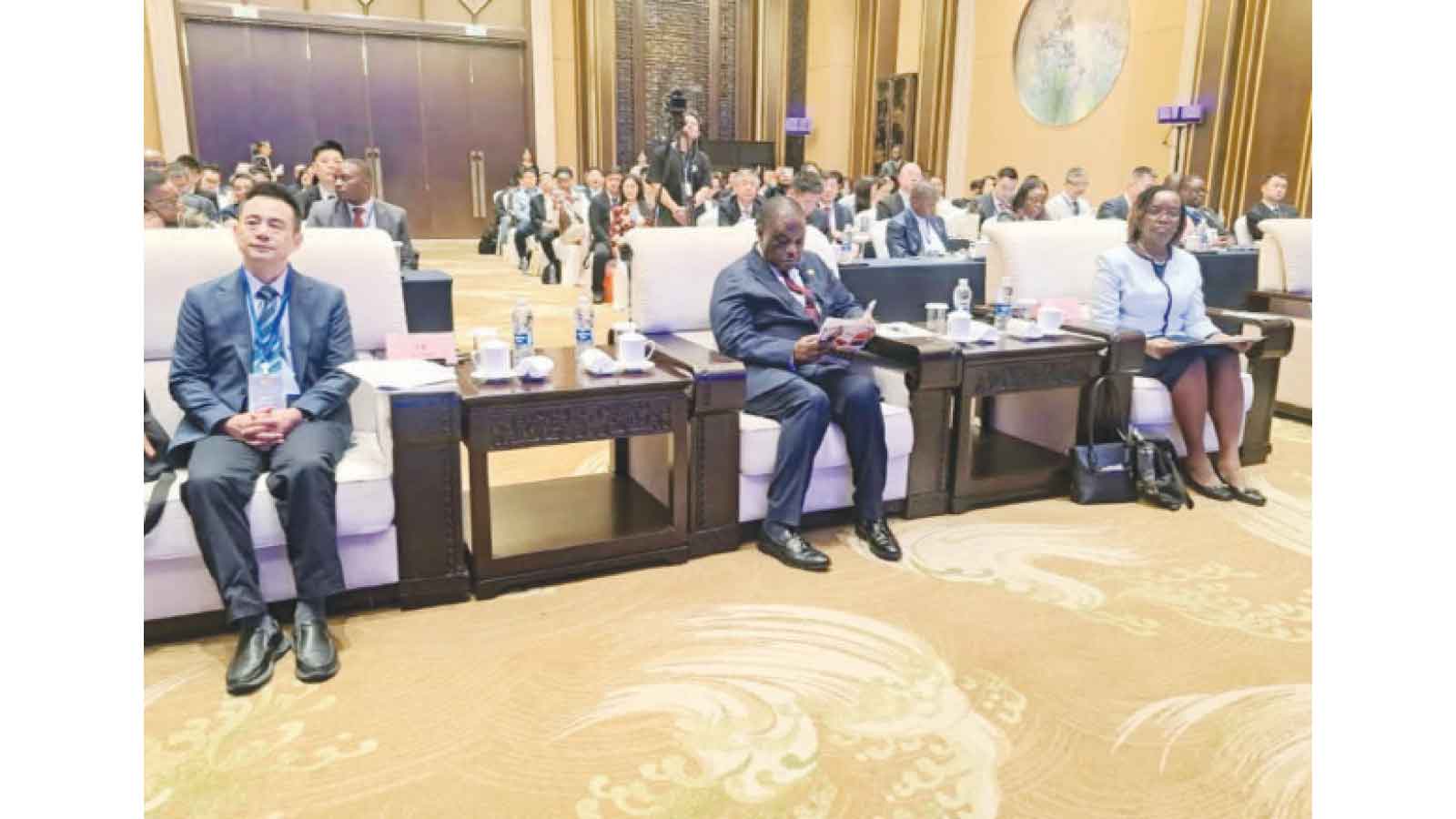
Lincoln Towindo, in HANGZHOU, China
Government will no longer licence isolated, single-mineral operations, with all future mining investment now required to include beneficiation capacity of separating and processing the multiple mineral ores embedded in local deposits, Vice President Dr Constantino Chiwenga has said.
Addressing the Zimbabwe-China Business Forum here yesterday, VP Chiwenga said there was determination to end raw mineral extraction without local processing.
He said mining operations unable to identify, separate and beneficiate the full range of minerals in their deposits would not be permitted to operate locally, calling on companies to invest across the entire value chain to move the economy away from the export of raw materials.
“The multi-layered nature of our mineral resources demands integrated mining operations,” said VP Chiwenga.
“We are no longer permitting isolated, single mining operations. We, therefore, encourage investors to bring in machinery capable of identifying and separating all embedded minerals.”
VP Chiwenga said the decision to move away from isolated mining operations was driven by the need to capture greater value the country’s natural resources and create a strong industrial base.
“This pursuit of the industrialisation agenda, beneficiation and value addition of natural resources at source, is a departure from the mere export of raw materials,” he said.
“It is informed by evolving national needs, lessons learnt and our desire to secure greater value from our God-given natural resource endowments.
VP Chiwenga said Zimbabwe possessed a remarkably diverse concentration of strategic minerals capable of supporting emerging global industries, including electric vehicles and artificial intelligence.
“Zimbabwe sits in an elite geological tier where every single primary input for both the electrical vehicle battery chain (lithium, nickel, graphite, manganese, cobalt) and Artificial Intelligence hardware stack (copper, chrome, Platinum Group Metals and rare earths elements) exist within a single national border.
“This ranks Zimbabwe as the second country globally with the most geographically concentrated cake layer of strategic minerals, along the Great Dyke.”
The Great Dyke is one of the world’s major geological features and hosts significant deposits of platinum group metals, chrome and other minerals.
Zimbabwe has also become an important producer of lithium, a key mineral in rechargeable batteries.
The Vice President said the new mining model would require investors to look beyond individual minerals and develop operations capable of extracting the different mineral components contained in ore bodies.
The approach, he said, would be complemented by Special Economic Zones and industrial parks where mineral processing and manufacturing could take place.
“Within this premise, we invite investment in Special Economic Zones and industrial parks anchored on integrated manufacturing,” he said.
“We call for the establishment of upstream and downstream value-chain industries across sectors in these Special Economic Zones.
“Going forward, for the steel industry, we would want steel production to evolve into steel bars, flat steel, pipes, wire and automotive alloys.”
He said Zimbabwe’s mineral wealth, combined with Chinese technology and expertise, could provide the basis for a new phase of industrial development.
“We acknowledge our vast wealth in minerals and fertile lands,” said the VP.
“With our resources, your technology and expertise, together we can transform our economies.”
The same value-addition philosophy, he added, should be applied to agriculture, where Zimbabwe has potential for agro-processing.
“Agriculture remains central to livelihoods, food security, exports and agro-industrial development,” said VP Chiwenga.
“We enjoy favourable agro-climatic conditions, good soils and abundant water bodies. Dam construction, irrigation expansion, and water management remain central to long-term agricultural and industrial growth.”
He singled out tobacco, saying the country was Africa’s largest tobacco producer but continued to export the bulk of its crop as raw leaf.
“Zimbabwe is Africa’s largest tobacco producer, yet exports 90 percent as raw leaf,” said VP Chiwenga.
“We therefore invite investments in tobacco value addition at source, moving through the value chain from cutting, blending, manufacturing and packaging.
“The same thrust applies to other cash crops such as citrus, blueberries, macadamia, avocados, groundnuts and chillies.
“These must be enhanced through full agro-processing value chains. Our ambition is to transform agriculture from a production sector into a fully integrated commercial value chain, achieving the farm-to-table philosophy.”
VP Chiwenga said the industrialisation drive would also require major investment in infrastructure, particularly energy, roads, railways and ICT.
He invited Chinese companies to participate in railway corridors, road rehabilitation and expansion, saying efficient transport infrastructure was critical for moving bulk commodities from production centres to domestic, regional and international markets.
Meanwhile, Vice President Chiwenga held a bilateral meeting with Sany Group vice president Mr Roger Guo on the sidelines of the forum, as part of efforts to attract investment and expand economic cooperation with Chinese companies.
Sany Group is China’s largest construction machinery manufacturer and one of the world’s leading producers of heavy equipment.
Its product range includes excavators, concrete pumps and mixers, cranes, road construction machinery such as rollers, pavers and graders, as well as mining equipment.
Speaking after the meeting, Mr Guo said Sany viewed Zimbabwe as a potentially lucrative market and a gateway to the wider African market.
VP Chiwenga also met China Railway 25th Bureau Group Co general manager Mr Cheng ZhiQing.
The company is a wholly-owned subsidiary of China Railway Construction Corporation (CRCC), one of China’s two railway construction giants and a Fortune Global 500 company, specialising in railway, highway, bridge and tunnel construction, as well as municipal and housing projects.
The Vice President later toured the Hangzhou City Brain Operation Command Centre, an artificial intelligence-powered urban management platform that uses big data to monitor and control city operations in real time, including traffic flow, public safety and emergency response.
He later visited the headquarters of Alibaba, the Chinese multinational technology giant and one of the world’s largest e-commerce and cloud computing companies, founded by billionaire Jack Ma.