Online Reporter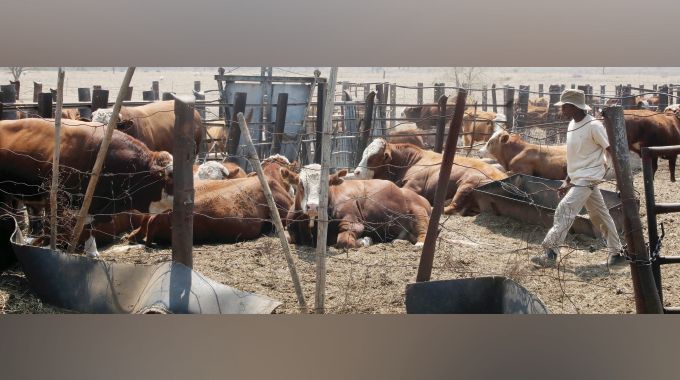
Lungelo Ndhlovu, [email protected]
The days of estimating a cow’s value by merely looking at it and assuming that instinct alone can deliver higher returns are steadily coming to an end. Across Zimbabwe, a growing number of agricultural experts and industry leaders are warning that farmers who continue to rely on guesswork risk being left behind in a competitive and data-driven livestock sector.
Farmers are now being strongly encouraged to invest in weighing scales and modern farm equipment to transform their operations into efficient, professional businesses. This shift is not just about adopting new tools for the sake of modernisation, but about improving profitability. With accurate measurements, farmers are better equipped to negotiate fair prices for their cattle, whether for beef or dairy production, and can make more informed management decisions that directly impact their bottom line.
This message was reinforced at the recently held Zimbabwe International Trade Fair (ZITF) in Bulawayo, where members of the Bulawayo Agricultural Society (BAS) cattle committee highlighted the hidden financial costs of relying on estimation instead of precision. Their observations revealed a pattern that continues to affect many farmers: animals believed to meet market or competition standards often fall short when properly measured.
“The biggest challenge we have is farmers who do not have scales,” said a BAS official overseeing the cattle competitions. “They look at an animal and assume it weighs 400 kilogrammes. When it arrives here, we find it weighs 380 or 385. It is close to 400, but it is not 400. For our competition, that is an automatic disqualification.”
The 400 kg minimum weight requirement is more than just a rule for competitions; it reflects a broader transformation within Zimbabwe’s beef industry. Success is being defined by measurable performance rather than visual judgment or experience alone. In this environment, precision has become essential, and farmers without the right tools are at a disadvantage.
In response, suppliers and agricultural organisations have intensified efforts to promote livestock infrastructure such as cattle scales, dipping systems, and specialised handling pens. These tools are critical in helping farmers transition from subsistence-style farming to commercially viable enterprises. With proper equipment, farmers can track growth rates, monitor animal health, and optimise feeding strategies, all of which contribute to improved productivity. Government initiatives have also played a significant role in encouraging this shift. Programmes such as the Presidential Input Scheme are supporting farmers in adopting better technologies and practices, aiming to close the productivity gap that continues to affect Zimbabwe’s beef and dairy sectors. However, despite these interventions, many small-scale farmers still rely heavily on traditional methods, including visual assessment of livestock weight.
According to Mr Obert Chinhamo, a prominent cattle breeder and chairman of the BAS cattle committee, this reliance on estimation has serious consequences. Farmers who do not use scales often misjudge their animals’ readiness for market, leading to lost income and missed opportunities. More importantly, it can negatively affect animal health and overall farm performance.
“A scale is a basic management tool for any farm, even for those who never plan to enter a competition,” Mr Chinhamo explained.
“If you are giving your cattle extra feed, you should calculate it based on a percentage of their body weight. Without knowing that weight, you are essentially guessing. The same applies to medication. Dosages are prescribed according to weight. If you do not know the weight, you risk under-dosing or over-dosing your animals.”
Such inefficiencies, when multiplied across thousands of farms, have a significant impact on the national cattle industry. Data presented at a recent livestock conference during ZITF revealed that Zimbabwe’s national calf birth rate stands at just 38 percent, a figure widely regarded as low by industry standards. Of those calves, approximately a quarter do not survive, further reducing the country’s overall productivity.
“That is a poor performance from us as farmers,” said Mr Chinhamo.
“We start with a low number of births, and then we lose even more calves. It clearly shows that we are producing far below our potential.”
This underperformance comes at a time when the government is aiming to significantly increase agricultural output and position the sector as a key driver of economic growth. Achieving such ambitions will require meaningful improvements in efficiency across the entire value chain, from breeding and feeding to marketing and disease management.
According to BAS experts, one of the simplest yet most overlooked solutions lies in proper nutrition planning. While genetics and breeding are important, they cannot compensate for poor feeding practices. Farmers must prioritise the development of structured feeding programmes that ensure animals receive adequate nutrition throughout their lifecycle.
“You cannot have high production without proper nutrition,” Mr Chinhamo emphasised.
“Even the best genetics will not perform if the animal is not fed well. A well-fed animal is more likely to conceive, carry a calf to term, produce milk, and wean a healthy offspring. That is where the farmer’s income comes from.”
For younger farmers entering the industry, these lessons are becoming relevant. Mr Neil, a farmer from Masdel Farm in Insiza, represents a new generation that is blending traditional knowledge with modern practices. Having grown up in a family deeply rooted in agriculture, farming was not just a career choice for him but a way of life. This year, his commitment to improving his operation paid off at ZITF, where Masdel Farm earned recognition and awards for its cattle. The achievement reflected years of careful planning, disciplined management, and strategic investment in better farming practices.
“Farming has been part of my life since the beginning,” he said. “Winning at the trade fair shows that the effort we put in is worth it.”
However, his success has not come without challenges. Like many farmers in the region, he operates under the constant threat of Foot-and-Mouth Disease, a highly contagious condition that can devastate livestock populations and disrupt entire farming operations.
“If there is a case within 10 kilometres, your entire farm is locked down,” he explained. “Depending on the severity, you could lose your whole herd.”
This ever-present risk has forced him to adopt strict biosecurity measures, carefully managing how animals are moved and ensuring that disease prevention remains a top priority. For him, success is not only measured by awards but also by the ability to maintain a healthy, productive herd in a challenging environment. Winning at ZITF has also opened new opportunities. Recognition at such a prestigious event enhances a farmer’s reputation and creates demand for their livestock, particularly from other farmers seeking to improve their own herds.
“Winning gets your name out there,” he said. “If you can raise quality animals, other farmers will want to buy from you. It creates opportunities for growth.”
As Zimbabwe’s cattle industry continues to evolve, the message is becoming clear: farmers must adapt or risk being left behind. Investing in basic tools like weighing scales may seem like a small step, but it represents a critical shift towards precision, efficiency, and profitability. In a sector where margins are tight and risks are high, the difference between success and failure may come down to something as simple as knowing exactly how much a cow weighs.



 Blessing Chizhande