

 admin
admin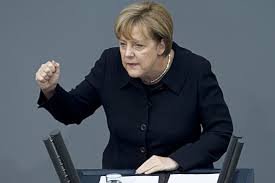
 London — A group of 13 Nobel laureates have urged UK voters to remain in the European Union, warning that Britain will lose funding, global influence and access to expertise if the nation votes to leave the 28-nation bloc. The scientists wrote an open letter to the Daily Telegraph newspaper, expressing concern that those arguing that Britain should leave “lack experience in scientific leadership.” They argued that the notion that Britain’s Treasury can make up for any funding shortfall as “naive and complacent.”
The signatories included Peter Higgs, who won the prize for predicting the existence of the so-called Higgs boson. “We may be an island, but we cannot be an island in science,” they wrote. “Being part of the EU is good for British science and that is good for Britain.”
Meanwhile, German Chancellor Angela Merkel stressed on Friday that she hopes that Britain will vote to remain in the European Union in a June 23 referendum. Her finance minister labelled the referendum a “wakeup call”.
Britain and Germany have traditionally been allies in the EU on matters such as free trade. “From my point of view, Great Britain remaining in the European Union is the best and most desirable thing for us all,” Merkel said in a speech to a group representing family-owned businesses.
She added, “we’ve very close cooperation on many questions with Great Britain and would of course like to continue this within the framework of the European Union”.
Germany has the biggest economy in the 28-nation bloc, and Finance Minister Wolfgang Schäuble told Der Spiegel magazine that a British exit, known as Brexit, would be bad for both Britain and the EU.
“It would be a miracle if a withdrawal of Britain would come without economic disadvantages,” he said, adding that he and other EU officials are “preparing for all possible scenarios in order to minimise the danger”.
Schäuble said if it comes to a British exit, that the possibility of other countries following Britain’s lead “can’t be ruled out”. “How would the Netherlands react, for example, which is traditionally very strongly linked with Great Britain?” he asked. On the other hand, he said, “Europe will also function without Britain, if necessary.”
Even if Britain’s voters choose to remain in the European Union, the referendum itself shows a dissatisfaction that EU leaders can’t ignore, he said in remarks to Der Spiegel for a special Brexit issue titled “Please don’t go! Why Germany needs the British.”
“We have to see this as a warning and a wakeup call not just to continue business as usual,” he said, according to an advance copy of the magazine, which is publishing its Brexit feature in both German and English.
Though some have suggested the EU could use a British exit as an opportunity to push through further integration, Schäuble flatly rejected the idea. “We can’t simply push for more integration as an answer to a Brexit,” Schäuble said. “That’d be clumsy, and many would correctly question whether we politicians still don’t understand.”
The influential finance minister suggested that if Britain did leave, though, it couldn’t expect to continue to enjoy the benefits of the European common market. “In is in, out is out,” he said. — AP



 Online Reporter
 derick.khumalo