admin
admin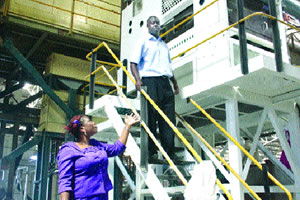
manhood should never be measured by the size of the bamboo stick between his legs but by his ability to think and plan for his family?
I know some of you readers are already saying, “hear . . . hear . . . hear! Here goes the eccentric villager from the land of milk, honey and dust or, simply Guruve, again.”
Back in the village, this is the time when real farmers are seen as they start preparing for the summer cropping season.
The lazy ones will always remain crybabies, for they lack the prerequisite skills to plan and think or think and plan. Yet, the clever ones are already in the groove. They have already thought, decided and planned.
How many of us are ready for the summer farming season, because many a time, we find ourselves, making last-minute decisions on what we are farming, let alone where we get the seed and what variety.
Robert Mugabe, the famous son of Bona, herself a peasant from Zvimba, redistributed the land as per liberation war promise and so, how do you prove to him and all those who fought alongside him that we really needed the land? Farm and produce high yields, simple! Farm and feed the nation, simple! Farm and be self-sufficient, simple!
Gone are the days when we called ourselves new farmers. This villager is not a new farmer, what is new is the farm. This villager was born a farmer and became a journalist by coincidence, so it helps.
Farming is an art, it is business and therefore it should be planned for.
Success in farming comes from a cocktail of seed selection, soil fertility, good timing, farming methods, pest control, weed control and close monitoring. Gone are the days when a farmer picks up seed from his previous harvest and expects to produce good yields, yet there is plenty of affordable hybrid seed on the shelves of various retail outlets.
JOURNALISTS, MY KIND
On Tuesday, just three days ago, Seed Co, organised a media tour of its premises, where it showcased its recently installed state-of-the-art equipment.
This villager, who joined his kind from across the media houses in the great land of Munhumutapa saw the equipment imported from Brazil and Austria worth US$1,5 million at work and was quite impressed.
The journalists, most of whom apparently did not embrace the land reform programme, judging by their lack of uptake of the land, came in their big numbers.
Even the Zimbabwe Union of Journalists, failed to rally journalists behind the land reform programme and today, very few journalists got farms.
They wanted to undo the programme even.
These days, the scribes also famed for unprecedented imbibing, claim they were left out, yet they churned out story after story on the land reform from an observer point of view. Never participating in this august national event. My kind!
Of course, journalists are major stakeholders in any national programme if it is to succeed but this villager is proud to be among the few who benefited from the land reform.
Of course, was it not Achebe again, who said every normal man, will always brag about his bamboo stick, no matter how tiny?
This villager watched as the scribes seemed to absorb every word from Seed Co managing director Denias Zaranyika (misnamed over the years as Dennis) but wondered why the scribes had not participated in the land reform programme with the same attention. My kind!
Anyway, that is beside the point. The full import of this installment is that journalists can make a difference by supporting the land reform to its logical conclusion in the same manner that Zaranyika and his team have done.
From the delicate times when land tenure changed a decade ago, to this day, when Zimbabwe has become self-sufficient in terms of seed production, Zaranyika and his team fronted by corporate communications manager Majorie Mutemererwa, should really be applauded for taking up the challenge when Zimbabwe’s seed production took a plunge and detractors of the land reform thought seed production would never be back on the rails.
It is fact not fiction that today Zimbabwe is sitting on 70 000 tonnes of seed, about 20 000 tonnes more than the national requirement of which 45 000 tonnes are from Seed Co, alone.
Once largely the preserve of a few white farmers, seed production has now become a mixture of the traditional seed farmers and those who joined seed production at the advent of the land reform programme.
According to Zaranyika, there is no longer a new seed producer or an old producer; all the farmers are now equally good producers.
Seed Co, says Zaranyika, has 200 farmers contracted to grow seed and are all doing very well and that has been proved beyond any reasonable doubt by the fact that Zimbabwe is now self-sufficient in terms of seed production.
Now that the seed is plenty Zaranyika challenges farmers to increase maize production to ensure that the great land of Munhumutapa does not import grain. If seed is now readily available why then should we import grain? All and sundry should support the agriculture season facing the farmers.
“Why should the country import grain when there is excess seed in stock? All we need is to address those factors that are inhibiting agricultural growth and farmers will start producing competitively.
“Not that we have been doing things badly but that we can do better. As seed houses, Seed Co and others, we have played our part and other stakeholders like banks, media houses, fertiliser manufacturers, Government, farmer organisations and agro-dealers, must also play their part so that we produce enough.
This villager, who is no good mathematician, understands Zaranyika’s explanation and stands to be corrected if he does not mean that if Zimbabwe plants 62 500 tonnes of maize on 2,5 million hectares, producing a tonne per hectare, the land of Munhumutapa will harvest 2,5 million tonnes of maize.
Our national requirement is not even 2 million tonnes, so this great land will have a surplus. Good farmers go up to 10 tonnes per hectare, so it helps.
In the same vein if Zimbabwe was to plant 42 000 tonnes of maize on 1,68 million ha, producing 1,5 tonne per ha, the great land will still produce 2,5 million tonnes of grain.
The villager is certainly not known for mathematics, ask those who attended Waddilove or St Anne’s Goto, back in those days but his elementary mathematics say Zimbabwe can do it, if the sons and daughters of this soil put their act together.
The land we have, the seed we have, the fertiliser we have (fertiliser companies say they have an excess) the banks we have, the skills we have, so what is wrong with us?
Back to Zaranyika, he contends that such factors as making inputs available to farmers on time, making cropping plans that included programmes such as liming and crop rotations were crucial in addressing the farmers’ yearly shortcomings in production.
On the issue of inputs, Zaranyika says banks needed to take a very active role in financing farmers to capacitate them to buy seed on time and ensure production of enough grain to fill the national strategic grain reserves.
Zaranyika said timing, which included planning of activities and procurement of inputs was critical in enhancing productivity, while crop management also played an important part in the production chain.
He also challenged farmers to make the right variety choices and stick to correct plant populations, while constantly consulting extension workers for technical assistance.
Zaranyika reveals that Seed Co is continuously conducting research to come up with varieties that improve disease and drought tolerance with greater adaptive qualities to the current changes in the climate.
“We do a lot of research at our centres that include Rattray Arnold, Kadoma, Mpongwe in Zambia, Stapleford and Kitale in Kenya,” he says.
The village soothsayer, that ageless fountain of wisdom and knowledge contends that Zimbabwe will soon retain its regional breadbasket status.
“It’s a matter of time. The detractors of the noble land reform programme will soon scamper for cover in shame and disbelief if all companies take the attitude of Seed Co.
“I said it’s a matter of time. None but ourselves will feed ourselves.
“A lot of appaluse should certainly go to the seed growers for a good job well done. They are excellent.”



 Online Reporter