admin
admin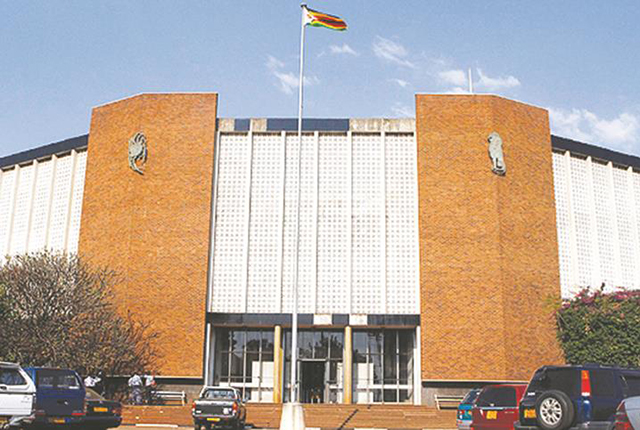
Reveal Nyamayemombe Correspondent
Time and money are of high importance to any individual in today’s world. It is thus not preferable to expend these valuable resources on chasing debtors. However, obligations under any agreements or contracts often go unfulfilled and non-payment of debts can be stressful.There arises a need to have an effective and efficient system for the recovery of debts. In this brief article, we will take a look at the Small Claims Court especially in view of Statutory Instrument 36 of2016 under which the jurisdiction of the court has been increased to US$1 000
The Small Claims Court was established in terms of the Small Claims Act [Chapter 7:12]. The Act establishes a Small Claims Court for the adjudication of small civil claims. It is arguable that every cent counts and as such this is a court which all Zimbabweans should make use of.
Parties who may appear
Only natural persons can make claims. Lawyers have no right of appearance and this makes it cost-effective and simple. Also, companies or artificial persons cannot sue but can be sued and may only counter-claim. Parties to proceedings are required to appear in person except if they do not have the legal capacity to do so themselves.
Where do you find the Small Claims Court? (Accessibility)
The Small Claims Court has jurisdiction over the area for which it was established. With effect from January 1 2016, the Magistrates’ Courts in Harare, Mutare, Bindura, Marondera, Chinhoyi, Bulawayo, Gwanda, Masvingo and Gweru have been designated as Small Claims Courts. The Small Claims Court has jurisdiction in respect of persons and causes of action in respect of any person who resides or carries on business or is employed within its province.
If a person does not fall under the above categories, then the Small Claims Court will have jurisdiction over that person if the cause of action arose in that area of jurisdiction or if that person does not object to the jurisdiction of the court.
What matters can be brought to the Small Claims Court?
A Small Claims Court in Zimbabwe has jurisdiction in respect of proceedings for the delivery of movable property, recovery of arrear rentals and ejectment not exceeding US$1 000 in value. The court also has jurisdiction where there is an acknowledgment of debt or on proceedings based on a cheque where the claim does not exceed US$1 000.
The Minister of Justice and Parliamentary Affairs is responsible for setting down the monetary jurisdiction of the court. Thus Statutory Instrument 36 of 2016 has increased the monetary jurisdiction of the court from US$250 to US$1 000.
The increase of the monetary jurisdiction to US$1 000 is most welcome as this will enable more people to have access to the court as long as their claims are below the prescribed monetary jurisdiction.
Thus an individual could approach the court and have his or her case quickly resolved without enduring the nitty-gritties of the fully fledged civil courts.
However, the jurisdiction of the Small Claims Court is limited as it does not have jurisdiction in respect of any case under customary law or claims for divorce, custody or maintenance other than arrear maintenance or cases involving the validity or interpretation of a will or cases in which damages are sought or any case in which an interdict is sought.
Why the Small Claims Court?
Many ordinary people in Zimbabwe do not use the courts because they are expensive or they are ignorant of their rights to access of courts.
The Small Claims Court is meant to be a cost-effective tool developed to cater for the needs of the majority of Zimbabweans who cannot afford the services of legal practitioners, and are usually priced out of litigation because the amount they want to claim is small as compared to the expenses they will incur in trying to recover same.
The Small Claims Court, if fully utilised, can play a part in resolving that dilemma and can be very effective in the administration of justice.
The court is accessible countrywide. The court adopts a flexible, friendly and simple procedure but remains underutilised.
However, one major impediment that remains is the costs of the Messenger of Court in execution of judgments of this court.
The cost remains inhibitive and defies the mischief behind the court. Be that as it maybe, the benefits of this court are numerous. There is nothing small about this court.
Reveal Nyamayemombe LLB (KZN) is associate intern, Muvingi and Mugadza Legal Practitioners, www.mmmlawfirm.co.zw



 Online Reporter