Chronicle Editor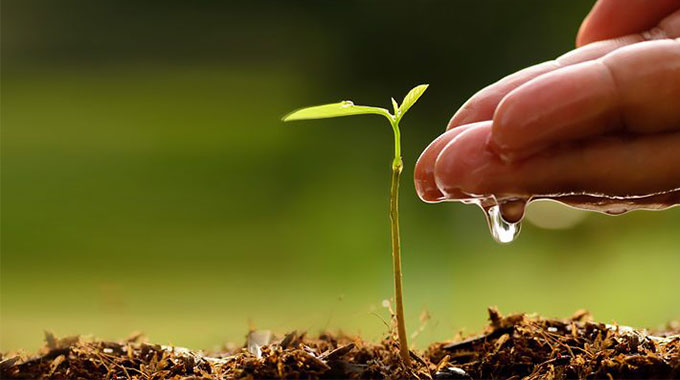
Pathisa Nyathi
THE more I delve into a particular theme, the more new perceptions and conceptualisations emerge. I began thinking deeply about the month of November and remembered that many years ago I was asked why it was not a month for marriages among the Shona people.
Obviously, something was special about the month. Now I realise it is to do with seed. Marriage is about seed, the continuity of the human species.
I looked at the conservation in the broader sense and environmental protection measures that are practiced in that month following the planting of seed in September and October at the commencement of a New Lunar Year. In the end, my concept of seed was expanded.
When that was coupled with the political statement of the nationalists in the 1960s, the concept of seed was further reinforced.
For quite some time I accepted that, the earth was female and so, considering its femininity. That realisation led to explanations and interpretations of several African phenomena.
The one that came to my mind was seed. The nationalists were reminding us we are children of the soil and the earth essentially comprises the soil. How are we its children? What we get into the soil is the seed that germinates in the month of November and out of it, the future of the species is ensured.
The seed is the future and this leads to a double-edged thrust in perceiving the conservation of the seed and the soil.
It was the concept of seed in particular that I had expanded and broadened in my mind. Now it embraced both flora and fauna.
As indicated in the last article I had restricted the concept to crops and other plant species. Now animals and men were embraced. The seed became a generic concept. Whichever way I looked at the conservation measures traditional Africans embarked upon I began to see some common thread running through them.
So, after all there are direct and primary measures to do with the conservation of. Within this context, the idea of seed is expressed. However, that alone will not suffice. There are secondary considerations to take on board for complete conservation and environmental protection of the earth.
In pursuance of conservation during the month of November, trees were spared from being wantonly cut down. Quite understandably, this is the time when they are flowering and thus producing seed as a measure to guarantee their future through germination of the seed, growth and development of trees till they get to the stage when they in turn produce seed.
It was an injunction that was recognised during the fertility month of November.
Any fruit trees falling within a family’s crop field was considered out of bounds to members of the community. There was no way the family would consume all the fruits with seed. Seed was thus conserved through that cultural measure. The same applied to fruit trees near a family’s homestead.
The senses of ownership and territoriality excluded harvesting of such fruits by members of the general community.
There was also selective collection of firewood to be used within a homestead. Associated taboos protected certain trees such as ichithamuzi, which is believed to cause conflict within a household when burnt within a homestead. As a result, the species is spared.
It has been observed that this tree species proliferated around Bulawayo, particularly beyond uMguza River. Citizens steeped in traditional taboos did not harvest the tree even in the face of electricity shortages. Another tree that was similarly spared because of conservation taboos was umbola. The two species proliferated just north of Bulawayo
During the same month of November, herbalists are expected to ensure herbal plants are protected. Harvesting takes into consideration the need to conserve the trees for future use. Digging up all the roots is not permitted.
Similarly, debarking should not result in the death of trees. The traditional doctors will need the herbs for use in the future. Sustainable harvesting is thus of the essence.
Africans posited that every object has a life, animate or inanimate. Herbal plants were presented with gifts before being harvested. The beads were the usual medium before the advent of modern currency. All this was calculated at conserving the herbal species.
Let us now turn to the animals. Hunting was a common pursuit as a source of protein from the hunted animals. However, animals that were pregnant were not killed since they were carrying the young, the seed in their wombs. Only the male animals were killed.
In the same vein, animals in calf were spared, for the same consideration. The calves or kids are the seed for the perpetuation of the animal species.
This consideration was extended to human beings. During the month of November, expecting mothers were not to be harassed or abused. Such spiritually-induced measures hold hope for them to be observed.
What emerges clearly is that conservation of seed was paramount in all the cited measures. Seed is thus at the core of conservation. The earth is the primary mother. Other subsidiary mothers such as human and animal mothers depend on her.
Animals feed on tree leaves and grass which get their nourishment from Mother Earth.
As indicated above, Mother Earth essentially is the soil of which we are the indirect children. The grasses and trees are the direct children.
However, as a woman the earth has to be fertilised to produce food to sustain the lives of her children. Rain is the agency for the fertilisation of Mother Earth. Mother Earth, without rain is as sterile as a desert. Conservation measures must ensure the rains fall so that the children of Mother Earth are sustained and the animals that cannot make their own food get indirect nourishment.
Soil conservation therefore, becomes an important consideration together with the water bodies, such as wells, springs and marshes. There are myriads of taboos that seek to conserve water. This lends to a holistic approach in the conservation effort.
All this hinges on the seed that, once dead, extension of species is not guaranteed. For the rains to fall the land must be cleansed. Starting in August the rain shrines such as Njelele, Ntogwa in Botswana, Manyangwa in Bulilima, Dula at eNqameni and Zhame at eMawabeni were cleansed. Communities brewed beer in the month of September and conducted local rainmaking rituals.
After that, the rain queens, amawosana/manyusa, take seed from their communities to Njelele alongside other items to present to the fertility shrine and request the Rain Goddess to play her part.
Sanctified seed was then taken back to the various communities where it was mixed with that of the communities. Instructions to deal with vermin were also given.
These measures should not be viewed in isolation. They complement other measures that seek to conserve seed and ensure the environment is protected to complement the conservation of the various animal and plant species for the sustenance of life forms.
“Umntwana wenhlabathi,” son/daughter of the soil,” may have been a political slogan to advance the nationalist agenda. In reality, it was one very pregnant with the message, ethos, spirit and philosophy of conservation.
Who says traditional Africans were not conservation conscious? They were alert to the fact that their continued existence as a species depended on the protection and conservation of the environment. To preserve the seed is to conserve and guarantee the future. With colonization things have of course changed.



 Online Reporter