Online Reporter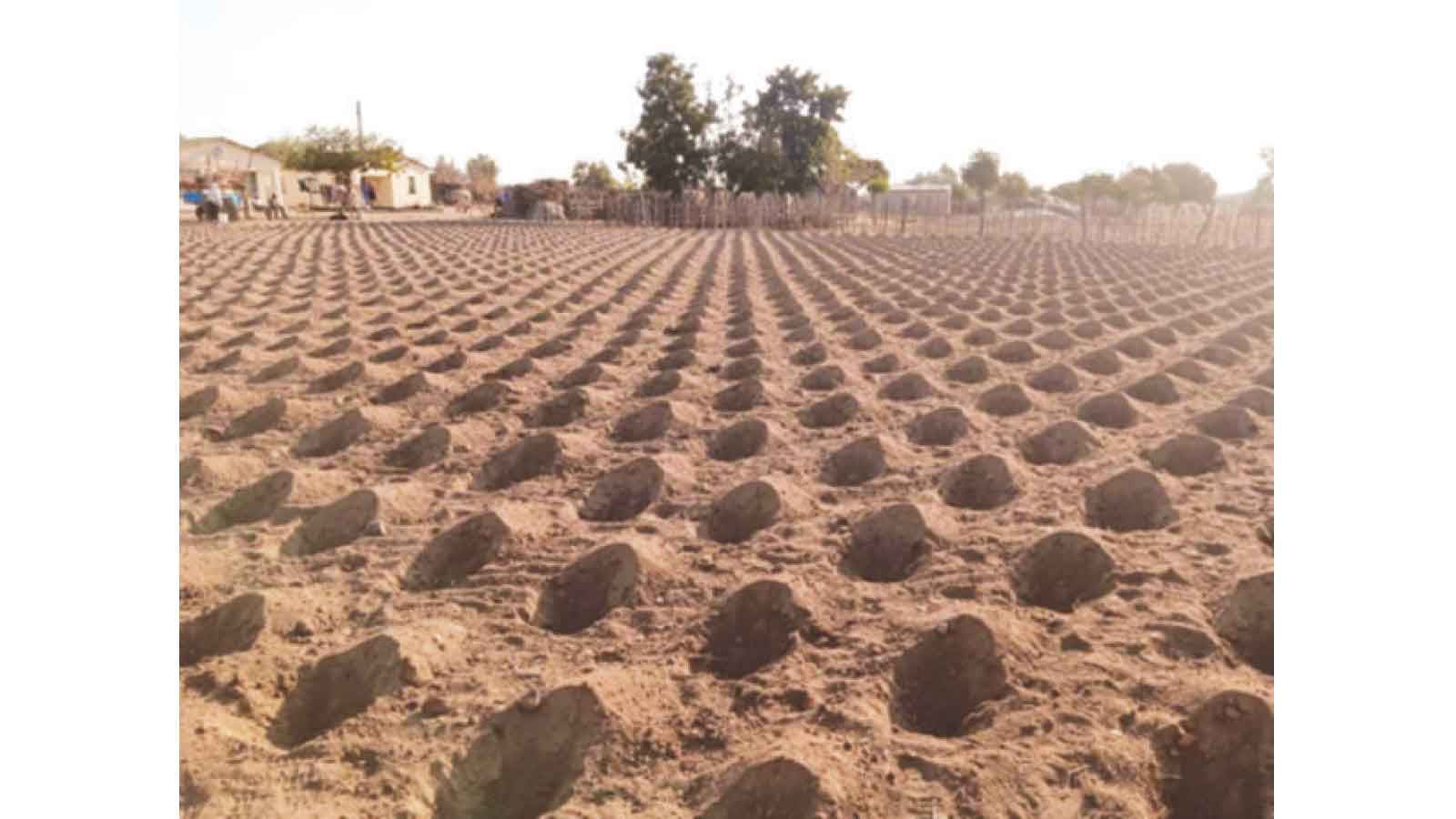
Innocent Mujeri
NOW that the rains are finally upon us, a renewed sense of hope blankets our nation.
The first drops that strike the soil do more than nourish the land—they awaken the spirit of possibility that has always defined Zimbabwe’s agricultural identity.
As the clouds gather and the fields soften, we are once again reminded of the crucial responsibility that rests upon our shoulders: to be productive, to honour the land reform programme, and to use farming as one of the strongest vehicles driving us towards Vision 2030.
For many years, agriculture has served as the backbone of Zimbabwe’s economy.
Our history, our culture, and our livelihoods are deeply intertwined with the land.
But the rains themselves do not guarantee success; it is what we do with this opportunity that determines the harvest and, ultimately, the prosperity of our households and our nation.
This season, more than any other, calls for commitment, discipline, and a deliberate national effort to maximise productivity.
With the land reform programme now firmly established, this is the moment for Zimbabweans to demonstrate that the reforms were not only justified, but transformative. Land is a resource that thrives under responsible stewardship.
For land reform to be considered a true success, productivity must speak louder than politics, louder than doubt, and louder than criticism.
Every prepared field, every planted seed, and every harvested crop becomes a testament to the national vision that gave birth to the reforms in the first place.
It is time for every beneficiary of land reform to rise to the task and prove that Zimbabwe can feed itself, sustain itself, and export to the world once again.
As the rains fall, let them also wash away complacency. Farming is no longer a pastime to be left to the elderly or carried out only when convenient.
It is a national duty and an economic pillar.
The global environment has become increasingly uncertain, with food insecurity threatening even the most developed countries. In this context, Zimbabweans must fully appreciate the gift of arable land we possess.
Few nations enjoy our combination of fertile soils, favourable climate, and vast agricultural potential.
We must, therefore, seize the rains as a signal that the time for action is now.
The Government has repeatedly emphasised agriculture as one of the central drivers of Vision 2030—our collective aspiration to become an upper-middle-income economy within the next five years.
Vision 2030 is not an abstract policy statement but a pathway requiring the active participation of every Zimbabwean.
Farming remains one of the most accessible and impactful ways for ordinary citizens to contribute to this ambition.
Whether one manages a large commercial farm, a small plot, or even a family garden, every effort counts towards the national food basket.
In this rainy season, we must focus on both productivity and efficiency. It is not enough to plant; we must plant smartly.
Farmers should take advantage of agricultural extension officers, training programmes, and Government-supported initiatives offering climate-smart farming, modern irrigation techniques, and improved seed varieties.
Climate change is real, and its effects are increasingly unpredictable, but modern techniques allow farmers to hedge against risks and boost yields even under challenging conditions.
Equally important is the need for collective responsibility.
Agriculture is not an individual pursuit; it is a national ecosystem.
Those who have received land must use it productively or make way for those willing and able to do so.
Idle land is a national setback. Productive land is a national asset. As the rains fall, every hectare should either be cultivated or prepared for cultivation.
It is through such seriousness that Zimbabwe will rebuild its agricultural reputation across the region.
Moreover, the private sector also plays a vital role.
Banks, agribusinesses, millers, contractors, and agro-dealers must continue to support farmers with inputs, financing, and timely access to markets.
A functional agricultural value chain ensures that farmers are not discouraged by market failures or delayed payments.
We must build a system where the farmer can farm confidently, knowing that their labour will translate into profit and security.
The rains must also awaken the spirit of independence and self-reliance.
For too long, Zimbabwe has been vulnerable to droughts, food shortages, and import dependence.
Yet these challenges are not inevitable. With proper planning and discipline, our country can consistently produce enough to feed the nation and generate surplus for export.
This is not wishful thinking—it is entirely achievable, as demonstrated by our national successes in tobacco, horticulture, and wheat production in recent years.
The task now is to expand this success across all agricultural sectors, from maize and soya beans to livestock and fisheries.
Farming also carries a deep societal responsibility.
When we produce more, we feed more; when we feed more, we stabilise our communities; and when our communities are stable, our nation prospers.
The cost of food has a direct connection to the cost of living.
Productivity in our fields is therefore directly linked to the well-being of every Zimbabwean, whether rural or urban.
A good harvest does not benefit farmers alone—it lowers the price of staples, reduces national expenditure on imports, and strengthens the local currency.
As the rainy season unfolds, let us work with urgency, unity, and purpose.
Let us remember that agriculture is not merely an economic activity but a legacy that we owe to future generations.
The land reform programme must stand as a victory not only in principle, but in measurable outcomes. Vision 2030 must be pursued not only through speeches, but through hard work in our fields.
Now that the rains are upon us, the soil is ready.
The fields are calling. And the nation is watching. Let us plant with determination, nurture with responsibility, and harvest with pride.
The success of this season will be the success of Zimbabwe itself — and every citizen has a role to play.