admin
admin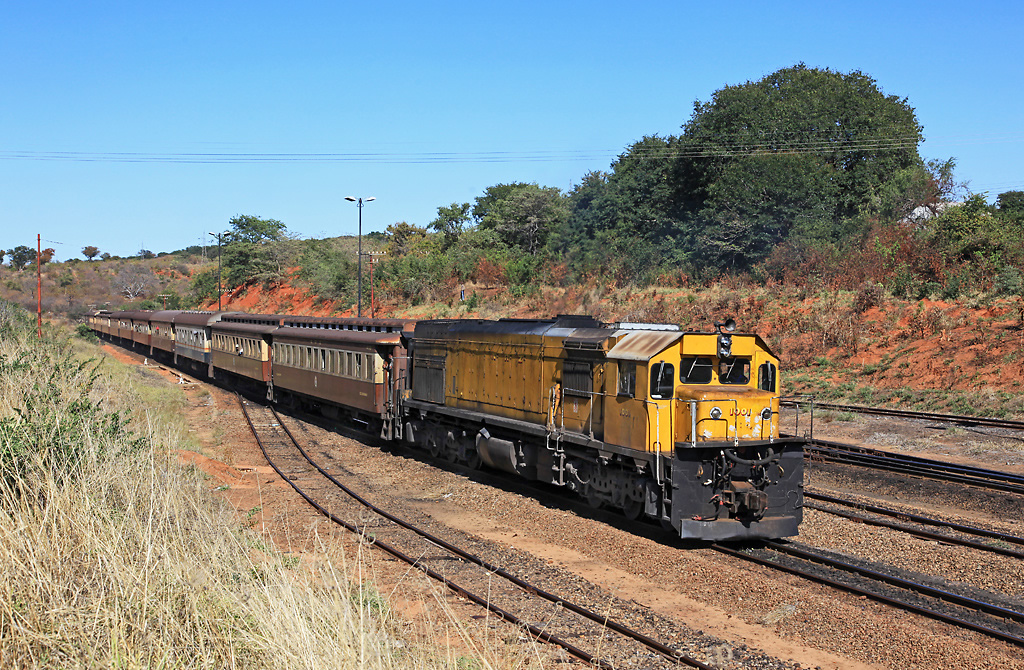
 Arnold Mutemi Business Editor
The National Railways of Zimbabwe is committed to moving coal from Hwange to end users across the country because of its importance to the economy, the general manager, Air Commodore Mike Karakadzai, has said. Speaking at the inaugural transport symposium for the coal industry in Hwange last week, he said coal, which is a bulk commodity, should be transported by rail and not on roads.
He said the parastatal had the capacity to move all the coal being mined in Hwange to various parts of the country.
Air Cdre Karakadzai said the NRZ had 3 226 wagons yet the economy required about 3 000 wagons while it had 23 wagons, with 19 required by the economy.
However, he said the major problem facing the parastatal was the age of its equipment, which sometimes led to breakdowns and delays in movement of goods.
“We have some challenges. The major challenge is the age of the equipment. The assets have seen their useful lives and reliability is an issue. Once you have locomotive failure, it affects wagons,” he said.
Air Cdre Karakadzai called on players in the coal industry to enter into Private Public Partnerships with the NRZ to improve its fleet. He said all locomotives and wagons rehabilitated under PPPs were reserved for the exclusive use of the organisation that would have repaired them.
He said the parastatal had entered into a PPP with the sugar industry which now had access to 500 wagons to carry sugar.
“Assets covered under PPS are dedicated for use by the people who assisted. The sugar industry operates 500 wagons dedicated to that industry,” he said.
He said the NRZ was in the process of sealing another PPP deal with a fuel company.
Air Cdre said to improve transit times, the NRZ would, with effect from today, introduce express trains.
An express train would take 46 hours from Harare to Hwange once loaded from the current four days.
He Karakadzai said using rail transport to carry coal over long distances was cost effective than using heavy trucks.
He said a single train was equivalent to 33 trucks and there could be major savings in fuel costs if coal was transported by rail.
Thirty three trucks going to Harare from Hwange needed 10 243 litres of fuel while a train with a similar load consumed 4 055 litres, he said.
Air Cdre Karakadzai urged coal miners to establish coal depots in various parts of the country where the NRZ would ferry the commodity with road transport being used to transport it over short distances to the end users.
Meanwhile, the Government is concerned with the set up in the transport sector and will not continue to watch and do nothing, the Secretary for Transport, Communications and Infrastructural Development, Mr Munesushe Munodawafa, has said.
In a speech read on his behalf at the symposium, he said government was worried about overuse of the road network, damage to roads, congestion on highways and a high spate of accidents yet the railway system was under-utilised.
He said the country’s trade competitiveness was being affected by high transport costs.
He said a study in 2011 showed that the average transport costs in Zimbabwe was 10 cents per tonnes kilometre compared to between three and six cents in other countries in the region.
“Rail transport is therefore a key strategy to improving trade competiveness because its is generally cheaper than road transport, costing on average between four and six cents per tonne kilometre to transport goods, compared to about seven to 12 cents by road. Rail is also considerably more environmentally friendly than road, using about 25 percent of the diesel fuel per net tonne kilometre compared to road,” he said.
Mr Munodawafa said he expected to symposium to come up with solution that would enable the NRZ to regain its market share and fund its recapitalisation programme from its own cash resources instead of relying on Treasury.
The NRZ needs $400 million in the short to medium term to improve capacity and $2billion over the next 10 years to be full recapitalised.
The symposium, which included a tour of Makomo and HCCL coalfields to get an understanding of their operations, was attended by representatives from the country’s three coal mines, major coal users and other stakeholders.
Air Cdre Karakadzai said the symposium was the first of industry specific activities to be undertaken by the parastatal. He said they decided to start with the coal sector because of the important role it played in fuelling the economy.


 Online Reporter