Online Reporter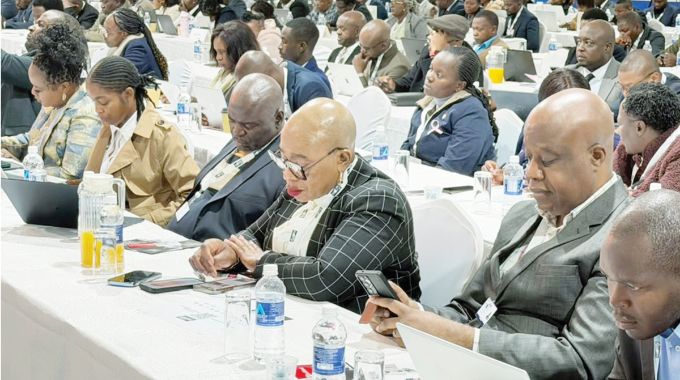
Nqobile Bhebhe Zimpapers Business Hub
THE National Railways of Zimbabwe (NRZ) could leverage a potential 20 million-tonne annual cargo market to unlock private capital for its estimated US$400 million short- to medium-term recapitalisation programme, as authorities seek to rebuild the railway around bankable freight corridors.
This emerged at the Zimbabwe Economic Development Conference (ZEDCON) in Bulawayo, where transport infrastructure experts and the Infrastructure and Development Bank of Zimbabwe (IDBZ) outlined a financing model focused on identifiable cargo volumes, mining corridors, private-sector off-take agreements and operational reforms.
Transport infrastructure expert Mr Fradreck Podzo said NRZ’s recovery should not be based on network-wide borrowing without clear revenue streams, but on commercially viable corridors capable of generating the cash flows required to service investment.
“Revitalisation should start with bankable corridors and credible institutions, not network-wide borrowing without clear traffic and repayment assumptions,” he said.
Mr Podzo was presenting a paper titled “Reimagining Rail Infrastructure in Zimbabwe: Innovative Financing and Operational Transformation for Upper Middle-Income Transition.”
He said the railway system was a strategic economic asset whose revival was critical to industrialisation, regional trade and Zimbabwe’s ambitions to attain upper middle-income economy status by 2030.
“Zimbabwe rail system is a strategic economic asset, but recovery requires more than capital injection,” he said.
NRZ’s freight volumes have fallen sharply over the years, with Mr Podzo noting that traffic had declined from about 12 million tonnes annually to less than three million tonnes.
“Of course there are challenges related to low traffic volumes, which have been observed over the past years declining from about 12 million tonnes per year to less than 3 million and as well there is stiff competition from the road and increased road dependence by former railway customers and this action is also putting unnecessary pressure on the already strained fiscals due to road maintenance costs and poor road-related costs.”
However, IDBZ representative Engineer Farai Madondo told a panel discussion that Zimbabwe had a substantially larger pool of potential freight that could be moved by rail.
“We estimate that local cargo is about 8,2 million tonnes, imports about 6,5 to 6,6 million tonnes and export cargo about 5,6 million tonnes,” he said.
“We are looking at 20 million tonnes of cargo to be moved and that is available to the National Railways of Zimbabwe virtually with no competition.
“There is your steady stream of income, your steady stream of revenues.”
Eng Madondo said securing long-term off-take agreements with private-sector companies could provide NRZ with predictable revenues and strengthen the railway’s ability to attract investors.
“There are private institutions here who want all of this cargo. We are happy to have off-take contracts with the National Railways of Zimbabwe and that will put the National Railways of Zimbabwe in a very strong position when it comes to attracting investment,” he said.
The potential cargo base is particularly significant for mining, which Mr Podzo identified as a key anchor for railway recovery because of its high freight volumes and bulk commodities.
“The mining sector has higher demand than in other sectors; hence, there is a need to invest in those corridors,” he said.
The approach would allow scarce capital to be concentrated on routes with established economic activity and identifiable freight demand, rather than attempting to rehabilitate the entire network simultaneously.
Mr Podzo said NRZ required about US$400 million in the short to medium term to address its recapitalisation needs.
The rehabilitation challenge includes ageing track infrastructure, obsolete signalling systems, inadequate rolling stock and outdated information and communication technology systems.
“The problem being faced is a limited low-cost financing option with a few lines of credit for the institution.
“We also have aging trucks, obsolete signalling equipment, limited rolling stock and outdated information and communication systems.”
Eng Madondo said the scale of the rehabilitation meant NRZ could not rely on piecemeal interventions.
“The scope of what really needs to be done with the National Railways of Zimbabwe at the moment does not need a piecemeal approach,” he said.
“We need to upgrade the tracks to reach the regionally integrated standards in terms of the gauges.”
He said rehabilitation should also encompass signalling and traffic control systems, rolling stock, training facilities and workshops, while new lines would be required to support national and regional integration.
“Traffic controls need to be in place. The National Railways of Zimbabwe used to have a vibrant training centre to train up-and-coming professionals to be able to look after the infrastructure and the business itself.
That needs to be revived,” Eng Madondo said.
“National Railways of Zimbabwe used to have vibrant manufacturing workshops, and we need as well to replace the existing rolling stock itself.”
“Now we are talking of regional integration. We also need to build new lines to integrate regionally and to meet national and regional needs.”
Eng Madondo said private capital would be essential given the scale of investment required.
“All this requires huge capital outlays. Does the Government have the money to do this? No, obviously not,” he said.
He said the first step was to restore NRZ’s commercial viability and rebuild confidence in the institution.
“The first thing we want to look at is the National Railways of Zimbabwe as a business,” he said.
“At the moment, in spite of the potential that is there in terms of the business itself and the policy support that exists from the Government, we have got a dead horse that is full of life.
“That’s the National Railways of Zimbabwe.”
The IDBZ representative said improved service reliability, cargo security and predictable turnaround times would be critical to winning freight back from road transport.
“At the top of it all, in everything that any national railway service does, it has, number one, to look at the safety and security of cargo in transit. It’s very important. It has to look at assured turnaround times,” he said.
Policy interventions could also be considered to increase the proportion of bulk freight carried by rail, including proposals for a statutory requirement covering the movement of heavy cargo.
“Indeed, I heard that proposal to put in place a kind of statutory mandate as to the percentage of heavy cargo that can be carried by rail.
“That is one of them, and we believe it has to be an assortment or a whole gamut of options around,” Eng Madondo said.
Mr Podzo said financing, however, would need to be accompanied by institutional and operational transformation.
“Innovative financing must be followed by digital and operational transformation,” he said.
He said institutional credibility and proper project preparation were fundamental to turning infrastructure requirements into bankable projects capable of attracting capital.
The railway’s revival also has wider economic implications because increased dependence on road freight has placed additional pressure on road infrastructure and maintenance budgets.
Mr Podzo said research had established a link between rail development and wider economic growth.
“Why rail revitalisation matters? There is a close relationship between rail transport business development and economic growth.
“There is a long-run positive causal relationship.”
He said rail recovery should therefore be viewed as an industrialisation and trade competitiveness programme rather than solely a transport-sector intervention.
“The study links rail revitalization to Vision 2030 regional trade and lower-cost bulk logistics.
“Therefore, rail recovery is not only a transport issue, but it is also an industrialisation and regional trade competitiveness issue.”
Corridor integration would also allow Zimbabwe to participate more effectively in regional freight flows and potentially capture transit business.
“Corridor integration sustains freight demand, revenue and regional competitiveness,” Mr Podzo said.
The proposed financing model comes as NRZ, now under the Mutapa Investment Fund, pursues major recapitalisation initiatives.
Mutapa is negotiating a US$115 million Afreximbank facility to acquire 10 locomotives and 315 wagons and rehabilitate critical infrastructure, while a separate US$6 million package is expected to support the refurbishment of 520 wagons and maintenance equipment.
NRZ’s freight volumes fell from 12,4 million tonnes in 1998 to about 2,03 million tonnes in 2025. The railway is targeting 3,01 million tonnes this year and 12 million tonnes by 2030.
The emerging investment model therefore places the emphasis on converting available cargo into predictable railway revenues, using mining and other bulk-freight corridors as the initial anchors while improving NRZ’s operational efficiency.
Mr Podzo said the objective was ultimately to transform the railway into an engine of economic growth.
“So Zimbabwe’s rail system is a strategic economic asset that we need not only to require more capital injection, but there is need for an innovative financing model and operational transformation to measure the cost of achieving an income economy by 2030.”
He added: “So our main issue here is to focus on policy issues, operations and operational issues that will transform the current railway system.”
NRZ representative Eng Richard Gurure said the parastatal is banking on the National Development Strategy 2 (NDS2) to recover volumes from the current 2,5 million to 3 million tonnes back to 12 million tonnes through urgent railway revitalisation.
He said the Government has now elevated its revival to a national objective.
He said while there is a proposal for a corridor-by-corridor approach, NRZ’s immediate submission is to address cautions which account for about 10 percent of the entire network and are contributing to lengthy transit times and delays in delivery of goods.
“So the investment basically will then be spread over the entire network, because we are seeing these situations all over the network.
“ That was our first approach to say, let us address this, because we are carrying goods and services all over the network,” he said.
“The submission is noted. I think it is appreciated. We will definitely also be looking at that in the medium to long-term, corridor-by-corridor approach.”