admin
admin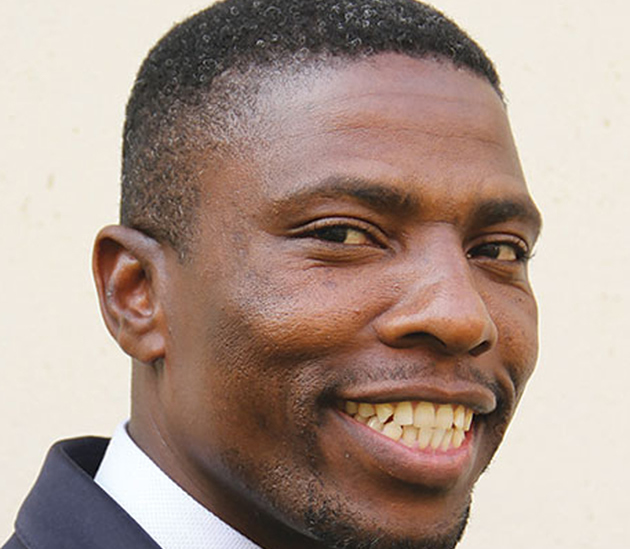

Business Reporter
THE National Railways of Zimbabwe (NRZ) management has pleaded with the government to take over the responsibility of maintaining the railway infrastructure and pay for its loss making passenger trains to ease the burden and allow recovery of the troubled parastatal.
Dexter Nduna, the chairperson of the Parliamentary Portfolio Committee on Transport and Infrastructural Development told Parliament that the two propositions were contained in the Railways Amendment Act, which is yet to be implemented.
Management believes the implementation of the two proposals is crucial to turning around the fortunes of NRZ.
“The first is that the responsibility for the maintenance of railway infrastructure be passed to the central government,” he said while presenting a report on the state of affairs on the company.
“Currently it was submitted that passenger trains were running at a loss. The Committee learnt that every single train that NRZ ran, even during the best of the days when the trains were running on time and were full, they were still making a loss.
“It was pointed out that very few railways in the world make profit because of the nature of passenger trains. They (management) said the Railway Amendment Act provided that for the loss that NRZ makes on the passenger trains, the government would pay provided it’s clear.”
Up to date Nduna said Treasury has not been able to pay for the loss. Nduna said the loss making passenger trains were only contributing three to four percent of NRZ revenue.
NRZ is battling operational challenges with workers staging repeated strikes demanding their outstanding dues of up to $68 million. The company owes more than $200 million to different creditors having lost business over the years due to economic downturn and ageing fleet, which has eroded its income.
Nduna said his committee has observed that NRZ has become a liability to the government and noted the need for the shareholder to recapitalise it either from the fiscus, investors or accessing a loan.
He stressed the need for self-introspection by the management of the parastatal to have a holistic approach to the problems that led to the current situation.
The committee noted the need for the government to regulate the loads that should be carried by rail only so as to protect the road network and at the same time protecting NRZ from unnecessary competition from haulage trucks.
“This can only be possible after all the operational challenges faced by NRZ have been solved and the parastatal starts operating professionally and deliver on time to its clients. If NRZ is paid its dues, the committee feels that some of its financial problems can be solved,” said Nduna.
Presently NRZ has a staff complement of 6,500 employees, a figure too high given the amount of business. Nduna said acting general manager Louise Mukwada explained that NRZ’s bulk business comes from cargo and freight.
The parastatal has a small real estate portfolio that contributes three percent of its revenue. In terms of cargo and freight, the bulk of revenue comes from energy and mining commodities like coal, chrome ore, granite, phosphate rock and fuel among others.
NRZ also runs a company called Road Motor Services (RMS) (Pvt) Limited, which is also facing operational challenges.
The number of locomotives, wagons and coaches has declined since 2000 due to lack of capitalisation and credit lines. Locomotives declined from 101 to 80, wagons from 9,019 to 5,824. Locomotives’ ages range from 32 years to 50 years compared to a lifespan of 25 years and wagons range from 45 to 60 years against a lifespan of 40 years.
Nduna said a complete overhaul to the passenger coaches was needed in order to restore them to a decent state and proposed a phased replacement programme whereby, every five years NRZ buys new a fleet of equipment to gradually replace the old fleet.
Among the recommendations for the resuscitation of NRZ is the need to conduct a forensic audit that will assist the evaluation of viability of the company and how it can be saved from the present state.
The government has been urged to urgently resuscitate RMS so that it augments the operations of NRZ and also consider the exploitation of mineral rights owned by NRZ outside the country as a matter of urgency.
The committee also recommended that the government should urgently gazette a Statutory Instrument that stipulates that all bulk transportation of coal, chrome ore and other bulk goods should be carried by rail only while Treasury should immediately use the offset principle to settle moneys owed to NRZ by other government departments or parastatals like the Grain Marketing Board.



 Online Reporter