Nqobile Bhebhe, Zimpapers Business Hub
THE National Railways of Zimbabwe (NRZ) has unveiled an ambitious long-term strategy to establish a nationwide network of mineral logistical hubs and new rail links to support the country’s expanding mining industry.
This builds on the successful launch of a new lithium export corridor linking Gwanda Lithium Mine to the Port of Maputo.
The strategy comes as the railway operator seeks to position itself at the centre of Zimbabwe’s growing mining sector while rebuilding freight volumes through bulk mineral transportation.
Speaking on the railway’s long-term vision, NRZ spokesperson Mr Andrew Kunambura said bringing rail infrastructure closer to mines would significantly reduce transport costs and improve the competitiveness of Zimbabwe’s mineral exports.
“NRZ has plans to bring rail heads closer to major mines to cut down transport costs and improve competitiveness.
“New rail routes will be constructed to new major mining centres and these include construction of a rail link from Mutoko to Moatize in Mozambique and from Inthundla to Redcliff.
“The West Nicholson initiative is just the beginning. More such hubs will be set up so that lithium is transported by rail.
“The hubs will be set up at Zvishavane (Sandawana Lithium and Bikita Minerals), Dete (Kamativi Lithium), Shangani (Zulu Mine Lithium) and Goromonzi (Prospect Lithium),” he said.
Mr Kunambura said the success of the West Nicholson project demonstrates growing confidence by mining companies in rail transportation.
“This initiative is significant because it shows that the mining sector has confidence in railway companies moving their commodities to the sea ports.
“The success of this initiative will see more mining houses opting to transport their bulk commodities by rail instead of road.”
The railway operator said the initiative will also increase freight business while preserving the country’s road infrastructure.
“This initiative will also improve rail freight volumes for railway companies as this is new business that has been generated for (BBR) Bulawayo Beitbridge Rail, NRZ and CFM (Portos e Caminhos de Ferro de Moçambique).
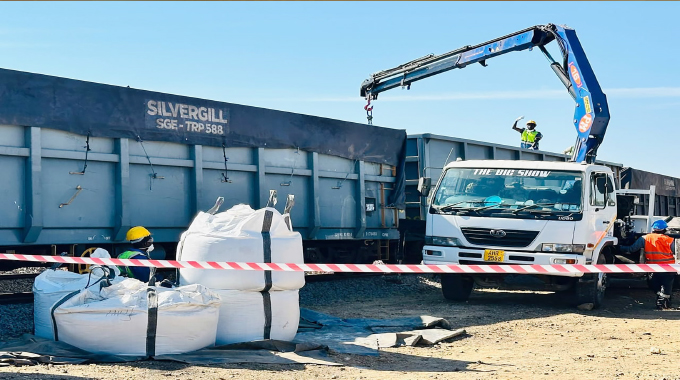
“It is also a major milestone because it will help preserve roads from damage by haulage trucks carrying heavy cargo. By moving 1 000 tonnes of lithium by rail, an equivalent of 33 haulage trucks have been removed from our roads.”
NRZ described the corridor as an important model for regional railway integration.
“The project is testing integration of regional railway systems, which will become a template in the movement of bulk cargo in the region.”
To cater for rising mineral volumes, NRZ said it is upgrading key sections of its rail network while pursuing fleet recapitalisation.
“Currently, infrastructure upgrades are taking place on the Machipanda-Harare section. Plans are underway to upgrade the Bulawayo-Victoria Falls section with support from the Mutapa Investment Fund and the Ministry of Transport and Infrastructure Development so that bulk cargo presently ferried by road, especially coal and coke, switches to rail to save the road from damage,” Mr Kunambura added.
The railway operator said it is also engaging Dinson Iron and Steel Company to extend the railway line from Mvuma to the Manhize steel plant while leasing locomotives from regional partners to meet growing demand as it works towards procuring its own fleet.
NRZ added that strategic partnerships across Southern Africa remain essential in creating an efficient regional logistics network.
“Moving bulk mineral commodities by rail will drive down cost of logistics. Rail is cheaper than all other forms of transport and this will make local miners competitive in the global village if they use rail.”
The announcement follows the successful launch of a new rail export corridor linking Gwanda Lithium Mine to the Port of Maputo, a development that has provided a timely and strategic boost for Zimbabwe’s mineral export logistics while supporting the revival of rail transport.
In partnership with BBR, NRZ recently dispatched the first train carrying 1 000 tonnes of lithium concentrate from the newly commissioned US$1,5 million West Nicholson rail siding.
Under the arrangement, BBR transports the lithium concentrate over approximately 180 kilometres from Gwanda to Beitbridge before handing it over to NRZ, which hauls the cargo to Chicualacuala in Mozambique.
From there, CFM moves the consignment to the Port of Maputo for export through the Maputo Development Corridor.
The project forms part of broader efforts to shift bulk mineral cargo from road to rail, lowering logistics costs, reducing road damage and improving the efficiency of Zimbabwe’s mineral export value chain.
The corridor comes as Zimbabwe strengthens its position as one of the world’s fastest-growing lithium producers.
Official figures show that the country exported 240 826 tonnes of lithium worth US$178,64 million during the first quarter of 2026.
Zimbabwe is Africa’s largest lithium producer and accounts for about 15 percent of China’s spodumene imports, making lithium one of the country’s fastest-growing export earners.
For NRZ, the new corridor provides an important opportunity to rebuild freight volumes, which have declined from about 18 million tonnes annually at its peak to around 2,1 million tonnes due to ageing infrastructure, rolling stock shortages and years of underinvestment.
The additional lithium traffic is expected to provide a sustainable source of bulk freight while supporting the railway’s long-term recapitalisation and infrastructure rehabilitation programme.