Sidumisile Mabena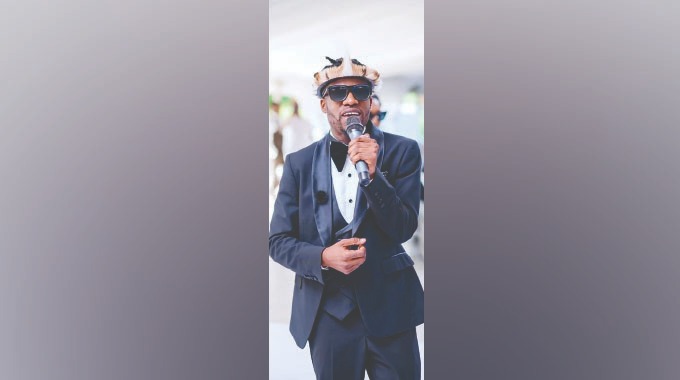
Local Afro music artiste Butholezwe Ntini is making his mark on the scene. With a career spanning over a decade, he has developed a distinct sound across Zimbabwe and South Africa, mainly Afro-infused.
During a five-year stay in South Africa, Butholezwe gained exposure with airplay on major platforms such as Channel O and Ukhozi FM. His journey began in primary school and has grown into a career marked by milestones, including winning a Pumula Royal Arts and Community Awards (Praca) in 2024 and earning multiple award nominations. His EP, UThando Lwentombi Emnyama, performed fairly well.
This week, he is featured on On the Spotlight with DJ Prince Eskhosini. Below is the interview.
Q. When did you venture into music?
A. I’ve always had an ear for music. In primary school, I loved the sound of the marimba and even bought a small one to play at home. I think the gift was always there, but I gained confidence later in high school when I joined the school choir as a bass singer. I later became one of the founding members of an a capella group called Oasis, and we competed in the first edition of StarBrite Zimbabwe. In 2015, I recorded my first single, My Voice, but I didn’t release it due to discouraging feedback, as it wasn’t properly mastered. I officially launched my music career in 2019 when I recorded my first EP, UThando Lwentombi Emnyama.
Q. Your music has a unique blend of styles. How would you describe your genre, and what inspired this fusion?
A. I’d describe my music as a fusion of Afro-soul, pop, and jazz. At the time of UThando Lwentombi Emnyama, my biggest inspiration was Afrotraction.
Q. Growing up in a family of 11 in Thorngrove, Bulawayo, must have been vibrant. How did your upbringing shape your music?
A. In my family, there are people with a good ear for music, but we all love different sounds. I grew up listening mostly to a capella music. I was raised in an SDA family set-up, so at Bahs, which is an Adventist school, the music is centred on acapella and close harmonies. That really opens your creativity in terms of arrangements, notes, rhythm, melodies, and harmonies. It was a great privilege to attend that school because most of my musical influence came from there.
Q. What’s your creative process like when writing and recording music?
A. When I started writing music, I would think of concepts first, then come up with a melody with the lyrics already fitting in. After that, the producer builds on top of the song. These days, my creative process is more spiritual because I dream of songs.
Q. In the industry, with whom have you collaborated, and how was the experience?
A. I’ve had so many collaborations. I have a song titled Sithembile, where I featured Beyond Vocal South Africa. I really loved working with the gents — when great vocalists meet, kuphuma uluju lodwa. I learnt a lot from the Grootmans. Another feature I’ve always cherished is the Thandy Dhlana feature (Izigwenxa Zomlomo), an amazing soul to work with, very musically gifted. I also featured Golden SA (Umona), Mzoe 7, Macala, and Xantel, just to mention a few.
Q. What is it like performing live, and how do you prepare for shows?
A. As for performance, I think I still have a few aspects I need to work on and perfect, as music performance is more than just singing. I still need to learn dance moves and how to engage the crowd, but I do well in live performances because I am an amazing vocalist. My preparation is mainly vocal-based; I do a lot of vocal exercises and drink plenty of fluids.
Q. What would you consider your highs and lows in the industry?
A. I have had my lows, where I stayed for long periods without being able to record due to financial constraints. Sometimes, as a performing artiste, if you don’t get gigs, you end up thinking of quitting. My highs were mostly in South Africa, where I got to see my music reach remote places far from Johannesburg through a lot of airplay on both radio and TV. I also think I enjoy performing at weddings where I flourish the most.
Q. What’s next for Butholezwe after the success of Uthando Lwentombi Emnyama?
A. I am dropping a 14-track album titled Ibutho.


 Online Reporter