admin
admin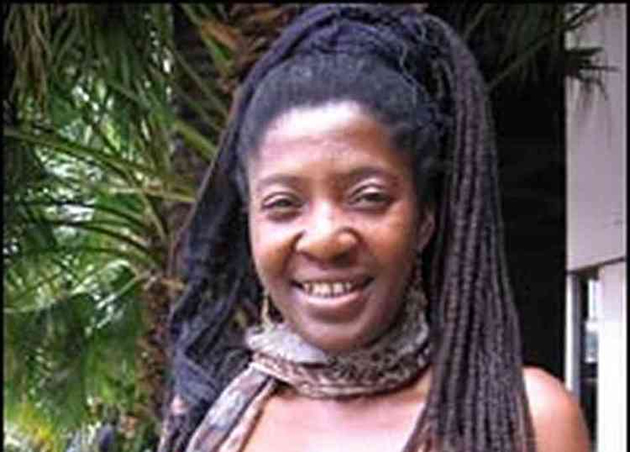
Elliot Ziwira @ The Book Stotre
“Some birds are not meant to be caged, that’s all. Their feathers are too bright, their songs too sweet and wild. So you let them go, or when you open the cage to feed them, they somehow fly out past you” (Rita Hayworth and Shawshank Redemption: “A Story from Different Seasons).
The notion of freedom usually finds meaning in the hearts of those whose progenies perished in an attempt to wade away from the sinking ships of their dreams, yet remaining snared in the same aspirations that shape their destiny; and that destiny can never be separated from the land.
“The land is sacred! These words are at the core of our being. The land is our mother, the rivers our blood. Take away our land and we die. That is, the Indian in us dies. We’d become just the sun-tanned white men, the jetsam and flotsam of your great melting point,” so reasons Mary Brave Bird; and Nilene Omodele Adeoti Foxworth concurs in “Bury Me in Africa” (1978): “A People without land are like cattle on naked ground with nothing to graze. They just mope around hopelessly.”
Freedom becomes a fallacy if it does not translate to ownership of the land; and it is the issue of the land that was central to the protracted liberation struggle which gave us independence as a sovereign country; it is this same thorny issue that has led to the demonisation and vilification of one of Africa’s greatest sons, Robert Mugabe, whose aspirations are embedded in total independence of the people of colour. It is indeed the issue of the land that led many a child of colour to take up arms against oppressive tentacles fashioned to wrestle the pie from the mouths of the oppressed.
Among such sons and daughters who sacrificed their all for the Motherland was Tichaona Freedom Nyamubaya, who passed away on Sunday July 5 2015 at the age of 57 and was interred on Saturday July 11. May her dear soul rest in eternal peace!
The Bookstore is poorer, though remaining enriched, without the blessings of one of the literary world’s greatest luminaries, whose chosen path remains thorny in the absence of resilient and courageous likes of her.
Weep not gentle citizen, friend and countryman, for Freedom is not dead; she lives in the depth of our literature; the literature of combat which resonates with yearnings of a world that we wish to live in, and yet seems to be ever receding to the horizon. She lives among us today, tomorrow and forever, just as she used to do yesterday.
To Nyamubaya, freedom; which indeed is her name, is more profound than mere rumblings for perceived liberation. It is the ultimate feeling of deja vu which gives one access to a humane livelihood. The freedom to claim ownership of the means of production and all that makes it possible to live without merely existing.
Having fought for freedom during the liberation war, the writer’s realisation that the enemy to universal freedoms is neither here nor there, but is embedded within; and is colour blind, the writer shed her war regalia for the mighty pen which culminated in the roar of a natural poetic instinct birthing “On the Road Again” (1986) and “Dusk of Dawn” (1995). It dawned on her that the war never ends for the downtrodden, but it is only the weaponry and the antagonists that change.
She is all too aware that “a man’s country is not a certain piece of land, of mountains, rivers, and woods, but it is a principle; and patriotism is loyalty to that principle” (George William Curtis).
A perusal through our literary cache will expose the different ways in which the revolutionary zeal and ideology is depicted, and would be incomplete without Nyamubaya’s immense contribution. Like Alexander Kanengoni and Thomas Sukutai Bvuma, she falls under Generation Two of Zimbabwean writers, as categorised by Viet-Wild (1993).
The trio’s experiences in the liberation struggle demystify the notion of the guerilla fighter as an impregnable genius, who could disappear from the enemy’s canons and author his own epic. Although the artistes exploit different genres, in their depiction of the war of liberation as dehumanising, disillusioning; psychologically and morally degrading, the way they vividly bring the horrendous nuances of the phenomenon to the fore, evokes sadness, ire and disgust.
Nyamubaya is contemptuous of the blatant exposure of brutality inherent in mankind which usually rears its ugly head during war times in “That Special Place” (2003), as she relives her sojourns in Mozambique where the vulnerability of womanhood is laid bare. There is something really traumatic about war that only those who never experienced it cherish. But to those who were part of the gory violence, the provoking hopelessness and the inevitable dementia of a traumatised soul, there is nothing glorious about war of any nature.
In “That Special Place” the narrator is raped by the Camp Security Commander, Nyati who deflowers her at 15, not because she is a woman, but because she has also gone to school up to Form 3 which was jealously frowned at.
As a natural poet, Nyamubaya embraces the connotative and denotative levels of poetry in the poem “A Mysterious Marriage”. Denotatively, the poem is about two children whose ideologies are infringed upon by “armed robbers” culminating in their decision to seek solace in blood and iron as it dawns on them that armed confrontation is the only vent out. In their search for freedom, they get married; coming home after the war, to wild cheers and merriment characteristic of a “wedding”. Unfortunately, the grand wedding anticipated fails to take place as only the bridegroom is present and the bride fails to materialise, much to the chagrin of the waiting crowd, which feels cheated and betrayed.
Freedom Nyamubaya highlights the other side of the guerilla fighter and the essence of culture in “Dusk of Dawn” (1995). The book is a collection of short stories and poems based on the liberation struggle and its aftermaths. Though the defeatist tone pervading the short story “That Special Place” is also prevalent especially in the poetry section, as reflected in the metaphorical title, the guerilla fighter is not portrayed as sadistic, implacable and brutal, but humane and fallible.
In the story “The Works of Mudzepete”, Nyamubaya hoists the reader on a whirlwind voyage of intrigue as she examines the psychological effect of the war on the individual psyche through Temba who strives to escape from the traumatic nature of battle through a potent illicit brew, mudzepete, which heedlessly intoxicates him to such an extent that he directs the enemy troops to their hiding place.
Indeed Freedom Tichaona Nyamubaya; an epitome of freedom, is always on the road for her people, now she is “On the Road Again”. Tread well great daughter of the soil! You are leaving us poorer, yet richer!


 Online Reporter