

 admin
admin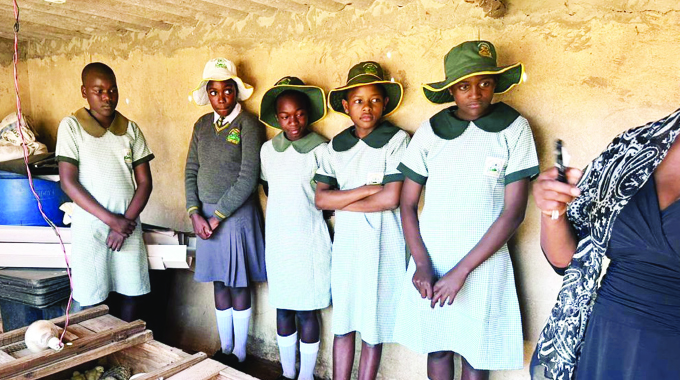
Rumbidzayi Zinyuke
Senior Reporter
In line with the heritage-based Education 5.0, Nyamhuka Primary School in Nyanga is running a thriving business unit and fostering a culture of entrepreneurship among learners.
The school business unit, which is run by the learners with the guidance of teachers, district extension officers and the district schools’ inspector, provides hands-on training in agriculture, business management, finance, and marketing.
School projects include rabbit rearing, poultry farming, fish farming, vegetable farming, an orchard as well as greenhouse farming where learners from Grades 2 to 7 take the lead in managing the projects. The school also has a land where they grow maize every year.
Agriculture teacher Mr Gift Nemaunga stressed the importance of agriculture for learners to become self-sustaining.
“It is important that learners learn all aspects of agriculture so that they can sustain themselves later in life. They learn everything done in agriculture so that they can do everything on their own, even at home. Here at Nyamhuka we have learners who are running the rabbit project and they have started doing the same at home,” he said.
The school business unit is not only bringing income for the school but has also been providing nutritious meals for learners under the school feeding programme. Mr Nemaunga said this had reduced the burden on school resources tobuy the relish for the programme.
“The learners are interested in being hands-on in these projects so we are cultivating that culture whereby learners know that we are not learning to be employed but when they learn, they should get the skill to even go and start their projects wherever they go and they become their employers,” he added.
Wishes Putirwa, a learner who manages the rabbit’s dietary needs, said she “oversees when other learners feed the rabbits to make sure that they give them the correct foods.
Most of the time we feed them green grass and pellets but when we use pellets we must also put in a lot of water because they could die from constipation,” she said. Another learner, Nyasha Mawoko, is responsible for marketing the project said their rabbits were being sold at local hotels as well as in the communities.
“I am responsible for marketing the rabbit project and l receive all the money that we make from the sales. We sell our rabbits locally at the Montclair Hotel and Village Inn Hotel and to some of the families in the surrounding community who also come in to buy our rabbits. This is a profitable project and we can assist other learners who cannot afford to pay for school supplies,” he said.
With 145 rabbits in the project being sold at US$5 each, the school expects to raise money for another project next term.
Hailey Waler, a Grade 2 learner said she enjoys applying manure they take from the chickens to the vegetables that they are growing. “Vegetables help us grow so we like helping to take care of them. Every day, we apply manure and water the vegetables so that they grow well,” she said.
The business unit has significantly improved its commitment to learning, with notable increases in attendance rates, academic performance, and confidence.
Nyamhuka Primary School Head Dr Doit Chikanyau commended the introduction of the schools’ business units by the Government. “We learnt that we are supposed to embark on what we call the Brazilian model whereby we need to produce our food in the school environment so in this school, we have got a nutrition garden, where we are growing a lot of vegetables.
“We also practice smart farming where we have rabbits, we do layers and broilers and our parents also chip in. We have been able to sell from the garden and the money is sustaining the school feeding programme. The feeding programme helps to prevent absenteeism,” she said.
The Ministry of Primary and Secondary Education launched the school business unit model this year with the aim to capacitate schools with skills and equipment to financially sustain themselves through green-energy-drive, innovative and productive agricultural projects. These are part of a broader Government initiative targeting to establish 10 000 business units by December this year. These include youth business units, school business units, irrigation business units and village business units.
These units foster entrepreneurship and enhance skills development to uplift communities countrywide.



 Online Reporter