admin
admin
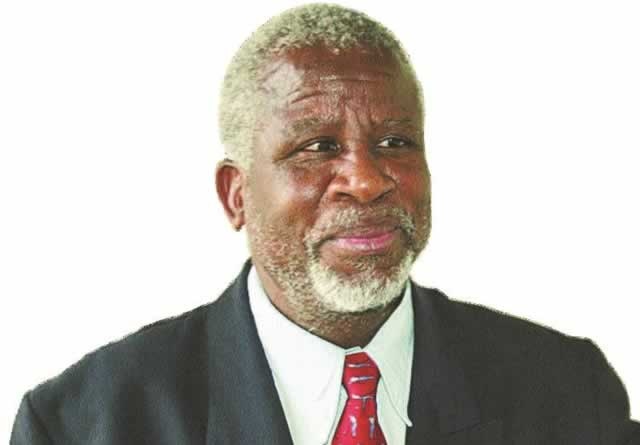
Richard Runyararo Mahomva
On Friday, I attended the Midlands State University (MSU) International Culture and Diversity Day. It was quite exciting for me to be back at MSU, my academic home. Likewise, I had the opportunity to reconnect several intellectual comrades discussing various issues of national and continental importance.
The discussion I had with one Umali Saidi, a Doctor of Philosophy to be in the area of visual and cultural communication influenced me to consider the importance of localising our theoretical and methodology framings in the academia. The route of the discussion to this end emerged from our random review of several academic work that has been published recently by other colleagues. Part of the discussion was our discontent in the excessive use of European scholars in the African academic space in interpreting African experiences. Surprisingly, we discovered that we are also guilty of the same academic vice.
The Doctor to be, Mr Saidi emphasised on the need for epistemic disobedience from this conventional academic fault which is now normalised in the continent. “Why are we not framing theoretical concepts from the abundant contributions of Professor Vambes, Bhebes and the Mudhimbes of this world? Saidi lamented.
The answer to that question is that the market of ideas has been congested by Western thought which is imposed in the production of universalised knowledge. We also see this coming out clear even in the inaugural decolonial thinking guided by Marxism giving birth to African scientific socialism. Africa has produced several scholars, but every time we need to explain our realities in theory and methodology we turn to the knowledge of the West.
It is as if we do not have minds of our own that can better explain our conditions. This is what prompted me to try and reflect on the aspect of Zimbabwe’s schizophrenic underpinning of national belonging. In a different article, in this newspaper I explained how we continuously refer to foreign scholars to explain our nationalism. As I am writing, the national-pledge debate still dominates public conversation. Maybe, it is high time we start making reference to local thinkers more in a proposition to shape our national discourse in local terms. As a result, this week I have seen it befitting to invite Pathisa Nyathi (2005) and Cain Mathema (2013) in an attempt to explain the next resort Zimbabwe has in order to remain united. Zimbabwe’s nation-building process stands challenged by several issues and hence the relevance of the Afrocentric paradigm of conceptualising the “nation”.
Cetshwayo Zindabazezwe Mabhena my column neighbour in this paper also wrote on the “Organic intellectualism of Pathisa Nyathi. Therefore, I thought it would be imperative to assess how Nyathi’s writings alongside Cain Mathema book Zimbabwe Diverse, But One can better redefine the concept of the nation from an Afrocentric point of view. This week, I won’t start by delivering an intense analytical approach for both books under review. My point of departure will be a general synopsis of the two publications.
Pathisa Nyathi: Zimbabwe’s Cultural Heritage
Zimbabwe’s Cultural Heritage is a collection of essays on the culture of the Ndebele, Xhosa, Tonga, Shona, Kalanga, Nambya and Venda ethnic groups of Zimbabwe.
The author offers a brief historical background for each group providing the reader with a contextual framework to appreciate and understand the various cultural practices under review. According to Nyathi, in the book’s introduction, “Zimbabwe’s Cultural Heritage was born out of a desire to promote and preserve for posterity our nation’s cultural traditions.”
In the years following Zimbabwe’s independence, literature tended to sketch out grotesque images of colonial rule while also being a conveyer-belt of optimism for the better days ahead (Waiting for the Rain), the constructed history eulogising the newly born “nation”
However, other writers began to express deep disgruntlement, to them all they could see was a “Long Time Coming”, rather a delayed dawn of Uhuru. In the contested terrain of identity and belonging, Pathisa Nyathi, decided to “decriminalise” the subject of ethnicity, thus validating Brilliant Mhlanga’s call for the celebration of ethnicity and not criminalising it through narrow nationalist discourses. Zimbabwe’s Cultural Heritage offers a unique contribution to the subject of belonging in Zimbabwe. It avoids both the idea that “patriotic history” should take the lead in constructing the national image, and the anti-nationalist narratives. Hence Nyathi’s work steps away from the literary norm of this time.
He states on the back cover that “the emphasis of this book is not on the histories of the groups, but on their cultural practices.” This substantiates the unique character of the text and makes it a relevant point of reference in cultural research. It is outstanding discourse compensates for the limited narratives of its kind in Zimbabwe where literature is often politicised and ethnic narratives further polarise the nation. Though Zimbabwe has a variety of cultures, it has inherited a legacy of a domineering culture, resulting in the younger generation being ignorant of their cultural roots. Nyathi’s work clearly sets out the differences and the commonalities of the cultural practices of the groups considered in the text, demonstrating that there is a “Zimbabwean Cultural Heritage”. Nyathi searches into the empirical depths of ethnic values and norms and how these define belonging and identity.
When Nyathi speaks of the Ndebele it is clear that he is an insider. Here oral tradition is still alive in the 21st century and can be used as a research method. At the same time written history validates his submissions. The language and tone is not discriminatory, it speaks to all age-groups. Nyathi’s style of inter-marrying English with local languages helps in articulating the key issues. The indigenous terms used give life to the isiNdebele, Venda, Kalanga and other groups’ practices.
There is more of an emphasis on the Ndebele than on the other groups; perhaps this is to balance their relative absence in other historical narratives of the ‘nation’. Not all ethnic and racial groups in Zimbabwe are considered in this text and one would hope for a second volume to give consideration to these.
Above all, Nyathi has shown that ethnic groups are pillars of national consciousness and that they must be celebrated in order to dismantle any leanings towards intolerance.
Cain Mathema: Zimbabwe Diverse, But One
On the different side of the same coin, Cain Mathema (2013) argues that; Zimbabwe is diverse, but one. His assertion is anchored on the Chimurenga past as the binding factor of nationalism. He acknowledges diversity in terms of ethnicity, but tries to use the aspect of “imagined blood-ties” to say as Zimbabweans we are “relatives” because of ancient old inter-marriages that gave birth to the country’s present day citizenry. He addressed this in his poem Maze of blood in the above named book.
He accuses the settlers for tribalising Zimbabwe and making the people tribe conscious instead of being nation conscious as proved by the first Chimurenga forefathers and the second Chimurenga generation. He raises the common subject of patriots and sell-outs.
This linearisation of the nation has been opposed by several European scholars including David Beach (1986).
However, apart from the linear construction of the nation the book provides a summative account of the African perspective of togetherness instead of the European model of realism engrossed in capitalist and selfish thinking.
The publication foregrounds the view that diversity of a people reflects the beauty of plurality. This is confirmed by the Ndebele adage, ukwanda kwaliwa ngabathakathi. This adage is loosely translated as: It is only witches and wizards who hate prosperity and human development. This is why Mathema (2013) can be validated as a promoter of the Afrocentric paradigm of defining the idea of the nation. This is because plurality is a cause for celebration and appreciating dissent of those who assume belonging in any community defined as a nation.
Richard Runyararo Mahomva is an independent academic researcher, Founder of Leaders for Africa Network — LAN. Convener of the Back to Pan-Africanism Conference and the Reading Pan-Africa Symposium (REPS) and can be contacted on [email protected]



 Online Reporter