admin
admin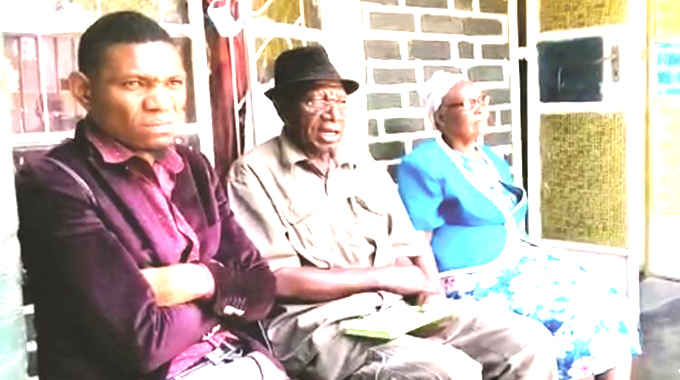
Phyllis Kachere Deputy News Editor-Convergence
“Kune nzira dzemasoja dzekuzvibata nadzo
Teererai Midzimu yose nenzira dzakanaka
Tisave tinotora zvinhu zvemasi yedu
Dzoserai zvinhu zvose zvatorwa kumuvengi
Taurai zvine tsika kuruzhinji rwevanhu kuti masi inzwisise zvakananga musangano
Bhadharai zvamunotenga nenzira dzakanaka
Mudzosere zvinhu zvose zvamunenge matora
Tisave tinotora zvinhu zvemasi yedu
Dzoserai zvinhu zvose zvatorwa kumuvengi
Tisaite cheupombwe muhondo yeChimurenga
Tisanetse vasungwa vatinenge tabata
Aya ndiwo mashoko akataurwa naivo vaMao vachitidzidzisa.”
As his deep voice moves from an almost meek whisper to a powerful bellow of the lyrics above, Cde Paul Chigango, whose Chimurenga name is Cde Sando Muponda, rises to attention. His demeanour changes as relives that sombre moment when he composed and first sang the song at Mgagao Base Camp in Tanzania in1974. He was just about 17 years, Cde Chigango’s body shakes.
As he stands akimbo, his wife, Mrs Norah Muguta-Chigango whose Chimurenga name is Cde Muchaneta Mabhunu rises from her seat to join him in attention but in silence until he finishes singing the song that many have described as the embodiment of Zimbabwe’s liberation struggle’s guiding cardinal commandments.
Cde Chigango explained that he composed the song while at Mgagao Training Camp soon after completing an orientation session on the guiding principles for Zimbabwe’s liberation struggle.
“We had just finished an orientation session on Chairman Mao Tse Tung’s Red Book, which became the guiding principle during the liberation struggle.
“I wrote the song based on Chairman Mao’s military doctrine ‘Three Rules of Discipline and Eight Points of Attention’.”
In China, Chairman Mao’s doctrine was developed as the code of conduct guiding the Chinese Red Army and later adapted as the basis that informed the liberation fighters’ interaction with the masses during Zimbabwe’s liberation struggle.
“Coming from a background of being an active member of the Johanne Marange where I strongly participated in composing songs and singing them as I attended a Seventh Day Adventist school, Kadohwata Primary School, I naturally was a good music composer.
“I composed the song, Kune Nzira DzeMasoja using Cde Mao’s Eight Points of Attention and fused the words with the melody of the Seventh Day Adventist Hymn 125. This was not the only song I composed.
“I immediately joined the recreational/entertainment group soon after my arrival in Zambia for training,” said Cde Chigango who, together with more than 15 other extended family members had crossed into Mozambique to join the liberation struggle from Dotito in Mt Darwin at the end of 1973.
He said he also composed the words on Sendekera Mukoma Chakanyuka that also became popular during and after the struggle and Rimwe Zuva Zvangu, among others.
“I sang with Cde Johnny Walker Mukorekore who died in a battle and Cde Murehwa who played mbira but died after independence.
“Unlike most comrades who left for the struggle under cover, I bade farewell to my parents before I crossed into Mozambique and a beast was actually slaughtered with all the traditional rites being performed before I left.
“My two uncles who worked for the Rhodesian forces had sold out and the liberation fighters who were operating in our area had warned us against such. They sought to give an example to the povo. We had been warned against selling out. And when my uncles were killed as punishment for selling out, I got motivated to join the struggle,” he said.
Cde Chigango said they walked from Chigango Village to the border where they crossed into Mozambique and arrived at Teresera base.
“I was trained that same year and joined the brigade that smuggled weapons to the front. We would carry the materials via Zambezi. We also carried the materials from Kaponda and would leave them for safe keeping at Njodzi’s place.
“That time Teresera was led by Cde Kashiri. During that time, there was the Badza rebellion and those who had arrested Cde Tungamirai and others were eventually arrested. We went to Zambezi and crossed the river into Zambia using a banana boat popularly known as ‘chimwadiya’.”
He said they were taken to Mawazaninga which was led by Cde Killian Butu who had not yet trained. They carried materials to Chifombo Base where they met Cde Kumbirai Kangai and others.
“From there, we were taken to Lusaka Farm which was led by Cde Chikavangwena. It was at the Lusaka Farm that I was incorporated in the Recreational group and I started composing Chimurenga songs.”
Cde Chigango said while at the Lusaka Farm, it was announced that 400 cadres who had perfected their drills and individual tactics would be transported to Tanzania for further military training.
“I was not yet ready but desperately wanted to join the selected 400. The Organisation of African Unity trucks were to ferry the cadres to Tanzania and I clandestinely joined in. When we arrived at Tunduma border between Zambia and Tanzania, the authorities noticed that instead of 400 cadres that were indicated on the papers, there were 401. I was the number 401 and I knew they would not be able to tell I was not supposed to be there.
“We were allowed to pass and arrived at the Tanzania People’s Defence Forces at Mbeya. From there, we went to Iringa where we were given food supplies to carry to Mgagao. And our group became known as the 401 battalion.
“Cde Robson Manyika was camp commander at Iringa. At Mgagao, the commanders were Cdes Rex Nhongo, Joseph Khumalo and Dzinashe Machingura.
“Cdes Dominic Chinenge (now VP Constantino Chiwenga), Retired Air Chief Marshal Perrance Shiri, former police Commissioner General Augustine Chihuri, Modern Mutsetse, Aginyu Kambewu (Brig General Chimombe), who raised independent Zimbabwe’s flag at independence on April 18, 1980, Grey Tichatonga, Pfepferere, Parker Chipoyera and George Rutanhire were some of our instructors.”
Cde Chigango said he was trained in the various military departments like commissariat, security, and artillery.
“As I rose through the ranks in the recreation department. I also shared my room with now Zimbabwe Prisons and Correctional Services Commissioner General Paradzai Zimondi. My peers were Harry Tanganeropa (former ZBC chief executive Happison Muchechetere), Cde Chibage and Phineas Nyamhandu. I led my entertainment group named Chaminuka Entertainment Group. Cde Tambaoga was also in my group.”
He said the entertainment groups would provide entertainment to the weary cadres and boost morale.
“We also sang jiti music and in 1975 I was sent to Chimoio where I continued with my entertainment role but soon after General Nhongo went to the front in the Gaza Province, I was deployed to Nyadzonia as detachment political commissar. I also served at Chibawawa and Torongo. We would make banjos with Cde Ketai Muchawaya and other members of the entertainment groups through which we would provide the much needed morale in the camps.”
He said they also recorded some of their music in Maputo and soon after was promoted to become a member of the General Staff. Cde Nhongo immediately promoted him to Chibawawa Camp as political commissar and as deputy camp commander to Cde Leonard Pfumo.
“That time, Cde George Rutanhire was sent to Chimoio as a trustee. From Chibawawa, I was deployed to Tembwe in 1976 and Cde Makasha was camp commissar. I was later to accompany Gen Nhongo, Mark Dube, and Cde Shiri in the Takawira Sector. I was assigned to Cde Bonewell Masawi’s grave, who had been killed in a battle in Mutoko.”
While he was in operation in Pfungwe, Maramba, Uzumba and Mangwende areas, in 1977, Cde Chigango was called back to Mozambique for a new mission.
“I was tasked to go and rescue Cde Chando Mukwanisi, a medical officer who had been captured by the Rhodesian forces during a battle in the Chaminuka Sector (Chikwaka area). He was being kept at an army camp in Bindura.
“I managed to communicate with him and he expressed his desire to be rescued and go back to Mozambique. I mobilised 13 comrades and seven bicycles which we used to transport him to the border and into Mozambique as he had been badly injured. In the same year, I went back and led the attack on Benson Mine in Mutoko.”
Benson Mine was a few kilometres from the Rhodesian Mutoko Army Camp and was feared and deemed a challenge to attack.
After the Benson Mine successful attack, Cde Chigango moved to the Chitepo sector which encompassed Nyatate, Nyanga Chendambuya, Chikore and surrounding areas.
During the ceasefire period, Cde Chigango went into the Ellem Mission Assembly Point in Nyanga but was called to the University of Zimbabwe in Harare where other senior military commanders were stationed.
“I was asked to go to the Goromonzi Assembly Point after we had been briefed to attend a traditional welcome party in Zvimba for Cde Robert Mugabe. After the party, we went straight to Goromonzi where musicians like Thomas Mapfumo would come and listen to our music. We had formed the Zanu People’s Band and our promoter was Cde Simba Mudariki,” he said.
While at Goromonzi Assembly Point, Cde Chigango said his parents visited him and went home with him.
“Having spent years in the bush, I found it uncomfortable to sleep in the bedroom that my parents had prepared for me. I slept in the bush, I could not trust anyone, including my own parents.
“While at Goromonzi, I also formalised my union with my wife who had been deployed in the Wedza area. My brother went and paid lobola to her parents. We have four children-Ottilia, Size, Prosper and Pascal.”
As the Zanu People’s Band’s popularity grew, the members led by Cde Chigango travelled across the country for live shows.
In 1981, he was sent to Romania for training and when he came back he realised all positions in the new Zimbabwe National Army had been taken up.
“I reluctantly hung my gun, to join civilian life. All my juniors had filled up positions during the integration period and I was hurt by that. I gave up and stayed at home but having been a senior member during the struggle, a comrade that I had fought alongside me Cde Ndoda Hondo now Cde Vhemba Mutandadzi called me and asked me to join the Ministry of Youth in 1982.
“I was deployed to Gweru and Mvuma. I resigned 12 years later and joined the Gweru City Council as a municipal police officer in the Housing Department. When the National Youth Service programme started, I resigned from Gweru and joined as an orientation officer and was deployed to Mt Darwin in 2003. I also served in the Midlands province at Dadaya Training Camp in Zvishavane where I was deputy commandant,” he said.
While Cde Chigango is a proud beneficiary of the land reform, he feels the Chimurenga principles they relied on during the struggle need to be revisited and set straight as chancers are still trying to hijack and turn them upside down.
“Chancers have been fighting Zimbabwe. But we will not allow them to win. We have to go back to our principles. This is not the Zimbabwe I envisaged when I was fighting for the liberation of this country.
“Chancers have hijacked our revolution but I am hopeful this will be sorted as more and more comrades retire from the army to join politics as civilians.
“Zimbabwe has been fighting against sanctions that were illegally imposed on her soon after the land reforms. We fought for this land and these sanctions will not force us to give back our heritage. No, we won’t give in!” he said.



 Online Reporter