admin
admin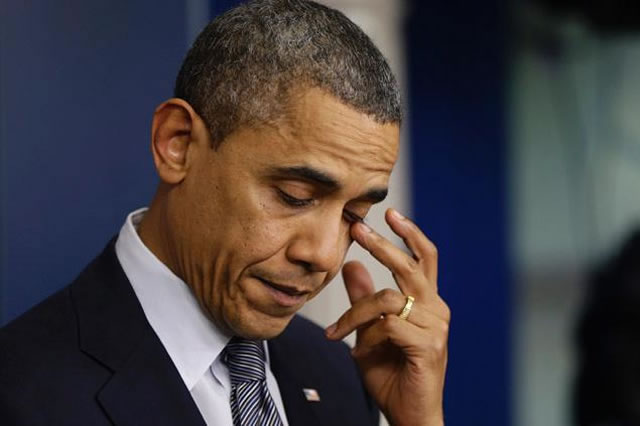
Felex Share Harare Bureau
US President Barack Obama has for the first time admitted that the illegal economic sanctions his country imposed on Zimbabwe in a bid to force illegal regime change were punishing ordinary people and needed to be reviewed.
Obama, who was speaking during an interview with Zimbabwean ICT entrepreneur Takunda Chingonzo, 21, at the US-Africa Business Forum in Washington, conceded that America had to “refine” the sanctions regime so that they do not affect businesses and ordinary people.
His admission is a major U-turn on the effects of the sanctions which his country had always insisted that they were targeted at President Mugabe and his inner circle and companies linked to Zanu-PF.
But in reality they knew the sanctions were meant to cripple service delivery in Zimbabwe and force people to revolt against the government.
But Obama said the US was in a quandary to balance the measures to ensure that they did not hurt ordinary people.
“Well, obviously, the situation in Zimbabwe is somewhat unique,” he said. “Let us see if we can refine them (sanctions) further based on what you are talking about.”
“The challenge for us in the United States has been how do we balance to help the people of Zimbabwe with what has frankly been a repeated violation of basic democratic practices and human rights inside of Zimbabwe, but you are absolutely right it also has to be balanced with making sure that whatever structure we put in place with respect to sanctions do not end up punishing the very people inside those countries.”
Obama then suggested a meeting with young Zimbabwean businesspeople to discuss the issue further.
“So, what I suggest would be that we set up a meeting what kinds of things the young entrepreneurs in Zimbabwe want to do and see if there are ways that we can work with you consistently with the strong message we send about good governance in Zimbabwe,” he said.
Chingonzo, a Nust student and co-founder of SaiSai Wireless, openly told Obama that the sanctions were hampering efforts by ordinary Zimbabweans to have business with other countries.
The forum was held during the ongoing US-Africa Summit and was attended by representatives from 200 corporations and 50 African countries.


 Online Reporter