admin
admin
Stanford Chiwanga, Online Reporter
Africa has the ability to achieve sustainable food production and deliver good quality food to feed the continent. However, this potential is not being realised due to a catalogue of barriers. An examination of Botswana, Somalia and Zimbabwe shows that the most common barriers are climate change and low rainfall.
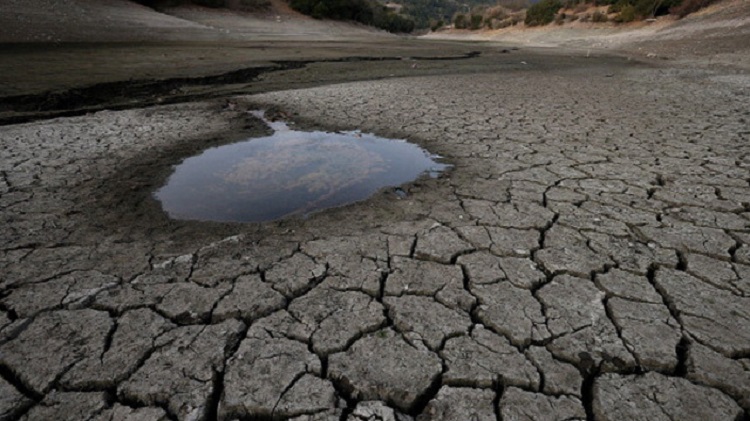
Botswana’s agriculture relies heavily on rains and this has a negative impact on food production as the low rainfall and high temperatures that characterize the rainfall season mean there is high inter-annual variability of rainfall and drought is a recurring element (Department of Meteorological Services, 2009). According to the Seanama Conservancy Consultancy, (2012), drought adversely affects the already fragile food and agricultural situation in the country and seriously impairs the rural economy and socio-cultural structures. Cattle population has reduced slightly from just fewer than 3 million to 2 million.

The low rainfall and high temperatures have resulted in limited arable land and the situation is further compounded by desertification. Limited arable land means most of the land in Botswana is not fertile and this results in low crop yields. The Botswana Department of Meteorological Services, (2009), states that: “As a consequence of low and erratic rainfall, and relatively poor soils, arable production is predominantly a high risk and low input, rain-fed system with low productivity.” According to Statistics Botswana (2012), to remove this barrier to food production, there is need to improve the performance farms in arable land in order to offset the low produce from infertile soils.
The use of available water sources in agriculture in Botswana is not efficient and this inefficiency undermines food production. The irrigation technologies in use are old and not highly effective. The Seanama Conservancy Consultancy, (2012), posits that “the use of dams in Botswana is currently laden with inefficiencies as the dams are used primarily to contain water with little contribution to other development goals such as farming, fisheries and biodiversity conservation.” All these are potentially high value industries that could improve food production.
Lack of research in the field of food production is also a barrier to food production in Botswana. Research is not only about determining how crops and animals perform under different conditions, but it is also about improving their performance under difficult climate conditions to further enhance their economic contribution. According to Tebogo Seleka, (2005), “food production in Botswana is low because there is no diversified agricultural research into new crops and animal products. Food technology research is not intensified enough to promote value addition.”
In Botswana, policies needed to promote food production in the face of climate change are sometimes missing, rigid or inadequate. Seleka, et al, (2002) cites an example of farmers having to reapply to land boards before diversifying their production base. A horticultural farmer has to reapply to the relevant land board before adding a broiler or pig production enterprise. Because land boards are slow in processing applications, this often leads to loss of opportunities and reduces the responsiveness of farmers to dynamic economic and weather conditions. Tebogo Seleka (2005) reveals that there is no capacity to enforce policies. Land boards, for example, do not repossess land that is continuously left idle, even though there are provisions for doing so.
The rainy season in Somalia runs from April to June, this is not enough for sustainable food production. According to Somalia Water and Land Information Management (SWALIM, 2009), “water harvesting infrastructure was destroyed as a result of the conflict and the conflict has also disrupted plans to repair the damaged water harvesting infrastructure and build new ones. The little water harvesting infrastructure that exists is in a state of disrepair because it is not being maintained.” As a result, irrigation systems that could lead to sustainable food production do not exist. Only the wealthy have good water systems and these are not availed to the public (FAO, 2015).
The main driver of low food production in Somalia remains climatic variability which causes droughts and floods. Since a large percentage of food production output in Somalia comes from subsistence farming and pastoralism, this dependency on climatic changes means food production is severely compromised. According to the Food Early Warning Systems Network (2013), climate changes cause successive rain failures and consequent droughts and floods. All this has seen food production declining rapidly leading to low harvests and a further deterioration of the Somali food security situation.
The poor management of natural resources has also been highlighted as a major barrier to food production. The negative effects of poor management of natural resources on food production are more felt in Somalia because the country is an arid to semi-arid country where 80 percent of livelihoods are directly dependent on natural resources (World Bank, 2015). This exposes it to multiple uses without primary concerns for preservation, conservation and recovery (Humanitarian Country Team, 2013). According to FAO, (2015), charcoal production is a major income source for more than 70 percent of poor and middle level households. The progressive reduction of vegetation seriously threatens livestock activity, which is the mainstay of food production and the economy in Somalia.
Of particular concern are pastoral livelihoods which are threatened by below normal pasture growth.
Climate variability in Zimbabwe including late and unpredictable rains, high temperatures, successive drought, shortening rainfall seasons and seasonal changes in the timing of rainfall are a major obstruction to food production. Simbarashe Gukurume, (2013), postulates that climate variability has caused the failure of crops, death of livestock and low crop yields, all of which have led to declining agricultural productivity.

“Climate change has of late presented insurmountable challenges to the agricultural sector as well as agricultural sustainability in many developing countries like Zimbabwe,” Slater, Peskett, Lundi and Brown (2007).
Zimbabwe’s economy is agro-based and climate change may negatively affect agricultural production systems (Gumbo, 2006). Yields from rain fed agriculture may be reduced as a direct consequence of such scenarios as low rainfall. Most households are forced to resort to other means of raising income and coping with the climatic conditions such as the selling of livestock.
A downward spiral in terms of sustainable human development thus characterizes the present state of small holder farmers in Zimbabwe. Poverty levels are high as shown by high unemployment rates and food scarcity with a high dependence on handouts from donors. They may have no alternative but to reduce consumption, cut nutrition, take children out of school, or sell the productive assets on which their recovery depends (UNDP, 2008). Agriculture is a source of livelihood for small holder farmers and extreme events such as flooding, drought may increase their vulnerability.
In a nutshell, Africa has the potential to produce enough food to feed the continent and avert future food crises. For this potential to be realised Africa has to undermine the negative effects that climate change and low rainfall have on food production.



 Online Reporter