

 Moffat Mungazi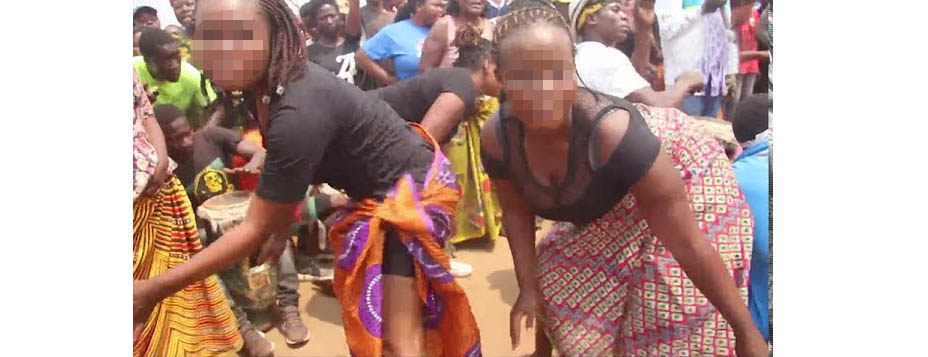
Tendai Gukutikwa
Post Reporter
THE old Shona saying ‘‘wafa wanaka’’ which roughly translates to once they are dead, they are good, seems to have been forgotten when people perform funeral rites in today’s world.
In the Shona culture, the dead are said to be revered, with their shortcomings often being covered up or forgotten.
However, recent funeral practices are casting a shadow over this tradition, as mourners have started to imitate the deceased’s habits, often in a provocative manner, leading to a public outcry and condemnation from traditional leaders.
Just last week in Nyanga, a funeral took an unexpected turn when a group of sex workers stormed the proceedings, claiming that the deceased, Priviledge Garufu, was one of them.
Garufu was murdered by her lover in her sleep, and according to them, she was a regular at bars, and had died while intoxicated.
In an act of ‘‘solidarity’’, they danced provocatively around her coffin, threw their panties in the grave, and later retrieved them in a shocking display that left mourners in disbelief.
As the burial service proceeded, the sex workers seized the coffin, disrupting speeches and arguing that there was no need for eulogies because “the dead do not hear.”
Some mourners, especially close relatives, were stunned to learn about Garufu’s alleged double life in such an unorthodox manner.
A community member, Mrs Eullita Chifamata was not impressed by the happenings at the funeral.
“They took over the digging of the grave, while others danced. We were shocked as a community. They disrespected the dead, and we do not know whether she is resting in peace. The deceased’s uncles did not even know about their niece’s behaviour and lifestyle before the funeral. It was like she had been leading a double life, and it was only revealed during her funeral because her friends were there to bury her, which was very shameful,” she said, describing the incident as disgraceful.
This is only one of many chaotic scenes at various funerals which have been raising questions about the shifting funeral customs and erosion of traditional funeral decorum.
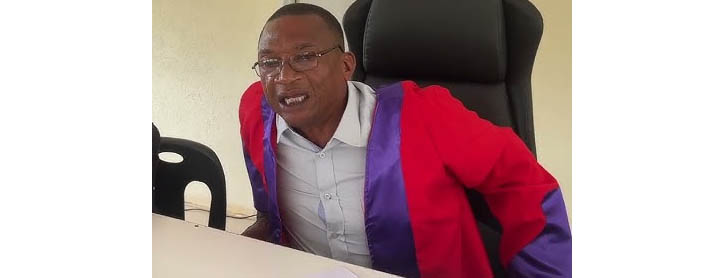
Traditional leaders, including Chief Saurombe, are against such behaviour, arguing that it is not in line with the Shona customs.
“A few years back, a bus conductor passed on and his friends took over the coffin on its way to his final resting place at Yeovil Cemetery. The coffin fell, and it got opened during the process. Such behaviour is highly prohibited and unacceptable,” he said sternly.
Chief Saurombe said the behaviour is an influence from urban dwellers, as people in rural areas adhere to customs and traditions. He said imitating the deceased’s behaviour at funerals is a serious taboo that attracts bad omens.
“People who engage in such practices often experience stagnation in life. It is not just about disrespecting the dead, it is about inviting misfortune upon yourself and if you notice, these people who misbehave at funerals will never know any peace,” he warned.
Chief Saurombe also condemned the growing trend of taking coffins to bars, pool tables, or public transport vehicles to reflect the deceased’s lifestyle.
“It is disheartening to see mourners placing coffins on pool tables or inside kombis simply because the deceased spent much of their life there.
Funerals should be dignified. Mourners should give speeches, pray, and proceed to the grave without unnecessary disruptions or theatrics,” he said.
To highlight the gravity of such disrespect, Chief Saurombe recounted an incident, where the coffin fell to the ground, leaving mourners terrified.
“People started whispering that the deceased’s spirit had escaped, which is a very bad omen. In my area, anyone found dancing provocatively at funerals will be fined a cow and a calf, equivalent to about US$400,” he declared.
He said according to Shona traditions and customs, the phrase ‘wafa wanaka’ emphasises that once someone has passed, they should be remembered with respect.
“People no longer respect the phrase wafa wanaka. They seem to have forgotten that the dead’s shortcomings should not be the focus, nor should mourners re-enact their lifestyle especially during the funeral. Instead, funerals should be solemn moments of remembrance and prayer,” he said.
Despite the chief’s stern warnings, some argue that funerals are not a one size fit all affair, and that people should be allowed to mourn as they see fit.
One of Garufu’s friends, who only identified herself as Chido Lisa said not all people mourn their loved ones the same.
“Not all of us mourn the same way. We enjoyed life together, and so we should celebrate her life. She was our friend, and it is sad that she died, but our dancing at her funeral showed that we were happy that we got to spent some time with her on this earth. We were honouring her in the best way we knew her. People should not judge us,” she said.
As provocative funeral behaviour becomes more common, the divide between modern and traditional mourning practices widens.
However, for many elders, religious folk and traditionalists, such displays signal a dangerous shift in cultural norms.
Pastor Davies English, of Shield of Victory Ministries weighed in on the matter, condemning the provocative funeral behaviour as a mockery to the deceased and an insult to God.
“Funerals are a time for reflection, prayer, and giving thanks for the life that was lived. The Bible tells us that funerals should not be taken for granted. In Genesis 35:20, Jacob, after Rachel’s death on the way to Ephrath (Bethlehem), erected a pillar over her tomb, marking it as “the pillar of Rachel’s tomb” which remains there to this day. The tomb showed his honour to the deceased, had he disrespected her body, he would not have buried and erected one for her.
“This means death should be met with reverence, not with worldly and ungodly celebrations. Religiously and culturally, such actions are bad. Funerals should be a time of reflection and unity, not a time to expose secrets or put up a show,” he said, criticising the trend of imitating the deceased’s behaviour, calling it “a clear sign that society has lost its moral compass.”



 Online Reporter