admin
admin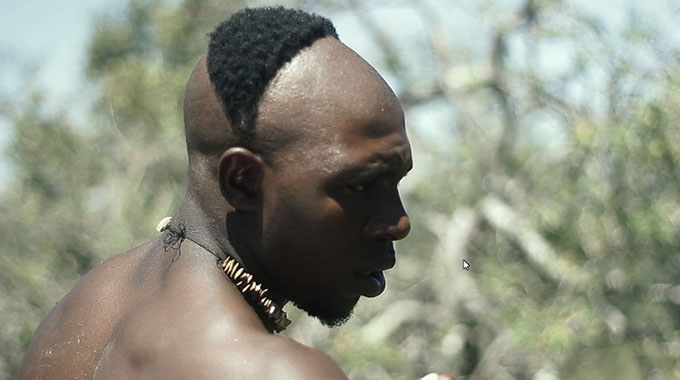
Kundai Marunya Lifestyle Writer
Imagine walking into a church with a funky hairstyle; a haircut that leaves patches on different spots. Only you can explain better the story behind the world of sheer art, which to many, translates to madness.
Then a church elder rebukes you for wearing a hat, a sign of disrespect in the house of God.
Everyone’s eyes fall on you.
You try by all means not to attract attention by trying to explain the reason for such gesture. Instead of getting appreciative nods, you further attract unwanted attention.
After a while you submit to removing your hat, after all, the Bible instructs one to listen to their elders.
The moment you remove your hat, everyone falls in stitches.
For some time the church services is halted as people are lost in delirium.
They all see your haircut as pure naughtiness, alas, this is just the beginning of your life as a character in one of the celebrated television drama series, “Tunga”.
This was Brian Makangira’s (who plays Gwandavhu) experience when for the first time he exposed his hair to family and friends after he joined television series “Tunga”.
He had spent days indoors at home, avoiding people, and always wearing a hat when going outside.
He was shy.
“I had kept my hair for a year so it was funny seeing myself with the haircut. I was used to watching these guys (Tunga cast) from home and I had never given a thought of how it was like to be part of them,” he said.
His hairstyle only made sense to many after his role was successfully introduced on local television. From then on he was a star. Even his pastor rebuked people from forcing him to take off his hat in church.
“The only time I then took off my hat in church was when I was a master of ceremony at a fundraising event on Africa Day. At that time everyone knew I was part of ‘Tunga’ and they were happy and excited.
“Even children would sometimes imitate me,” said Makangira.
His experience is a lot similar to most “Tunga” cast members. Highly revered, “Tunga” is a local television drama series that airs on ZBC TV focusing on life in a pre-colonial African tribe. It is themed around unity, traditional marriages, love and women’s rights among other issues.
For Grivies Chengeta who plays “Jinda Guru Mudanhi” it was mostly his friends who ridiculed him.
“My family thought it was just something I was doing for a silly drama and it would soon pass. My friends however would mock me saying I was taking drugs to walk around in such a silly hairdo.
“After watching me on ‘Tunga’ they however started following the trend of wearing their hair differently and in unique ways,” he said.
People hardly recognised the “Tunga” cast without their weird hairstyles. Wearing hats and for ladies, wearing wigs has become a bracket of protection from nagging fans who are always stopping them for selfies.
Takura Kachambwa, who plays Tunga, the lead role, said he did not know that one day he would find himself donning a unique hairstyle when he joined the drama series.
“I remember during rehearsals our director Slimaz (Willard Magombedze) saying ‘zvechisalad tichazvipedza’. I was surprised when he took us to a barbershop. For days I hid indoors before I resolved to flaunt my hairstyle. Now people can hardly recognise me without my hairstyle, it has grown to be part of me,” he said.
He hosts several events as the master of ceremony, proudly donning his hairstyle. He, however, conceals it on occasions he wants to be taken seriously.
“When people see the hairstyle they just think it’s all comedy so I have bought many hats for different occasions,” said Kachambwa.
For ladies in the cast, it is a bit different as their hair is not cut but rather braided and kept in its natural form, which means they have to forgo trending hairstyles.
Finding ways to look good in the “Tunga” hairstyles has always been challenging for them, especially Pheona Tanyaradzwa Bizeki (who plays Princess Shongedzo), who also doubles as a model.
“It’s hard competing with other models who can wear their way in any trending style they want. I have had to find really beautiful wigs, because I usually keep my hairstyle from ‘Tunga’ because we shoot from time to time.
“Eighty percent of the time when I am not modelling I just walk around in my television hairstyle,” she said.
Rose Mwandera who plays Princess Chengetai, however, enjoys the limelight acting brought to her life. Her friends readily accepted her new role, embracing the hairstyle with affection, standing by her and supporting her in realising her dream.
“When I told my mother I was now part of ‘Tunga’, she was really happy for me but my dad was not pleased at first. He thought acting was for ‘marombe’ or people without better things to do and the hairstyle did not help my case
“After sometime he accepted it and is now proud of what I am doing,” she said.
Though she revels in popularity when wearing the “Tunga” hairstyle, Mwandera sometimes fails to freely move around.
“As much as I enjoy the limelight, I am sometimes delayed by fans who want to hang around me.
“At one point I was mobbed by school children, so I usually wear wigs when we are not shooting,” she said.
Weird styles and hairdos are popular in local television and theatre with characters like Sabhuku Vharazipi and Apama Styles earning recognitions through them.
They are common mostly in comedies.
In “Tunga”, Magombedze creatively exploited hairstyles, re-imagining local tribes.
“We wanted to have a certain tribe that is not so common in Zimbabwe. People usually only relate dreadlocks to African tribes but we have those tribes that have their unique styles in short-hair.
“The hairstyles are however not adopted from any particular tribe or era in history but they are a work of creativity aimed at capturing attention to African culture, not to mock on it,” he said.
This year “Tunga” was nominated for the National Arts Merit Awards (Nama) 2019 in the Outstanding Television Production category.


 Online Reporter