admin
admin
Elliot Ziwira
At the Bookstore
Lately, I have been thinking about Charles Mungoshi. I have been thinking about him so badly that it hurts.
Probably because we are in February, and February is such a bad month. Perhaps because the immensely talented wordsmith coined his last prophetic line; an epitaph really, on February 16: “Today I am wearing blue, tomorrow I will be in white, and you will be in black.”
Curiously, it is on February 16 that another gifted man of letters, Soul Musaka (Soul Jah Love) unlocked his last intelligent puzzle about the nature of the human soul.
He proved that, indeed, heroism is more than a guns affair, for liberation is multifaceted, declaring “Ndini Uya Uya”, “Pamamonya Ipapo”.
His voice was, and remains a more powerful machine gun; a bazooka, a landmine and an AK47, all rolled into one. And boy, did he know how to use it?
Chibaba could shoot from all angles. He could shoot from the hip with such precision that could only take the ear by storm and mellow the heart.
Regardless of the situation, he just had the right volley for it. He would hit you hard, with a combination of rhyming salvoes and wordily prowess, but you would feel no pain.
The dosage would be therapeutic, just fine.
Soul Jah Love had a way of telling his story in such a way that it became yours; or maybe he had a way of running riot with your story, our story of hope and toil, the story of the ghetto youths, claiming it to be his.
Such is the nature of the human soul.
He fought for the Motherland in his own musical way; doing proud to the bogeyman forever used to frighten children, for musicians in our backyard had not always received societal sanction.
Indeed, Chibaba fought the good fight with the Motherland’s flag draped around his gargantuan shoulders in his own lean and rebellious way.
But eish! I am thinking about Charles when I should be at Soul Jah Love’s graveside today, not burying him as such, for artistes do not die, but celebrating him.
But you see, we, at the Bookstore celebrate books and writers.
Without taking anything away from Chibaba’s contribution to music, particularly the genre known as Zimdancehall, we believe that books permeate our everyday toils.
Our Charles was promoted to the other side of life on February 16, 2019 at the age of 71, barely a month after national hero Oliver “Tuku” Mtukudzi.
He was buried on February 19 at his rural home in Chivhu without honours, yet in all fairness he was a hero, a national hero, a global hero.
True to the words of his cousin Dr Geoffrey Chada, Charles, who by “Grade Seven, was almost an accomplished writer on articles, and an accomplished one by the time he did his Form Four”, is “the Shakespeare of Zimbabwe”.
It is sad that he was not officially recognised as a national hero, which is why my thoughts about him have become persistently hurting.
Perhaps we let him down here at the Bookstore. We did not make enough noise to be heard.
Maybe we thought he whispered, through his works, in every one of us’ ears as a people. Perchance words evoke different emotions when put in song.
But isn’t silence also speaking? Charles would have put it succinctly: “Kunyarara Hakusi Kutaura?”
I have had the pleasure of knowing the two gifted Mungoshi siblings: Charles and David, but today am thinking about Charles. I really miss David, though.
I first met Charles when I was in Form Two.
Having read his books “Coming of the Dry Season” (1972), “Waiting for the Rain” (1975), “The Milkman Doesn’t Only Deliver Milk (1981), “Makunun’unu Maodza Moyo” (1970), Ndiko Kupindana Kwemazuva (1975), “Some Kinds of Wounds and other Stories” (1980), “Inongova Njakenjake” (1980) and “Kunyarara Hakusi Kutaura?” (1983), my chance to meet Charles was availed when our headmaster invited a group of luminous writers to apprise us on the art of writing.
Having been accorded a chance, I told him about my feelings on the portrayal of Lucifer in “Waiting for the Rain” (1975), and how I thought the conclusion of the story leaves him as alienated from his society as he was introduced.
Having not yet started studying literature as a body of knowledge, I was unaware of the concept of ideology, but I felt that his portrayal could not possibly inspire confidence.
To my disappointment, he blew my bubble by telling me something to the effect that I should write my own book and end it my way.
Ironically, “Coming of the Dry Season” was one of my set books when I started studying Literature in English at Form Three and “Waiting for the Rain” was one of the texts I explored in further studies.
It is impossible to study Zimbabwean Literature or African Literature at any level without reference to Charles Mungoshi.
Although my understanding of literature has since developed, I believe the ideas I raised then still hold water, and Charles has not lost an admirer as a writer of repute.
Such was his frankness, such was his candidness, but to a mere boy still cutting his literary teeth it was a huge pill to swallow, especially coming from your hero. And I just cannot help thinking about him.
It is not our culture at the Bookstore to write obituaries, neither is it our way to sing eulogies. We simply state facts, which to our understanding do not lie.
The Bookstore is poorer, though enriched, without the blessings of one of the literary world’s greatest luminaries, whose chosen path remains thorny in the absence of resilient and courageous likes of him.
For us at the Bookstore, Charles Mungoshi is not dead.
He lives in the depth of our literature; the literature of combat, the literature of liberation, which resonates with yearnings of a world that we wish to live in, and yet seems to be ever receding to the horizon.
He lives among us today, tomorrow and forever more, just as he used to do yesterday. The master of metaphor cannot be silenced because he never uses his mouth to speak, for his words are not meant to be heard.
Their silent screams will echo from the millions of pages cutting across the universal landscapes of the oppressed; even though his body and soul partook their inevitable separation.
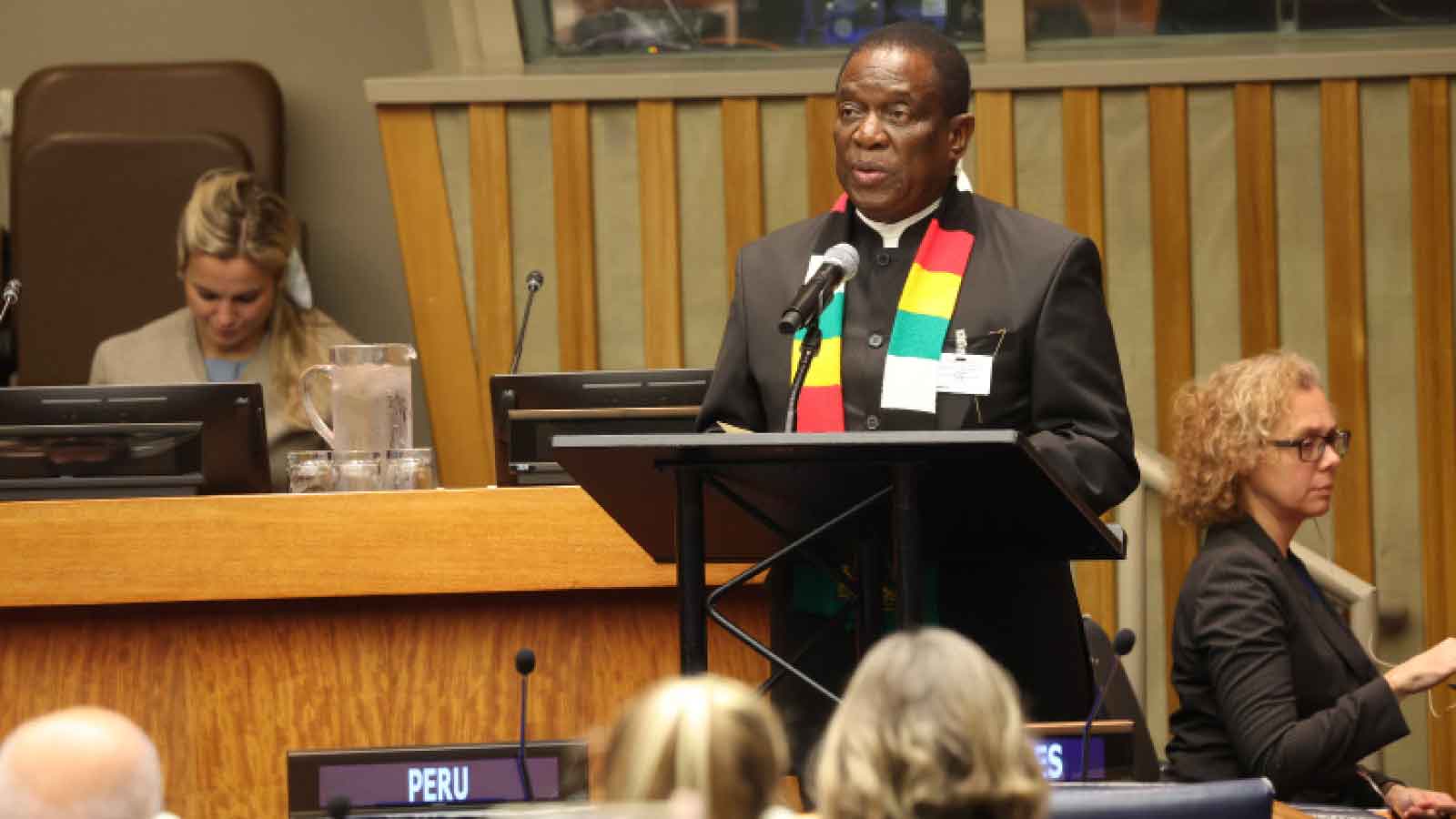
He cannot be gagged because the stifled muffles of the wretched escape in millions of decibels from his silent mouth, giving voice to their suffering through metaphors and symbolical elements that only he, Charles, could give meaning to. And, we, his disciples revel in. In his condolence message to the Mungoshi family, following Charles’ departure, President Mnangagwa said: “The death of our prominent writer, Dr Charles Mungoshi, barely a couple of weeks after we lost Dr Oliver Mtukudzi, has come as a heavy blow to the arts industry and to our nation as a whole.
“The late Dr Mungoshi ranks high among a pioneering generation of national writers who used their pen to creatively engage the national question, especially in colonial days when issues of decolonisation and African cultural self-expression and self-assertion ranked high.
“What put the late Mungoshi in a league of his own was his use of both, this mother tongue, Shona, and the foreign English language to express himself, thus shaping a broad, bilingual, literary tradition for our nation.”
The President added, “We, too, thank him for his outstanding role in mentoring young writers during his days as a writer-in residence at the University of Zimbabwe, and a founder-participant in the Zimbabwe International Book Fair.
“We owe it to the prominent writers like the late Charles Mungoshi that Zimbabwe today stands tall as a literary nation.”
The metaphors of drought, wounds, waiting, streams and hunger that Charles effectively uses in “Waiting for the Rain”, “Coming of the Dry Season”; “Walking Still” (1997) and “Branching Streams Flow in the Dark” (2013), capture the spiritual, cultural, intellectual and creative crisis at the centre of the national psyche.
All the characters in “Shadows on the Wall” in “Coming of the Dry Season” are victims in one way or the other. What is paramount, however, is how they find an elixir out of their conditions.
The starting point is for them to identify themselves in the many sites availed to them through imagery and symbolism. Trust Charles to be the custodian of the key to unlock the images and symbols that make us Zimbabwean.
The family unit remains central to his works as is portrayed in “Waiting for the Rain”, “Branching Streams Flow in the Dark” and “Walking Still”.
Having battled illness for nearly a decade Charles Mungoshi reminds one of Saidi, the protagonist in “Branching Streams Flow in the Dark” (2013), his latest novel.
It is ironic that the tragic hero, Saidi, is a musician, whose family of entertainers, like Charles’, and fans kindle his hope as they cheerfully encourage him to blow on the horn, the instrument that gave him fame, at his final show.
Saidi prophetically tells his exuberant fans: “Today I am wearing blue, tomorrow I will be in white, and you will be in black.”
Indeed, Charles remains Master of the Pen, and one of the greatest writers to have graced our shelves at The Bookstore.
And today as the earth preserves one of our own, liberation hero and the Soul of Zimdancehall, Soul Jah Love, I just cannot stop thinking about Charles too.


 Online Reporter