admin
admin
Business Reporter
INVICTUS Energy, which is searching for oil and gas in northern Zimbabwe, has reached the targeted exploration drilling depth of at least 3,5 kilometres with early results showing strong potential for the existence of petroleum deposits.
This presents a potential breakthrough for Zimbabwe, long plagued by a crippling energy deficit that forces power utility Zesa to cut supply for long hours, as successful hydrocarbon discovery would guarantee energy security, create new jobs and drive economic growth.
Mining, under which oil and gas fall, is expected to grow into a US$12 billion economy by 2023, providing a major stepping stone towards the national vision of transforming Zimbabwe into an empowered upper-middle-income society by 2030 (Vision 2030). Zimbabweans in general stand to benefit from a guaranteed Government share of production or proceeds from the oil/gas extracted from Invictus ongoing exploration drilling in the event of a commercial discovery of the petroleum deposits.
The Australian company is close to completing a petroleum products sharing agreement (PPSA) with the Government, which details the fiscal provisions of concessions with central the Government, which would take effect upon commencement of production.
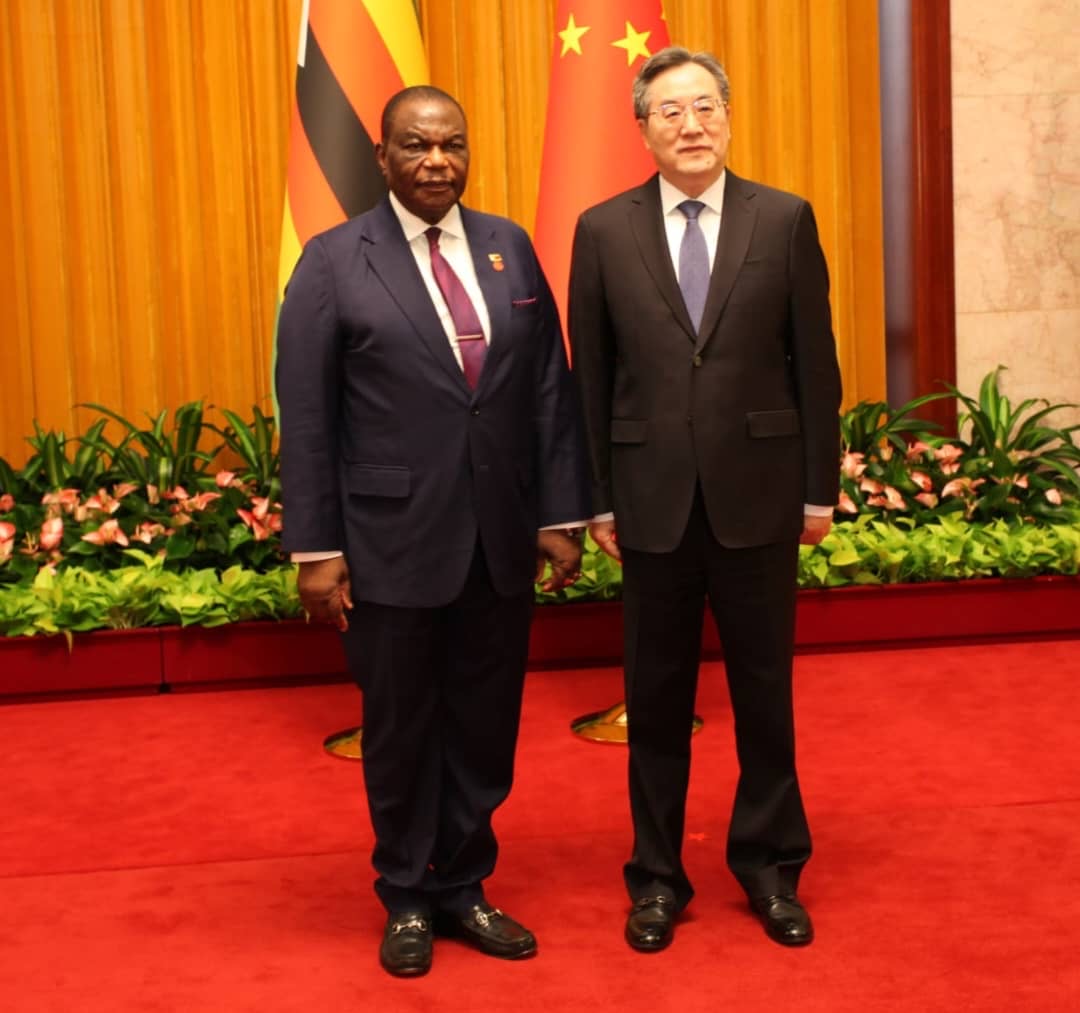
Only last week, the company commended the extensive and timely support it has received from the Government, including through legislation-backed agreements, which has enabled it to rapidly progress implementation of the project. President Mnangagwa said last year, during the signing ceremony for a petroleum exploration development and production agreement at State House that the agreement represented major strides “in our efforts to tap into our oil and gas deposits, which is a new territory in the country’s mining sector”.
He also said potential benefits of an oil and gas discovery included electricity generation, production of liquid petroleum, liquefied petroleum gas (LPG), fertiliser production and petrochemicals.
Invictus pointed out yesterday it may elect to deepen the well post the wireline logging of the current hole section in order to test the deeper potential in the remaining Upper Angwa and Lower Angwa rock formations on its prospective site in Zimbabwe’s Cabora Bassa region.
The Australia Stock Exchange-listed company commenced exploration drilling at its Mukuyu-1 prospect, the first of its two well drilling programme late September, and the early results from the test-drilling have been highly encouraging.
Notably, just the commencement of the basin opening exploration drilling was a significant milestone in the history of oil and gas exploration in Zimbabwe, which until now had never witnessed drilling of any sort in the petroleum sector. After completing the test well drilling, Invictus will now proceed to gather sub-surface technical data on the drilled well to measure the oil and gas potential of the site to determine if this conforms to the firm’s subsurface model.
The world class Mukuyu (Muzarabani) prospect is the largest undrilled prospect onshore Africa independently estimated to contain 20 trillion cubic feet and 845 million barrels of conventional gas condensate (on a gross mean unrisked basis). One trillion cubic feet of gas would roughly be worth more than US$3 billion to the producer at wellhead. Earlier, company executives indicated the two-well test well drilling programme, which is being undertaken by Romanian firm, Exalo SA, is expected to cost US$25 million.
Mukuyu-1 is being drilled in Mbire District while the second shorter well, Baobab, will be drilled Muzarabani District to a depth of 1,5 kilometres. Both wells are located in Zimbabwe’s northmost province of Mashonaland Central.
Invictus said the early-stage results from the drilling exercise had indicated elevated gas shows and fluorescence in the Upper Angwa geology in a development that vindicated assumptions in the firm’s sub-surface model. Invictus managing director Scott MacMillan said “The evidence of hydrocarbon charge throughout the Upper Angwa reservoir intervals provides further validation of our subsurface model and the presence of a conventional working hydrocarbon system in the Cabora Bassa Basin.
“We have continued to observe elevated gas shows and fluorescence through multiple reservoir intervals in the Upper Angwa until TD (Total Depth) was called, and we will now acquire the necessary wireline data whilst the borehole conditions are still conducive in order to evaluate the zones of interest observed to date.
“The company may elect to deepen the well post the wireline logging of the current hole section in order to test the deeper potential in the remaining Upper Angwa and Lower Angwa formation.
“The planned comprehensive wireline logging programme including formation pressure and fluid sampling, sidewall cores and check shot surveys will be run with the aim of confirming the presence of moveable hydrocarbons in multiple zones.”
A gas show is a recorded increase in gases above a baseline amount indicative of the hydrocarbon potential of the formation. This increase is assumed to be independent of any borehole drilling or circulation process.
Fluorescence refers to the colour of the drill cuttings under UV (Ultra Violet) light of various wavelengths. Fluorescence is described in terms of its colour, intensity, distribution, and percentage of sample fluorescing. Drill cuttings are pieces of rock that come out of a well, (a deep hole made in the ground, to locate oil) when a well is drilled to an oil or gas reservoir.
Elevated mud gas peaks (up to 135 times above background gas baseline while drilling through a depth of 3 171 metres have been observed with marked increases across the range of compounds (methane, ethane, propane, butanes and pentanes).
Invictus said multiple additional zones with elevated mud gas and fluorescence were also encountered throughout the intersected Upper Angwa reservoir intervals, which also have associated drilling breaks.
The company said increasing background gas with heavier hydrocarbon components have been observed with the increase in depth to total depth since the repair of the mud gas chromatograph (technical separation of mixture) system from approximately 2 820 metres measured depth.
Logging While Drilling (LWD) (measurement of the geological formation while drilling) resistivity was unavailable prior to recommencement of drilling due to a tool integrity issue and was excluded from the deployed bottom hole assembly.
The subsurface geophysical and petrophysical information results in the description and analysis of subsurface geology, reservoir properties and production characteristics. All zones of interest will be comprehensively evaluated through a planned wireline logging programme, which allows for the identification of any potential hydrocarbon pay.



 Online Reporter