Online Reporter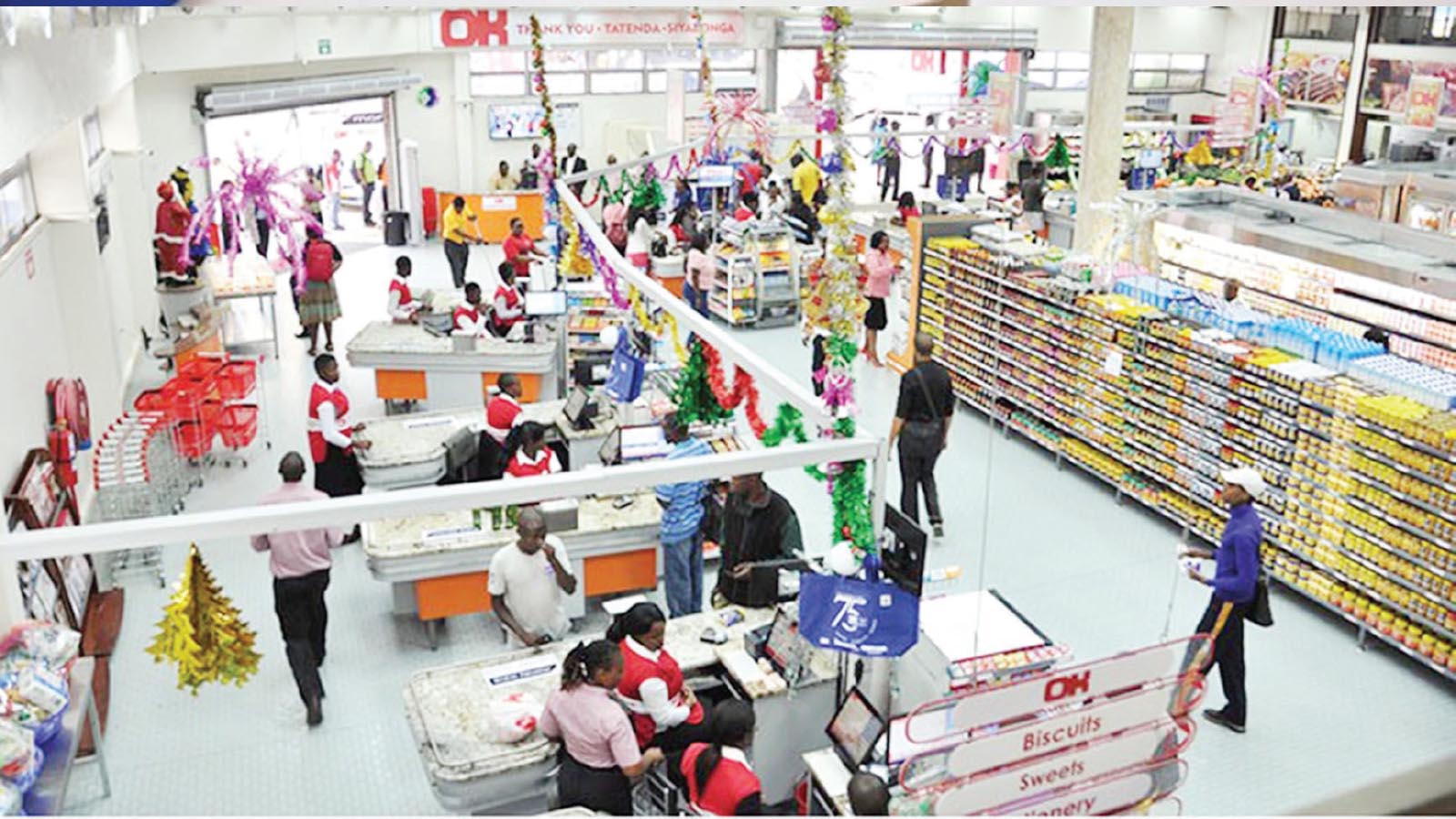
Business Reporter
BUSINESS experts have welcomed the US$15 million in bank guarantees extended to OK Zimbabwe, saying the facility provides a critical lifeline, and should be used to build stronger stores rather than simply restocking the entire network.
The guarantees, reportedly provided through CBZ and BancABC, have allowed major local manufacturers to resume deliveries.
Bulawayo businessman and former Zimbabwe National Chamber of Commerce (ZNCC) Matabeleland region vice president Mr Louis Herbst said the recovery of OK Zimbabwe had implications beyond retail.
“From an economic perspective, this is important because OK Zimbabwe is not just a retailer. It is part of a much larger economic chain connecting local manufacturers, farmers, transporters, suppliers, employees and consumers,” he said.
“When a major retailer is unable to trade properly, that disruption works its way through the entire supply chain. Conversely, if OK recovers, it can become an important channel for getting locally produced goods back into the market.”
Pointing to the 44 operating and 33 closed locations, Mr Herbst suggested that OK concentrate its limited working capital on maximising the success of existing stores before attempting to reopen the closed ones.
“Identify the stores with the strongest customer traffic, best locations and highest potential margins, and make those the engines of the recovery,” he said.
“There is no point continually feeding a store that is structurally loss-making simply because it has always been part of the network. A closed building does not need feeding.
“Maintain the property, protect the asset and keep the option of reopening it, but don’t allow a slow-moving outlet to consume the cash generated by a successful one.”
Mr Herbst noted that liabilities had reached approximately US$37,4 million, including about US$24 million owed to suppliers, and monthly sales had fallen dramatically over the past year.
“Once the stronger stores are generating sustainable cash flow, that surplus can progressively be used to rehabilitate the next tier of outlets where there is a genuine commercial case for doing so,” he said.
“In other words, resuscitate the healthy parts of the business first, rather than trying to resuscitate the entire business simultaneously.”
Mr Herbst said the turnaround must be driven by technology and customer data.
He said OK needs to know, almost in real time, what each individual store is selling, what is sitting on the shelf, what is moving slowly and what is being lost through shrinkage.
“Technology and AI (artificial intelligence) can be used to create a much more intelligent stock-allocation and purchasing system,” said Mr Herbst.
“A store in Bulawayo should not necessarily receive the same product mix as a store in Harare or a smaller rural outlet. Stock should follow actual customer demand.”
He said OK must win back customers through competitive pricing, availability, convenience, loyalty rewards and digital engagement, including potential online ordering and delivery.
On local content, Mr Herbst said OK’s push for Zimbabwean products should go beyond shelf space.
“‘Buy Zimbabwe cannot simply mean putting locally manufactured goods on the shelves,” he said.
“It should mean using OK’s enormous retail footprint and customer data to help local manufacturers understand what Zimbabweans actually want, at what price and in which markets.
“That could turn OK from simply being a supermarket into a much more important part of Zimbabwe’s domestic manufacturing ecosystem.”
Mr Herbst described the US$15 million facility as a lifeline and an opportunity, not a solution. He said if the company simply restocked, reopened branches and went back to the same operating model, then it risked repeating the cycle.
“But if it uses this opportunity to become more data-driven, more customer-focused, more disciplined about its store portfolio and more closely integrated with local producers, then this could become a genuine turnaround,” he said.
“Sometimes the best strategy is not to grow bigger. It is to become stronger first. OK Zimbabwe doesn’t necessarily need more stores right now. It needs more successful stores.”
Buy Zimbabwe chairperson Mr Munyaradzi Hwengwere welcomed OK’s return, describing the retailer as a major pillar of local industry.
“The coming back on stream of OK as a big player that we know it to have been for years is most welcome,” he said.
“No one forgets the cultural retail significance of the OK Grand Challenge. Even as we speak, a number of consumers have a strong recollection and affinity to the OK brand.”
Mr Hwengwere noted OK’s historical role in growing local content, from below 10 percent of supermarket shelves to over 60 percent today.
“So, the fact that they will come back and have been such a player in preference of locally produced goods and services is again most commendable,” he said.
“We still have a lot to do in the local content drive in ensuring that, based on our domestic success, we get into the other markets, including COMESA (Common Market for Eastern and Southern Africa), with the 600 million people in that market.”
Sources said 44 OK branches out of 77 were now fully operational. This includes the reopening of key branches such as OK First Street, Machipisa and Chisipite in Harare.
The other 33 branches remain closed, with no firm timeline for reopening.
Company insiders say these are predominantly smaller, lower-revenue outlets in peri-urban and rural areas, where restocking costs may not yet be justified.
The supply arrangements follow an agreement between the retailer and its major trade creditors to defer legacy debt settlements, providing the company with operational headroom to trade.
The retail chain’s troubles escalated dramatically in late 2025, as a crisis of confidence gripped its supply chain.
To limit exposure to rising trade receivables, major suppliers cut credit terms from 30-60 days to one week, then stopped deliveries altogether.
The credit freeze brought operations to a virtual standstill.
Despite raising US$20 million through a rights issue approved by shareholders in July 2025 to clear supplier debt, the capital injection failed to fully restore market confidence. By February 2026, total liabilities had expanded to about US$37,4 million, including US$24 million owed directly to trade suppliers.
The resulting stockouts triggered a severe drop in revenue, from peak monthly sales of US$21,7 million down to US$1,3 million, forcing the board to seek court-supervised protection.
Under the current corporate rescue plan, a combination of bank-backed guarantees and creditor deferrals aims to stabilise the inventory supply loop, protecting thousands of retail jobs and preserving one of the country’s oldest formal retail chains.
ZNCC president Ms Josephine Takundwa said: “We applaud local manufacturers for supporting the return of OK Zimbabwe and the fact that stock is predominantly from Zimbabwe also points to levels of local production which are improving consistently.”
“As OK returns, however, we still caution on competitiveness in the new era of e-commerce.”