admin
admin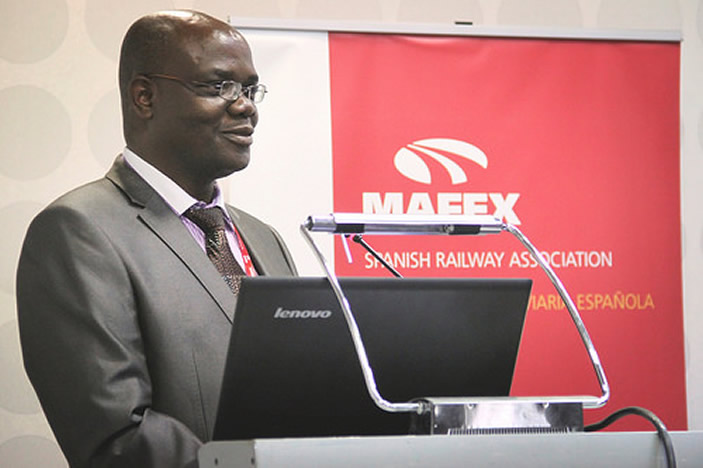
Business Editor
ZIMBABWEAN companies need urgent re-tooling if the country is to derive increased earnings through a value chain economic model.
With the rise of merchandise imports in the past few years and more concentration on minerals and metals exports as well as importation of services, the country’s value chain link has been weakened.
This calls for coordinated policy interventions that will facilitate the creation of vibrant value chains in the economy, National Railways of Zimbabwe (NRZ) general manager Engineer Louise Mukwada said.
“One of the things we are looking at as the railways is import substitution in light of strengthening value chains. I think this is now critical in Zimbabwe given challenges of capital flight through importation,” he said.
While value addition is an integral approach in line with the country’s blueprint, Zim-Asset, Eng Mukwada says replacing imports through local supply and increased production is still a challenge due to a number of hurdles.
One major challenge is ageing equipment that is still used by local firms. This, together with labour, water, power, taxation and finance costs, continue to weigh down on industry efficiency.
“We have faced certain challenges. One example was that we engaged a local company to try and produce brake blocks that are used on locomotives and wagons to brake the train.
“These are like brake pads of a vehicle but are much bigger and we import these. We engaged a local company to produce them locally,” said Eng Mukwada.
“Our engineers and those from the company we engaged worked together and we were able to come up with a product but they were producing it at thrice the price of the imported product.
“The challenge was the equipment that they were using. It was just not appropriate.”
He said NRZ has also been struggling to get local suppliers of critical components to sustain the operations of the giant parastatal due to capacity constraints facing local firms.
“The second example was on timber slippers. Our railway line rests on timber slippers. These were put in the 1960s to 1970s and a lot of them are rotten and we need to replace about a million of them. We engaged Sawmills and other companies to produce so that we can do trials,” said Eng Mukwada.
He said although local companies were able to make satisfactory samples, they could not produce the required volumes because of limited capacity.
Said Eng Mukwada: “This again is related to the equipment they used. It was good enough to produce a single or two samples but to produce volumes they now needed to re-equip”.
He made reference to a third scenario in which NRZ engaged another local firm for supplies in a deal that later collapsed because of capacity issues.
“There is a local company that was producing some pads. These are synthetic material pads that we use on the rail. We used to import quantities of these.
“This company went into trials with us and we eventually managed to perfect the pads that we wanted and for a couple of years they were supplying us but eventually they faced capital challenges and went underground,” said Eng Mukwada.
“So, my point is that perhaps we need coordinated policy interventions. The SMEs sector for example, I have heard from time to time, facilities being given to companies to support SMEs.
“Perhaps . . . this could be more targeted so that those that can add value in a particular value chain, like in our case, we are looking at the maintenance of the track and we have identified companies who can participate in that value chain. The business there is guaranteed. So, if there is intervention to support the rail or even working capital then we can substitute the imports and then save on our currency.”
Eng Mukwada revealed this during the recent Confederation of Zimbabwe Industries (CZI) congress in Bulawayo where he made a presentation focusing on cost competitiveness in relation to export performance.
During the discussion, CZI deputy president Mr Sifelani Jabangwe said his organisation was keen to engage NRZ on how to increase business volumes in bulk transportation.
He stressed the need to fine tune the cost structure to ensure symbiotic benefits to parties involved for purposes of competitiveness.
@ProsperNdlovu


 Online Reporter