Chronicle Editor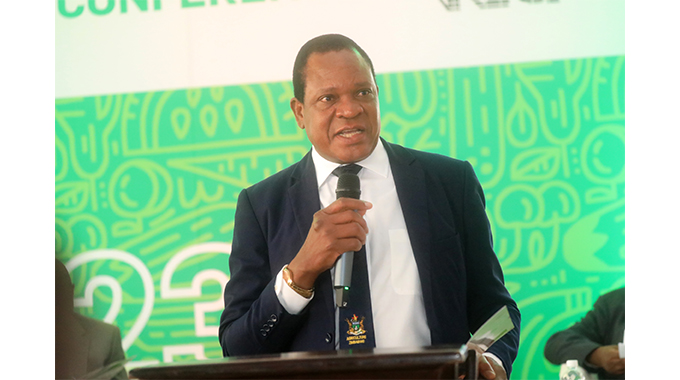
Sukulwenkosi Dube-Matutu, [email protected]
LANDS, Agriculture, Fisheries, Water and Rural Development Minister, Dr Anxious Masuka has said all 460 irrigation schemes across the country will be put under irrigation during the 2023/24 summer cropping season to complement the Pfumvudza/Intwasa programme.
The latest development is aimed at increasing yields in the face of the looming El Nino.
Weather experts have predicted that most parts of the country will receive normal to below-normal rainfall due to the El Nino effects with southern parts of the country expected to receive the lowest rains.
As a result, farmers have been encouraged to start rolling out land preparatory works ahead of the forthcoming summer cropping season. The Government has said the digging of Pfumvudza/Intwasa plots is a prerequisite for those who will benefit from the free inputs distribution programme.
According to the 2023/2024 rainfall season forecast report, the bulk of Matabeleland North, parts of Midlands covering Gokwe North and South districts and parts of Matabeleland South province are expected to receive below-normal-to-normal rainfall.
Normal rainfall with a bias towards below-normal rainfall is highly likely for the remaining provinces for the sub-season October-November-December 2023.
The distribution of agricultural inputs has started early to ensure farmers maximise on early rains.
Speaking during the commissioning of the Tuli Makwe Irrigation Scheme in Gwanda district, Dr Masuka urged farmers to do all three plots under the Pfumvudza/Intwasa programme by October 31.
He said Government has so far moved over 25 000 tonnes of Compound D fertiliser to GMB deports.
A target of over one million hectares of crops under the Pfumvudza/Intwasa programme has been set for the 2023/2024 summer cropping season as Government moves to ensure optimum production and guarantee food security.
An update from the Agricultural and Rural Development Advisory Services in the Ministry of Lands, Agriculture, Fisheries, Water and Rural Development shows that more than one million hectares will be put under Pfumvudza/Intwasa crops.
Maize is scheduled to be planted under 400 000 ha, soya bean 6 230 ha, sunflower 100 000 ha, sorghum 250 000 ha, pearl millet 126 577 ha and cotton 180 000 ha.
“We have climate-proofed agriculture at two levels. At the household level, we have Intwasa and at the irrigation level we enhance irrigation through rehabilitation of irrigation schemes and expansion of irrigation schemes,” said Dr Masuka.
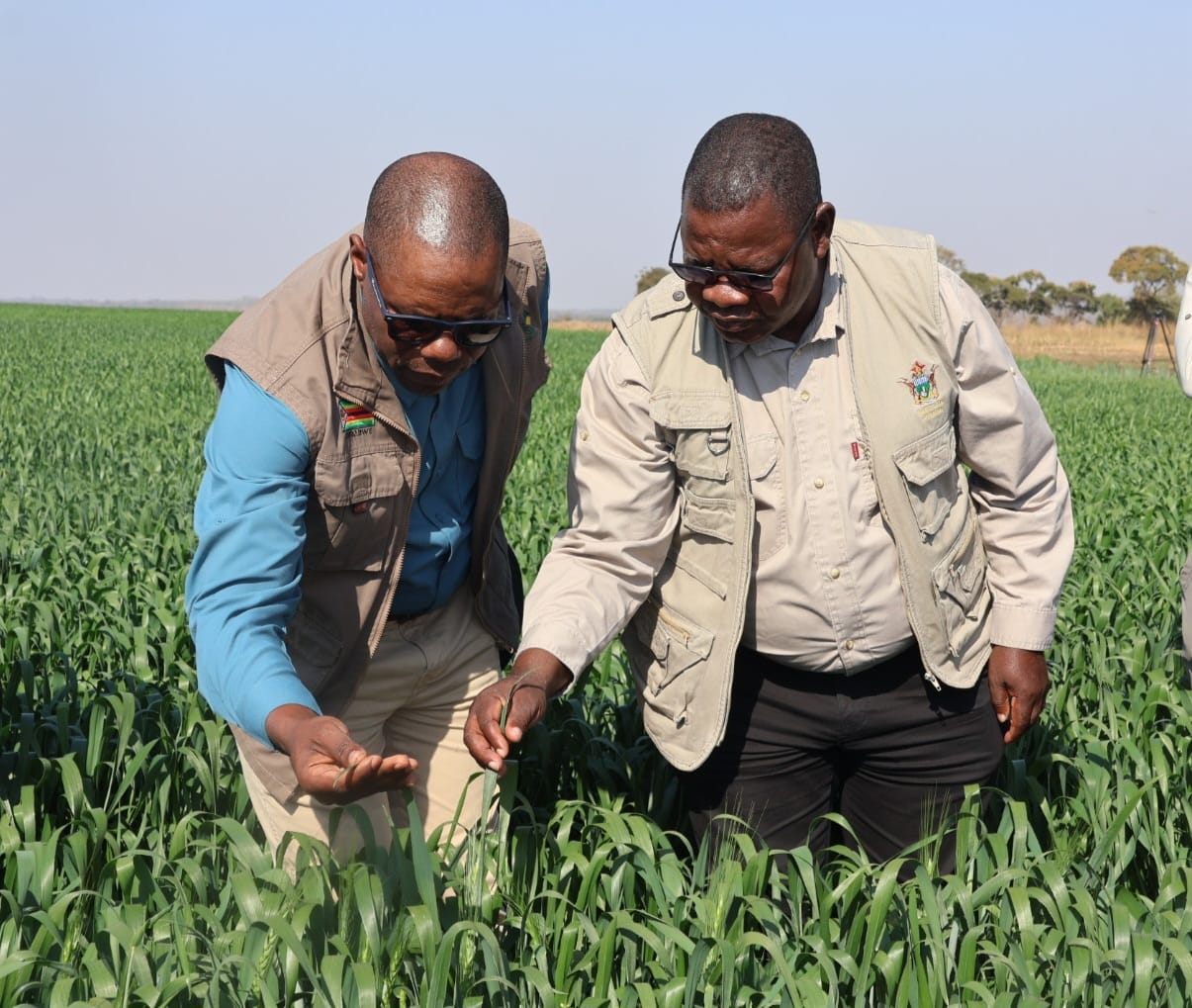
He said the irrigation schemes are expected to produce enough food for the farmers and surrounding communities including supplying the Grain Marketing Board.
Government working with various partners is rehabilitating irrigation schemes that have been lying idle across the country and establishing new ones to improve food and nutrition security.
Land preparations for the next summer season are underway in most parts of the country and the communal sector is showing an overwhelming response to the conservation farming technique.
Dr Masuka said Vision 2030 is anchored on agriculture development and its success requires input from various stakeholders.
“His Excellency President Mnangagwa is committed to the transformation of rural areas and people’s livelihoods.The President has said Vision 2030 is about Rural Development 8.0 where eight interventions have been put in place to ensure that there is agricultural development,” he said.
“The first thing that the President did was to launch the Presidential Climate proofed input scheme known as Pfumvudza/Intwasa. What is grown by a farmer is determined by the area and not what the farmer wants. If you are in Region 1 you produce what is required in that area such as maize. When you are in Region 4 and 5 you grow suitable crops such as traditional grains.”
Pfumvudza/Intwasa has helped the country attain food security in the last three seasons and at the same time boosting families’ incomes.
The programme entails the use of mulch to retain moisture for some time in the event of rain. The main aim of the Pfumvudza/Intwasa concept is to address problems of low productivity and low profitability in farming, which have, in recent years, been negatively affecting food security.
The concept has also come in handy as a way of mitigating the harsh effects of climate change that have caused severe food shortages in the wake of successive crop failures.
More farmers have joined the Pfumvudza/Intwasa programme this year, and the number of plots has correspondingly increased as farmers seek to make money from selling surplus grain to GMB.
Under the programme, farmers can prepare up to five plots. Depending on the district and the farming region, plots will have either maize or traditional grains, legumes, soya and sunflower. — @DubeMatutu


 Online Reporter