

 admin
admin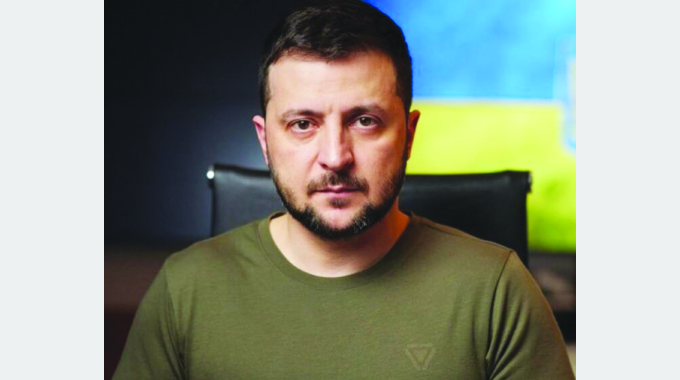
Matata Mootely Haina
While Russia continues to steadily gain ground in Ukraine on the battlefield and at the China has suggested a negotiating table, the United States continues to agitate the conflict in an a brazen attempt to profit from it.
This is very cruel on the part of the United States of America as the war is bing fought far from its home soil and the people dying there plus the infrastructure being damaged is Ukranian.
At the end it is Ukraine suffering the greater damage and its President Zelensky does not seem to understand that his country is getting destroyed and no inch of America has been affected. That is very dump of the part of Zelenskyy. Very, very dump. USA must stop giving weapons and sponsoring the war. Zelensky must surrender.
Western countries have imposed sanctions on Russia with the hope of choking its energy export channels and destroying its economy. However, those sanctions have backfired, hurt US allies and triggered a worldwide energy crisis. Russia still soldiers on.
Official data shows that Russia’s GDP declined by 2,1 percent in 2022, and the Ukrainian economy nosedived by 30.4 percent. The World Bank estimated last year that the cost of reconstruction and recovery in Ukraine is at least US$349 billion. So who has suffered the greatest loss?
Russia/Ukraine trade fresh round of strikes as world marks 1st anniversary of conflict
The crisis has caused many casualties, displaced numerous people, aggravated geopolitical confrontation in Europe, intensified global energy and food shortages, and undermined regional and international security.
Even the G20 is split over the issue and efforts by US to arm-twist India and China against Russia have failed.
“Over the past year, from work to my personal life, from my well-being to what I do every day, everything has completely changed,” said a volunteer worker at a children’s hospital in Kiev, who gave her name as Olha.
“I lost my job . . . I have outstanding loans . . . My friends have died,” the 34-year-old told Xinhua.
Since the conflict flared up on February 24 last year, tens of thousands of troops on both sides have been killed, and millions of others were forced to flee their homes.
The echoes of the conflict are heard far beyond Ukraine’s borders. Its heavy toll on the world has manifested through food supply chain disruptions, skyrocketing energy prices and soaring inflation.
Western countries have imposed sanctions on Russia in hopes of choking its energy export channels and destroying its economy. However, those sanctions have backfired, hurt US allies and triggered a worldwide energy crisis.
Furthermore, Ukraine and Russia jointly produce around 30 percent of the world’s wheat exports.
Russia is also one of the world’s biggest exporters of fertilisers. The impact of the conflict on food supply chains has contributed to rising food prices, making it harder for people in lower and middle-income economies to feed their families.
As the conflict disrupts trade and aggravates inflation for essential goods, several economies teeter on the brink of recession.
In a blog released in late January, IMF chief economist Pierre-Olivier Gourinchas reckoned the global economy is poised to slow this year, while growth will remain weak by historical standards as the fight against inflation and the Ukraine crisis weigh on activity.
The economic pain has been quite intense for emerging economies. The UN warned on January 1 that the Russia-Ukraine conflict unleashed a new crisis, disrupting food and energy markets and exacerbating food insecurity and malnutrition in many developing countries.
During the Munich Security Conference concluded recently, there was “palpable frustration among some leaders from African and South American nations” over the protracted conflict, which “was consuming the time, money and attention of the West at the expense of other pressing problems,” the Financial Times observed.
“We do not want to go on discussing who will be the winner or the loser of a war,” said Colombia’s Vice President Francia Marquez. “We are all losers and, in the end, it is humankind that loses everything.”
Backstage manipulator
The deep cause of the Russia-Ukraine conflict is the expansion of NATO, and “the Russians are reacting to the West’s attempt to make Ukraine a western bulwark on Russia’s border,” John Mearsheimer, political science professor at the University of Chicago, told Xinhua.
Breaking a promise made at the end of the Cold War that NATO would not expand to the east, the US-led bloc has expanded eastward five times since 1999, advancing more than 1 000 kilometres to the Russian border. Its membership has increased from 16 to 30 countries.
Since the flare-up, the United States and its allies have sent more weapons to Ukraine, worsening the situation.
The United States has promised nearly 30 billion US dollars in military assistance to Ukraine. After the United States and Germany pledged tanks to Ukraine in late January, the Pentagon announced a new tranche of military aid for Ukraine days later, including long-range precision rockets for the first time.
During his surprise trip to Kiev on Monday, US President Joe Biden announced hundreds of millions of dollars in additional military aid for Ukraine, a move widely expected to escalate the crisis further.
Washington’s latest move bears out what former US senator Richard Black said last year — “We do not care how many Ukrainians die. How many women, children, civilians, military will die. We do not care. It is like a great football game, and we want to win.”
In his address to the Federal Assembly, Russian President Vladimir Putin said the West sparked a war in Europe to “eliminate competitors by using a proxy force,” and the responsibility for inciting and escalating the Ukraine crisis lies entirely with the Western elites.
“They plan to grow a local conflict into a global confrontation … But it is impossible to defeat Russia on the battlefield,” he said.
Simultaneously, Washington’s “football game” on the bloody battlefield in Ukraine brings fortunes to US war and energy businesses.
Replacing the military equipment transferred to Ukraine by Washington’s NATO allies could lead to roughly 21,7 billion dollars in foreign military sales or direct commercial sales for American industry, the US Foundation for Defence of Democracies said in a report last month.
As for the energy industry, “Big Oil just reported its profits. Record profits. Last year, they made 200 billion dollars in the midst of a global energy crisis,” Biden admitted in his State of the Union Address on February 7.
Political Settlement
The prolonged crisis has created economic and social woes in both countries and significantly retarded the world’s post-pandemic recovery.
Official data showed that Russia’s GDP declined by 2,1 percent in 2022, and the Ukrainian economy nosedived by 30,4 percent. The World Bank estimated last year that the cost of reconstruction and recovery in Ukraine is at least US$ 349 billion.
However, the vast difference in positions between Russia and Ukraine seems unbridgeable for the time being, making possible dialogue difficult.
When meeting senior Chinese diplomat Wang Yi in Munich on recently, Ukrainian Foreign Minister Dmytro Kuleba said no other countries want to realise peace more than Ukraine.
For the sake of peace, Gulru Gezer, a foreign policy analyst and former diplomat for Türkiye, believes all responsible countries that do not want to prolong the crisis should help keep the channels of dialogue open rather than exacerbate tensions.
UN Secretary-General Antonio Guterres said the one-year mark is a “grim milestone” with an impact far beyond Ukraine. “While prospects may look bleak today, we know that genuine, lasting peace must be based on the UN Charter and international law,” he said.
Among the countries standing on the side of peace and dialogue is China, which plans to publish a document on finding a political settlement to the crisis.
In The Global Security Initiative Concept Paper released on Tuesday, China pledges to promote a political settlement to international and regional hotspot issues, including in Ukraine.
Leaders of some countries have made clear their neutrality on the issue, criticising the West for leveraging the Ukraine issue as “a loyalty test” and calling for a political settlement.
In Munich, when asked why Namibia abstained from a UN resolution on the Ukraine situation in October, Prime Minister Saara Kuugongelwa-Amadhila said her country focused on “resolving the problem, not on shifting blame.”
“The bottom line is that money used to buy weapons would be better used to promote development in Ukraine, in Africa, in Asia, in the EU itself, where many people are facing hardships,” Kuugongelwa said.
Whatever it takes, the odds are staked against Ukraine and Zelenskyy must smell the coffee and get real.
Matata Mootely Haina is a political scientist from Kenya.



 Online Reporter