Sharuko on Saturday
WE are still licking our wounds after the record seven-goal battering, and nine-goal aggregate hammering, of our Mighty Warriors.
The post-mortem still rages on, and many voices, across many platforms, appear to suggest that our team had no chance.
We have seen and read many of the innuendoes, including some horrible ones being fuelled by gender conspiracy theorists, in the aftermath of that humiliation.
Thabita Chiwanga and her sister Temwa have borne the brunt of this unfortunate Mother of All Shaming episodes.
This is the same Thabita who revealed that she was forced to strip naked, after one game, just so that she could prove that, indeed, she was a woman.
Still, it appears that’s not enough for those who have been wrongly questioning whether she should be allowed to play in a women’s team.
That’s quite unfortunate because Thabita is a woman.
And so is her sister Temwa, whose name translates to love in the English language.
While she has been getting plenty of love in Malawi, and in the American city of Kansas where she plays her club football, we can’t say the same about that in this country.
She destroyed us with a hat-trick at the National Sports Stadium, and there has been a lot of negative talk about her, including questions about her gender, her fitness, her pace and even how she looks.
That’s quite unfortunate, and very sickening because, generally, we are good losers in this country, and this has been very much unlike us.
Temwa might even win the Ballon d’Or Féminin this season in what would be Malawi’s finest football hour and the first time an African woman has done that.
If that happens, she will become the FINEST Malawian footballer in the country’s history, relegating the likes of Kinnah Phiri, Jack Chamangwana, Lawrence Waya and Ernest Mtawali into the shadows.
That will be a huge achievement given that, for decades, it has been assumed that no Malawian footballer, male or female, will ever be mentioned in the same bracket as Kinnah Phiri.
He is their all-time record goal-scorer, with 71 goals, while Chamangwana, nicknamed “The Pillar,” was an inspirational captain who led the Flames to CECAFA Challenge Cup success in ’78 and ’79.
Waya won the Golden Boot at the ’87 All-Africa Games football tournament, where the Flames finished third and took home the bronze medal.
So, in a way, we have the Malawian Football Hall of Fame right there — Kinnah Phiri, Jack Chamangwana, Lawrence Waya and Temwa Chawinga.
And, this really got me thinking this week about our own Hall of Fame — who will be in it, who will miss it, the controversy that it will spark, and all the stuff related to such inductions.
There is a constituency that will always argue that success for the women’s national football team will never compare with success for their male counterparts.
These arguments are dressed in unfortunate sexist camouflage, but one also gets the feeling that African society, generally, doesn’t celebrate the Girl Child when she does well in a sport like football, the way it does the Male Child.
ONLY FOUR PLAYERS QUALIFY FOR LEGENDARY STATUS
Here in Zimbabwe, this year marks the tenth anniversary of the biggest thing which has ever happened in our national game — our flag being flown, our anthem being sung and our players on the field at the Olympics football tournament.
But, there has been a wall of silence all year, as if the Mighty Warriors didn’t play at the 2016 Olympics in Brazil, as if it’s something that is not worth remembering, let alone celebrating.
Shadrack Mlauzi, the man who guided them to that historic success story, has long been forgotten, treated like an outcast, ignored like a shadow and handled like a ghost.
Which brings me to something I have been thinking about a lot in the past few weeks — our general abuse of the word LEGEND in our football.
The Chawinga sisters have already attained legendary status in Malawian football and whether we like it or not is irrelevant.
There is a huge difference between a club legend (like a Dynamos or Highlanders legend) and a national legend (a Zimbabwean football legend).
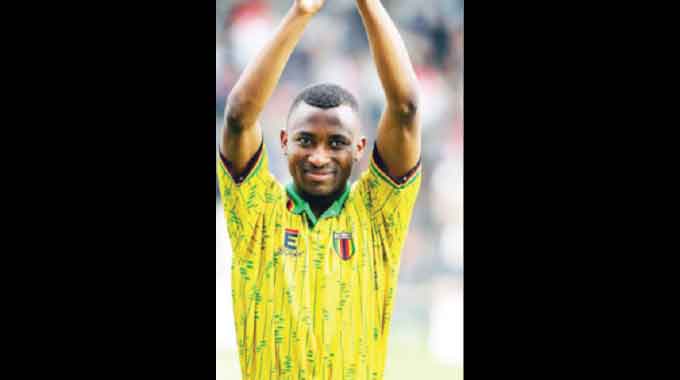
As far as I’m concerned, only FOUR footballers — Peter Ndlovu, the GOAT, George Shaya, Moses Chunga and Bruce Grobbelaar — qualify to be called Zimbabwean football legends.
Stanley “Sinyo” Ndunduma, who was outstanding for both the clubs he played for and for the Warriors in the ‘80s, deserves special mention but falls just short of making this grade of national legends.
Knowledge Musona, too, deserves special mention here.
The rest, as good as they were, are legends at their football clubs.
King Peter, the first African footballer to feature in the English Premiership, the first visiting player to score a hat-trick against Liverpool at Anfield in more than thirty years, and the only African to do it so far.
The first captain to guide the Warriors to the AFCON finals, the first Warrior to score at the AFCON finals, and the only Warrior to score in consecutive games at the AFCON finals.
Mudhara Shaya, Five-Time Soccer Star of the Year, and we can only imagine his impact in international football if the Warriors had not been barred during his prime years.
But winning the Soccer Star of the Year five times, including three on the trot, at a time when the game was brimming with genuine football stars like Tendai Chieza, Peter Nyama, Ernest Kamba, and Moses Moyo, is the stuff of legends.
His iconic performance in the Southern Africa Champion of Champions final showdown against Orlando Pirates in 1976 sealed his immortality and legendary status.
Chunga divides opinion, but no one questions his incredible talent.
Becoming the first Zimbabwean to move to a European club, after Independence, is the stuff of legends.
They still roll out the red carpet for him in Belgium, and his performances for the Warriors, after the turn of the ‘90s, after he had made peace with the ZIFA leaders, is the stuff of national legends.
Grobbelaar joined English side Crewe Alexandra on loan from Vancouver Whitecaps of Canada on December 18, 1979.
Then, he moved to Liverpool where he won just about everything — six league titles, two FA Cups, three League Cups, five FA Charity Cups, one European Cup (now known as the Champions League) and one Super Cup.
He was in goals for the Dream Team as they came within one win of qualifying for the ’94 World Cup.
ONLY THREE COACHES QUALIFY FOR LEGENDARY STATUS
When it comes to the coaches, I think only THREE – Sunday Chidzambwa, Charles Mhlauri and Kalisto Pasuwa — qualify for legendary status, on a national scale, in this country.
Mhofu tops that list and his achievements are there for everyone to see — the first coach to guide a Zimbabwean club to the final of the CAF Champions League and, 28 years later, he remains the only one.
He is also the first coach to guide the Warriors to the AFCON finals.
Charlie would have just been a legendary CAPS United coach for his exploits in 2004 and 2005, but guiding the Warriors to the AFCON finals in 2006 transformed his status into legendary, on a national scale.
He is the only Warriors coach to finish with the same number of points as one of the teams that made it to the knock-out stage, and lost out because of an inferior goal difference.
His Warriors finished with the same number of points (three) as Senegal, who made it to the knock-out stages, but lost out on goal difference. They beat a World Cup-bound Ghana and no one knows what would have happened if a “third” goal against the Black Stars, which was controversially disallowed for offside, was allowed to stand.
Pasuwa won four league titles on the bounce with Dynamos, guided the Warriors to the 2017 AFCON finals and won a number of league titles in Malawi, where he is now coaching their national team.
For me, only three men — Charles “CNN” Mabika, Evans Mambara and Choga Tichatonga Gavhure — qualify on my list to be called legendary Zimbabwean football commentators.
The legendary Mabika tops that list, not because he ventured into television, but because he made the biggest impact when it comes to football commentating, in this country.
Only four men — Felix Tangawarima, Brighton Mudzamiri, Felix Sanyika and Frank Valdemarca — qualify to be called Zimbabwe’s legendary football referees.
Wilfred Mukuna deserves special mention here but falls just short.
And only two men — Allan Hlatshwayo and Jahoor Omar — deserve the honour of being called Zimbabwe’s legendary football writers.
Allan, who also starred for Dynamos during his playing days, was a pioneer who became the first black Sports Editor of this newspaper.
One interview stands out.
On the eve of a major Cup final, he decided to visit Rufaro and see how the groundsmen were preparing the stadium for the show-piece.
He decided to interview one of them, who was busy tending the lawn around the centre circle, and asked him which team he thought was going to win the Cup final.
“Dynamos,” came the authoritative response.
The challenge, though, was that DeMbare were not playing in that final.
Omar is my mentor and remains the greatest Zimbabwean football writer of all-time.
Special mention, though, should go to Tinaye Garande.
His pen was something else, and it’s a pity he died young and we will never know where his profession would have taken him.
Special mention, too, should go to Collin Matiza, the man we call Mandela, for his longevity.
God willing, next year, he will clock 40 years in the trenches, all in service for this grand old newspaper.
To God Be The Glory
Peace to the GEPA Chief, the Big Fish, George Norton, Daily Service, Sitting Bull, Crazy Horse, and all the Chakariboys still in the struggle.
Come on Warriors!!!!!!!!!!!!
Antoniooooooooooooo!
Text Feedback – +263772545199
WhatsApp – +263772545199
You can also interact with me on
Twitter (@Chakariboy), Facebook, Instagram (sharukor)