


 Online Reporter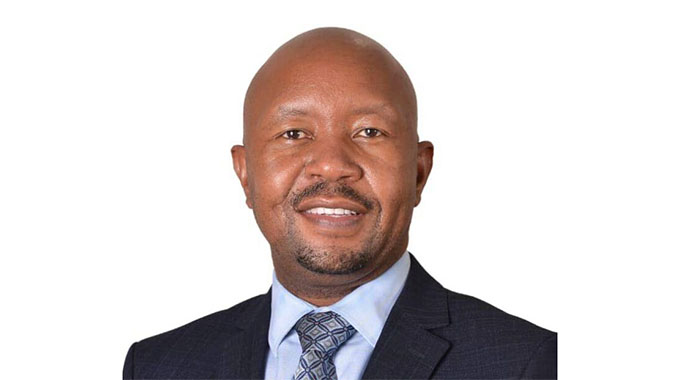
Dr Aspect Maunganidze
ZIMBABWE’S health sector has achieved various milestones in the last year and a half.
These milestones have strengthened the sector in various ways.
The Medicines Control Authority of Zimbabwe (MCAZ) achieved the World Health Organisation (WHO) Maturity Level 3.
This achievement indicates a stable, well-functioning and integrated regulatory system for medicine regulation.
It enhances the country’s capacity to ensure the quality, safety and efficacy of medical products, contributing to progress towards universal health coverage.
In October 2024, Zimbabwe launched its Health Workforce Strategy (2023-2030) aimed at strengthening and transforming the country’s human resources for health.
The vision is of doubling our health workforce by 2030.
The ministry has already embarked on expanded training, revamping of schools’ infrastructure and piloting of e-learning in nursing.
Zimbabwe launched the 2.0 One Health Antimicrobial Resistance (AMR) National Action Plan after a two-year intensive development exercise.
The plan adopts a comprehensive “One Health” approach, integrating human, animal and environmental health sectors to combat AMR.
In December 2024, Zimbabwe initiated a collaborative effort to reduce maternal mortality, which stood at 357 deaths per 100 000 live births.
The approach involves the Government, healthcare providers, community representatives and development partners working together to improve access to essential healthcare services for expectant mothers, with a special focus on rural communities.
The ministry has also commissioned various clinics and mini-hospitals in the country.
The latest to be launched was the Runyararo mini-hospital in Chimanimani.
Mataga mini-hospital is set to be commissioned in June.
Quaternary or specialist services have been expanded and brought closer to the people.
This has seen Chitungwiza and Gweru hospitals offering advanced surgeries such as total hip and knee replacement.
Open-heart surgeries at Parirenyatwa Group of Hospitals managed to go beyond the milestone of 50 operations.
Priorities
This year, the ministry is focusing on improving health service delivery in particular through decentralised service provision, improved access to medicines, diagnostics, optimised infrastructure and a motivated, compassionate and caring health workforce.
Infrastructural upgrading is important in making our institutions fit for purpose in the 21st century.
The ministry is now actualising the recently signed Health Investment Compact (2024-2026), which seeks to address the human resources gaps that exist in Zimbabwe.
Healthcare professionals shortages
This is a matter of great concern to the ministry.
While there is high attrition of personnel to the so-called greener pastures, internal rural-to-urban migration has also led to manpower shortages in the rural areas.
The ministry and the Health Service Commission are looking at equitable distribution of personnel and incentivisation of rural posts.
This is one of the key deliverables expected from the bipartite deliberations that are ongoing.
Availability of essential medicines
The Government is putting in place efforts to make sure hospitals have adequate supplies of medicines and medical commodities.
Treasury allocated a budget of US$44 million for medicines in 2025.
We have ongoing supply contracts with Intrapharma and Clean Planet to enhance the supplies.
Treasury is mobilising additional resources to mitigate donor funding reductions.
This is done through various mitigating measures such as sin taxes and ring-fencing of funds for health.
The supplies of antiretroviral, anti-TB (tuberculosis) and anti-malarial drugs are adequate for the rest of 2025, and we want to reassure the nation that we are ready for 2026.
Investment in infrastructure
The Ministry of Health and Child Care is enhancing healthcare infrastructure in Zimbabwe by renovating key institutions like Sally Mugabe, Mpilo and Cowdray Park hospitals, upgrading Masvingo Hospital into a teaching hospital and constructing 20-bed mini hospitals in various districts (Harare, Esigodini, Muzarabani, Hwedza and Victoria Falls).
The national TB reference lab in Harare is 100 percent complete and the upgrading of Mpilo to meet modern standards is 80 percent complete.
The ministry is also expanding infrastructure, mainly maternity, cancer and dialysis wards, at Sally Mugabe, Chitungwiza Central and Victoria Chitepo hospitals.
Waste management is being improved, with 350kg incinerators installed at Sally Mugabe and Mpilo Central hospitals, and 150kg incinerators planned for all provincial hospitals.
The ministry has also drilled 401 boreholes equipped with solar power and tanks, targeting 180 water-stressed sites this year.
The Solar for Health initiative has equipped over 1 044 health facilities with solar systems, reducing power outages and ensuring continuous operation of essential medical services.
Maternal and child health services
Zimbabwe is promoting access to healthcare by providing free maternity services, especially at clinics supported by the Results-Based Funding programme.
We are also pushing for integrated outreach services. This is meant to bring services closer to the people.
The ministry also strongly believes in working with the community through village health workers; for example, for screening of malnutrition at household level and promoting vaccinations in the community.
The Urban Voucher Programme has also assisted the urban poor to access maternal services.
The ministry continues to lobby for more resources to ensure that critical drugs and sundries will be available through the national pharmaceutical company.
We have also maintained the provision of blood for free through a coupon system.
This is key in reducing maternal mortality.
These measures have gone a long way in reducing the maternal mortality rate from over 600 deaths per 100 000 live births to 363.
This is still high, as we believe no woman should die while giving birth and, in this regard, we will continue to focus our energies and resources to reduce the mortality rate much further.
Funding
In 2025, the Ministry of Health and Child Care is intensifying efforts to secure consistent domestic funding for health services amid resource constraints.
The Government has increased its health sector allocation to 13,01 percent of the National Budget, moving closer to the 15 percent target set by the Abuja Declaration.
Innovative financing mechanisms include the Health Fund Levy; a 5 percent airtime levy on every dollar of data purchased, which has raised US$10 million; and a sugar tax generating US$28,6 million, both earmarked for cancer treatment and essential medical supplies.
Additionally, a 0,5 percent fast-food tax introduced in January 2025 is expected to further bolster health funding.
To ensure effective utilisation, the ministry conducts quarterly reviews with the Ministry of Finance, Economic Development and Investment Promotion and engages with Parliament and Cabinet, advocating for increased investment in both preventive and curative care.
These initiatives reflect a strategic shift towards sustainable, domestically driven health financing.
For the eligible paying patients, the ministry has implemented a cost-recovery system, where the basic cost of services can be recovered from the member’s respective medical aid.
The ministry is also pushing for the establishment of national health insurance that is expected to increase funding for health.
Staff remuneration
The Health Service Commission is now in place and together we have been seized with finding ways of improving the condition of services.
These measures go beyond just remuneration to include non-monetary benefits like subsidised accommodation, transport and food.
Improvements in the availability of tools of trade will also help improve working conditions of the health workers.
The Health Service Commission will be guided by macroeconomic fundamentals and recommendations of a job evaluation in reviewing conditions of service for health workers.
Engagements with worker representatives will take place in June 2025.
Open-heart surgeries
Open-heart surgery is a critical indicator of Zimbabwe’s healthcare capabilities.
The successful launch of the programme in June 2023 has seen 62 patients being operated on to date.
Clearly, this presents an opportunity to grow the specialised workforce and places Zimbabwe among its peers.
The combination of different specialists and specialised equipment will propel the country into the future.
This service has a huge potential of reversing outward medical tourism and making Zimbabwe a regional hub or centre of excellence.
Cancer treatment machines
The procurement of cancer treatment machines is progressing well, with the Procurement Regulatory Authority of Zimbabwe (PRAZ) having approved tenders that the ministry submitted to the Special Procurement Oversight Committee (SPOC).
Contracts are set to be issued shortly after the standard stand-down period.
We are on schedule to deliver timeously, as previously advised.
Health services digitalisation
As part of efforts to achieve Universal Health Coverage, Zimbabwe’s digital health superhighway now covers over 65 percent (1 300 of 2 000) health facilities with electronic-first data capture via patient record and logistics management systems.
Laboratory and pharmacy functions are fully integrated through the Laboratory Information Management System, with 116 of 127 laboratories live and automated pharmacy workflows ensuring reliable medication supply.
Additionally, eLearning platforms have helped deliver continuous professional development and help mitigate workforce attrition.
More than 100 facilities are connected via Starlink, with plans for nationwide scale-up; all 29 sites in Gokwe North district — including Kwekwe General, Gweru Provincial and Mpilo hospitals — now feature Starlink connectivity and telemedicine infrastructure.
The Gokwe North pilot project demonstrated technical feasibility and high user satisfaction, and a national telemedicine rollout is underway to extend remote diagnostics and specialist consultations to every district.
We have rolled out a health information exchange that integrates patient, laboratory, pharmacy, logistics and District Health Information Software 2 data to enable seamless care coordination and real-time analytics.
We also have a national health ID and health card that ensure unique patient identification.
These digital health interventions are co-designed and supported by relevant Government ministries, agencies and implementing partners, advancing Zimbabwe’s National Development Strategy and Sustainable Development Goals.
Challenges to attaining universal health coverage
The major challenges have been emanating from funding shortfalls.
As we endeavour to be an upper middle-income country, resource constraints are a major challenge to access to health.
The recent United States Executive Order that significantly reduced health financing further exacerbated the strain on our health sector.
We, however, have put all efforts to explore new domestic financing options and Treasury is seized with the same
issue.
Adequate funding allows for infrastructural upgrading, adequate medicines and commodities supply and staff motivation
The other major challenge is that of healthcare workforce shortages, particularly in rural areas.
The Health Workforce Strategy seeks to double the health workforce by 2030.
This entails increased training, expansion of establishments, robust staff retention mechanisms and infrastructure upgrading, among other measures.
We are on course to achieving this vision.
Other measures that are key to universal health coverage include strengthening community health engagement through the National Community Health Strategy.
Dr Aspect Maunganidze is the Permanent Secretary in the Ministry of Health and Child Care. He was speaking to The Sunday Mail’s Tanyaradzwa Rusike.



 Online Reporter