dyton mupawaenda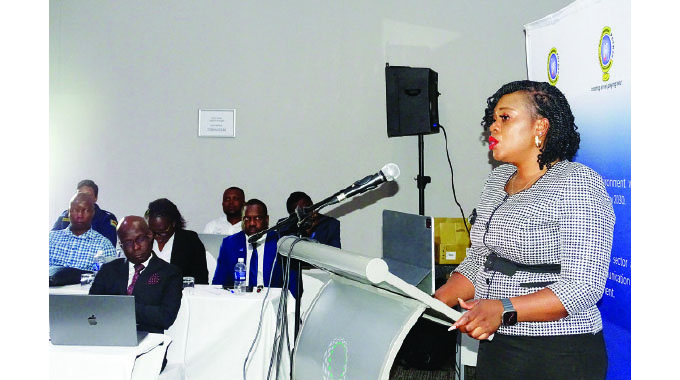
Victor Maphosa-Mash East Bureau
MOBILE network operators must continue to address connectivity challenges that are affecting access to the internet by users, especially those in rural areas where infrastructure can be shared to ensure full access, Information Communication Technology, Postal and Courier Services Minister Tatenda Mavetera said yesterday.
Minister Mavetera was commissioning the Karimbika Base Station in Ward 11 of Uzumba Maramba Pfungwe District in Mashonaland East.
This base station is a result of the tower relocation programme being spearheaded by the Postal and Telecommunications Regulatory Authority of Zimbabwe (Potraz), in cooperation with the three cellular service operators and that is driven by the infrastructure sharing policy of Government.
The policy ensures that mobile network operators share infrastructure resources such as towers and base stations to cut operating costs per customer to ensure affordable services for consumers.
By sharing infrastructure, operators can avoid unnecessary duplication of efforts and improve efficiency in service provision. While urban populations tend to be very dense, so a base station needs to cover a small area, rural populations are more spread out yet the radius of a station is around the same, so the number of subscribers per station is a lot lower, hence the advantage of sharing so each station can serve something closer to its maximum number and so be most efficient.
Infrastructure sharing is not only cost-effective but also key to achieving Vision 2030 of an empowered upper-middle class society through providing widespread access to reliable telecommunication services.
Before commissioning the base station, Minister Mavetera officially commissioned four computer laboratories at four schools: Mugabe primary and secondary as well as Rudawiro primary and secondary schools.
The schools had already received 30 computers each.
However, Minister Mavetera was concerned over connectivity challenges and urged network operators to address them.
“While the launch of the Karimbika Base Station and Information Communication Technology laboratories is a step in the right direction, it is important to acknowledge that connectivity problems still persist,” said Minister Mavetera.
“Consumers often face challenges such as dropped calls, slow internet speeds, and limited coverage. The Government urges network operators to address these connectivity issues urgently. Poor service provision will not be tolerated as it hinders progress towards achieving a digitally inclusive Zimbabwe.
“The development of a digital economy is crucial for Zimbabwe’s future growth and sustainability. Initiatives like the launch of Karimbika Base Station and ICT laboratories contribute towards achieving this goal by 2028.”
Minister Mavetera said a robust digital economy created numerous economic benefits including job creation, entrepreneurship opportunities and increased productivity through automation processes, among others.
Accessing high-speed internet services was essential for individuals and communities to fully benefit from the digital age.
“However, one barrier to widespread adoption of long-term evolution technology is the affordability of smart devices capable of connecting to these networks. It is imperative that mobile network operators work towards providing affordable smart devices or collaborate with other entities such as device manufacturers or retailers who can make these devices accessible for all.
“Increased access to long-term evolution technology can have far-reaching benefits for the masses. It enables seamless connectivity across various sectors including education, healthcare, agriculture, e-commerce, finance among others. Therefore, it becomes vital that efforts are made towards bridging this digital divide by making smart devices more affordable,” she said.
Minister of State for Provincial Affairs and Devolution for Mashonaland East Aplonia Munzverengwi said the ICT labs and rolling out of base stations, demonstrated the Government’s commitment to capacitate schools to enhance the teaching and learning processes.
“The establishment of these schools ICT labs will ensure that our youth are digitally enabled and capacitated with the necessary soft skills relevant in a digital economy.
“As Mashonaland East Province we take pride in receiving this honour of world-class ICT facilities for our children,” she said.


 Online Reporter