Online Reporter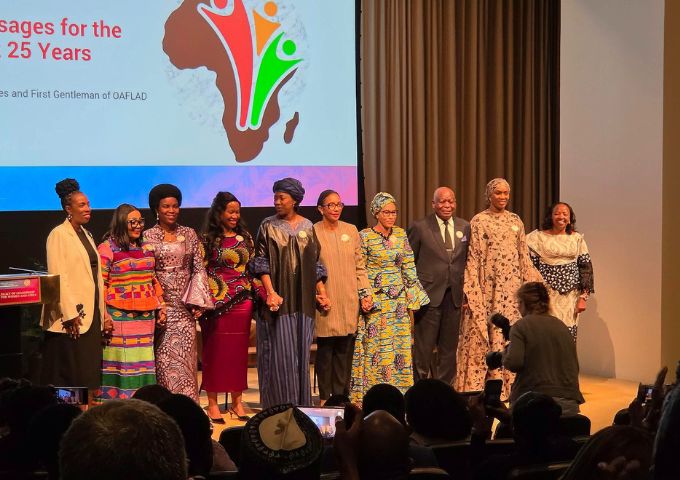
Blessings Chidakwa in New York, United States
ZIMBABWE’S ongoing efforts to reduce maternal and child mortality, protect vulnerable women and youth, and economically empower them have received further continental reinforcement through the Organisation of African First Ladies for Development (OAFLAD).
The reinforcement follows the adoption of OAFLAD’s 2025–2030 strategic framework, which places health, education, gender-based violence and women’s economic empowerment at the centre of its work.
For Zimbabwe, the framework provides a platform to strengthen existing programmes through partnerships, knowledge-sharing, resource mobilisation and continental advocacy.
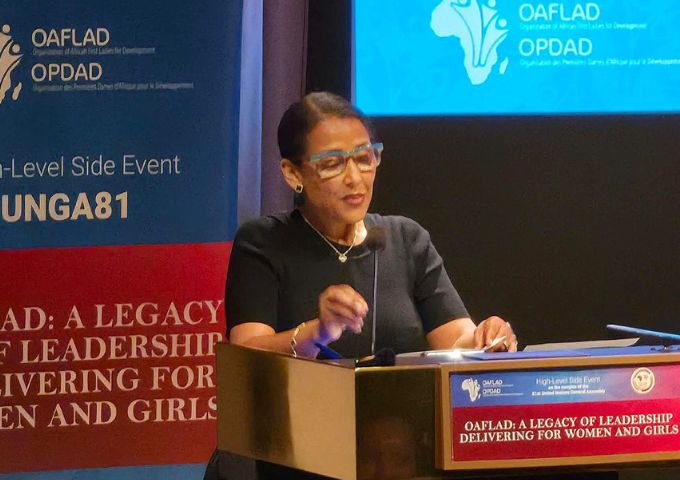
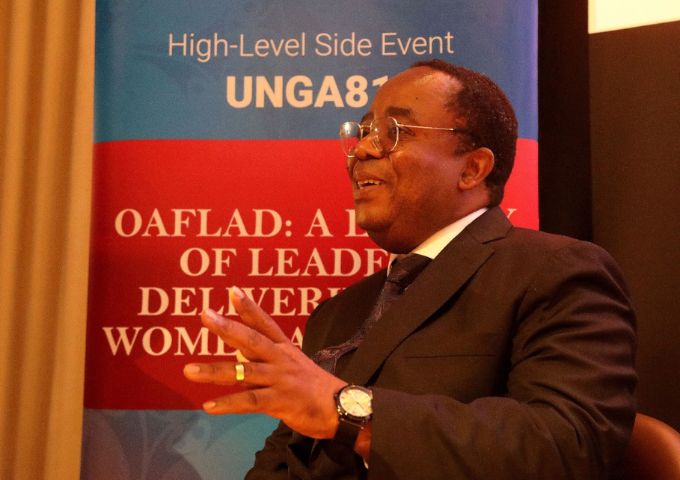
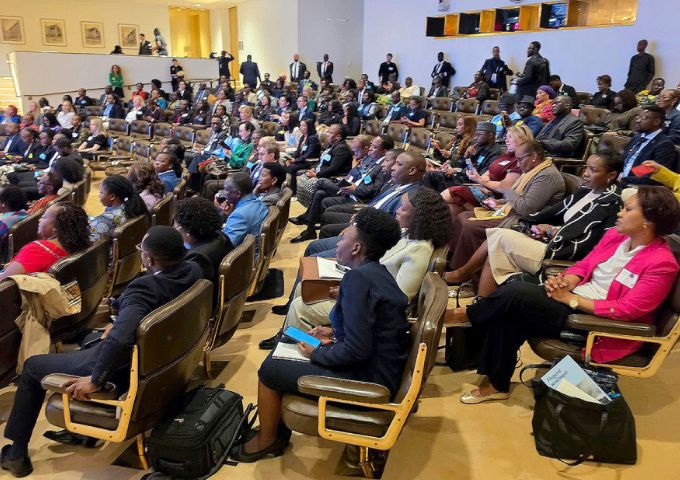
The alignment emerged at a high-level OAFLAD meeting in New York on Tuesday, held on the margins of the 81st United Nations General Assembly.
The meeting brought together African First Ladies and First Gentleman, development partners, United Nations and African union representatives and private-sector leaders.
They discussed practical measures to improve the lives of women and girls, particularly those in underserved communities.
Zimbabwe already has programmes underway across the areas covered by the OAFLAD framework, many of which are being championed by First Lady Dr Auxillia Mnangagwa, who previously served as an OAFLAD Vice President, a role she held dearly.
Dr Mnangagwa has been supporting efforts to improve maternal and child health. Her interventions include specialist medical outreaches and the mobilisation of medical equipment and supplies for public health facilities, as well as baby preparation kits to cushion vulnerable households.
During community and hospital visits, she promotes maternal nutrition, hygiene, infant care and the involvement of families in maternal and child health.
Dr Mnangagwa is supporting HIV and AIDS prevention, testing and treatment awareness while taking health services closer to vulnerable communities through mobile hospitals and clinics, improving access to testing, health education and treatment.
Such initiatives are contributing to broader national efforts to control HIV, including progress towards the UNAIDS 90-90-90 targets, while efforts to address HIV-related illnesses and cancers continue.
The Health and Child Care Ambassador is also advocating for greater awareness and early intervention in the fight against cancer, including childhood cancer, engaging parents and guardians on the importance of recognising warning signs and seeking timely medical attention.
Cancer awareness campaigns have been taken across the country, including to hard-to-reach communities, bringing vital information closer to families.
On economic empowerment, through the Agric4She, Solar4She and AgroTourism4She programmes, Dr Mnangagwa is supporting rural women to turn their homes and available resources into viable businesses, creating livelihoods, strengthening household incomes and expanding economic opportunities in their communities.
Through Agric4She, Dr Mnangagwa is helping rural women participate in agriculture and build livelihoods through farming, livestock production and related activities.
AgroTourism4She links agriculture with tourism, encouraging rural women to use their homes, farms, local produce and cultural heritage to develop tourism-related businesses.
Through Solar4She, Dr Mnangagwa is promoting the use of solar energy to support women-led enterprises, particularly in communities where limited access to reliable electricity can constrain economic activity.
Dr Mnangagwa’s work to protect vulnerable girls also dovetails with OAFLAD’s focus on education and gender-based violence.
Through the “Not in My Village” campaign, she works with traditional leaders and communities to raise awareness of child marriage and teenage pregnancy.
The initiative encourages communities to protect children’s rights, keep girls in school and support them to pursue further education and other opportunities.
Education remains another important area of intervention, with schoolchildren receiving support through Dr Mnangagwa’s school feeding programmes.
The provision of nutritious meals is helping improve learners’ wellbeing, concentration and ability to learn, while encouraging regular school attendance among vulnerable children.
The alignment was also highlighted by Dr Mnangagwa’s Technical Adviser, Dr Bernard Madzima, who said Zimbabwe was already implementing programmes in line with the continental framework.
Dr Madzima was accompanied by Dr George Jakanani.
“As Zimbabwe, it was noted in the report that was shared that Her Excellency has made significant progress over the past few years in empowering those who are left behind, be they women, children or young girls, by tackling issues of health and, lately, drug and substance abuse,” he said.
“So, guided by the OAFLAD template, Zimbabwe now has a 2026 to 2030 strategic plan, which will focus on implementing these key pillars so that no one is left behind.”
He said the plan also supported the objectives of the National Development Strategy towards Zimbabwe becoming an upper-middle-income economy by 2030.
Maternal and child health remains a key area of Dr Mnangagwa’s work.
“She is the Ambassador for Health, and one of the key areas she has focused on over the years is reducing maternal and child mortality,” said Dr Madzima.
“Through her programmes, she has ensured that women, especially young babies, neonates and newborns, have greater chances of surviving throughout pregnancy and during childbirth.”
The meeting also focused on the need for stronger leadership to address preventable maternal deaths across Africa.
Guest speaker Professor Senait Fisseha, MD, JD, Vice President for Global Programs at the Susan Thompson Buffett Foundation, urged African First Ladies and First Gentlemen to raise the level of urgency in tackling maternal mortality.
“We need your leadership to make even one death unacceptable, to raise the alarm bell and the level of urgency that is needed to tackle this scourge that we have been dealing with for decades,” she said.
Prof Fisseha said Africa could achieve a future where maternal deaths were rare and women and girls could access healthcare with dignity.
The discussions came against the background of another major development in the protection of girls.
On September 4, 2026, the United Nations General Assembly adopted a resolution establishing November 27 as the International Day for the Elimination of Child, Early and Forced Marriage.
The decision followed years of advocacy by African First Ladies and First Gentlemen, grassroots organisations and global child rights defenders.
Prof Fisseha said the achievement demonstrated what could be achieved when leaders refused to accept harmful practices as inevitable.
OAFLAD President and First Lady of Sierra Leone, Dr Fatima Maada Bio, said the organisation’s 25-year legacy should be measured by lives changed, systems strengthened and opportunities created for African women and girls.
She said advocacy must translate into action that reaches communities and influences systems, policies and opportunities.
Dr Bio said OAFLAD’s next chapter should focus on measurable impact, stronger partnerships, innovation and greater participation of young people as leaders.
OAFLAD was established in 2002 as the Organisation of African First Ladies against HIV/AIDS before evolving into the Organisation of African First Ladies for Development. Its current work covers maternal and child health, education, gender equality, women’s economic empowerment and the protection of women and girls.
For Zimbabwe, the framework therefore reinforces work already underway while opening further scope for the country to share its experiences, strengthen partnerships and connect ongoing initiatives to wider continental efforts for women and girls.