


 Online Reporter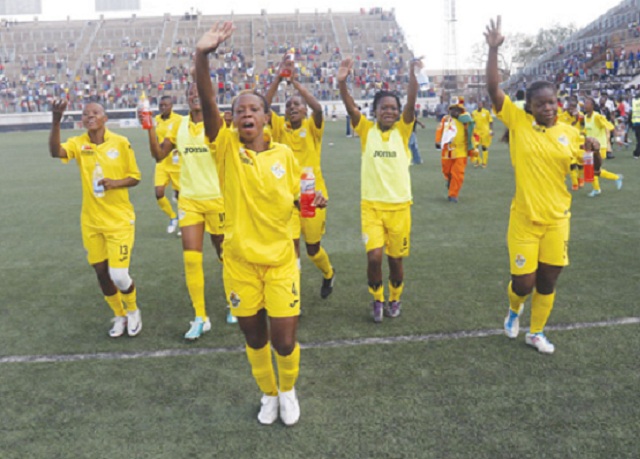
Inside ZIFA-Nqobile Magwizi
I GREW UP in a big family with more than 22 sisters, a household alive with laughter, chatter and the constant hum of activity.
Ours was a home defined by care and hospitality; no matter how little we had, my sisters always found a way to make everyone feel welcome.
My elder sisters, particularly Mizbah and Sibongile (now late), left a lasting mark on my childhood heart.
I remember the long walks to Gokwe Centre, along dusty roads, my small legs aching with each mile. When I could go no further, they would take turns carrying me on their backs, whispering encouragement, determined to get me safely to the destination.
They never complained, and they never left me behind.
That spirit of sacrifice, teamwork and relentless support shaped me, and it is the very spirit we need to embed in women’s football in Zimbabwe.
Like my sisters who carried me when I was too tired to walk, our institutions, communities and leaders must be willing to lift the women’s game when challenges seem insurmountable.
It is only through this unity and selflessness that we can build a stronger foundation for the Mighty Warriors, our women’s clubs and the young girls who dream of a future in football.
For a moment, we saw what was possible.
When the Mighty Warriors — the Zimbabwe women’s national team — qualified for the 2016 Olympic Games in Rio, the nation erupted in joy.
It was a proud moment not just for the players, but for every girl who dared to dream.
One of the standout players from that campaign, Rudo Neshamba, continues to inspire today — not only through her legacy on the pitch, but now as chairperson of the Zimbabwe Olympic Committee Athletes Commission.
She is a reminder that women’s football can shape leaders, role models and trailblazers.
But we must admit that the joy of Rio 2016 has since fizzled out. The visibility of the Mighty Warriors has diminished. The local women’s league has battled inconsistent support.
Many of our girls play without proper kits, on poor pitches, often without medical care or structured development paths. Yet, despite these hardships, they keep showing up — with talent, heart and hope.
The story of women’s football is one of passion, commitment and selfless dedication to a dream that many believed would never come true.
When Zimbabwe hosted the 2002 COSAFA Women’s Cup and the Mighty Warriors reached the final, the seeds that had been sown began to flourish into a strong field of dreams.
That flame, nurtured by pioneers like Susan Chibizhe, Eusebia Nleya, the late Pauline Matute, the late Faith Mpaso and others who laboured against stereotypes and societal barriers, deserves to be kept alive with respect and honour.
To change the narrative, real structures must be put in place and encouragingly, that work is now underway.
A comprehensive women’s football strategy, led by FIFA consultant Thubelihle Sibanda, is in the final stages of completion.
This process has taken her across the country, engaging stakeholders from the grassroots to the elite level, listening to the voices of those at the heart of the game.
The strategy will be a road map to guide investment, competitions, talent development and leadership inclusion for women’s football in Zimbabwe.
Leadership matters, and progress is beginning to show.
Today, four of the 11 ZIFA Executive Committee members are women — representing more than 36 percent of the leadership body.
That level of representation was unthinkable just a few years ago. It is a sign of our commitment to inclusivity and a belief that women must not just play the game — they must help shape its future.
But strategies and statistics alone will not drive change. Culture, perception and consistent support are equally important.
We must move away from treating women’s football as an afterthought or charity project. It is a sport. It is a product. It is a powerful platform for community development, identity and pride.
The next stage of women’s football development will start in schools and communities. Investment in schoolgirls’ football will be intentional and structured — not seasonal or ceremonial.
Talented players will be scouted early, nurtured through academies or club systems and provided with regular competition.
We must also be bold enough to create professional pathways, including a women’s premier league that is funded, televised and marketed to the public.
Live streaming of matches is no longer the huge technical undertaking it used to be. We just need to have the correct mindset for it.
We will have a deliberate drive to enhance the number of women in coaching, refereeing and administrative roles. This will be done not because they are women, but because they are capable.
Leadership spaces will be opened and mentorship programmes introduced to equip future female leaders with the skills and support they need.
There is reason to hope.
Clubs like Herentals, Correctional Queens, Black Rhinos, Blue Swallows and Borrow Jets have consistently supported the women’s game.
More girls are turning up for trials. Fans are beginning to follow their local women’s teams. And the spirit of the Mighty Warriors still lives on — in young girls practising barefoot on dusty fields, in local tournaments across provinces, in coaches working with no pay simply because they believe.
Our responsibility as ZIFA is to carry them forward like what my sisters did for me — carry them when the path is too tough, guide them when the way is unclear and never stop believing in their strength.
Women’s football is not a side project — it is our pride, our opportunity and our responsibility.
The future of Zimbabwean football is not male or female. It is inclusive. It is united.
Nqobile Magwizi is the president of the Zimbabwe Football Association (ZIFA).



