Online Reporter
MacDenias Moyo
The soil of Zimbabwe is not ordinary earth, but it is the sacred inheritance of our ancestors, the battlefield upon which our destiny was fought and won the marrow of our sovereignty.
Heroes Day is the covenant renewed each August, reminding us that the liberation struggle was not only about the right to vote or the end of racial segregation, but it was about reclaiming the land that had been stolen from our people and restoring the dignity of a nation dispossessed.
Land is the axis of freedom, the foundation of independence, the bloodline of our republic. Without land there is no liberty, without land there is no nation.
When Rhodesian settlers carved their colony out of our homeland, they seized the most fertile valleys and plains for themselves and drove the black majority into barren reserves where hunger and poverty became permanent companions.
Families were stripped of their ability to farm and provide for their children.
The settler regime enacted laws that criminalised African ownership of productive land and entrenched a system where the white minority controlled over 70% of arable land while the indigenous majority languished in destitution.
This injustice was the fuel of Chimurenga.
Josiah Tongogara declared that “the war is about land because without land the people have no life.”
Robert Mugabe thundered that the land question was the core of the struggle and that independence without land was hollow.
Joshua Nkomo proclaimed that the soil of Zimbabwe belonged to its people and that no foreign power had the right to dictate its use. Herbert Chitepo warned that the liberation war would be meaningless if the land question was not resolved.
Mbuya Nehanda’s immortal words “mapfupa angu achamuka” were not poetry, but prophecy a covenant that the bones of the oppressed would rise again to reclaim dignity.
The Land Reform Programme launched at the turn of the millennium was the fulfillment of that vow.
It was the irreversible reclamation of sovereignty. By 2013 nearly all white owned farms had been redistributed to black Zimbabweans.
Today over 300 000 families have been resettled on land that was once the preserve of a minority elite.
President Mnangagwa has declared that “land is the birthright of every Zimbabwean and no one shall ever reverse the gains of the struggle.”
Business leader and ZANU PF Central Committee Member Dr Kudakwashe Tagwirei has echoed this sentiment emphasising that agriculture is the backbone of the economy and that the empowerment of indigenous farmers is the true measure of sovereignty.
The voices of modern heroes resonate with the voices of liberation war commanders reminding us that the land is not negotiable that it is the covenant of Chimurenga fulfilled.
The gains are visible in the transformation of our agricultural sector. Tobacco production has rebounded with Zimbabwe now among the top exporters in Africa earning over US$1 billion annually in foreign currency.
Maize harvests have stabilised through the Presidential Inputs Scheme ensuring food security for millions with 2.29 million tonnes harvested in 2025.
Wheat production has surged with irrigation schemes revitalising formerly idle land reaching 640 000 tonnes in 2025, double the five year average. Sugar estates, ethanol plants, fisheries, horticulture and livestock have all expanded under indigenous stewardship.
The beef industry has regained momentum with communal and commercial farmers contributing to national supply.
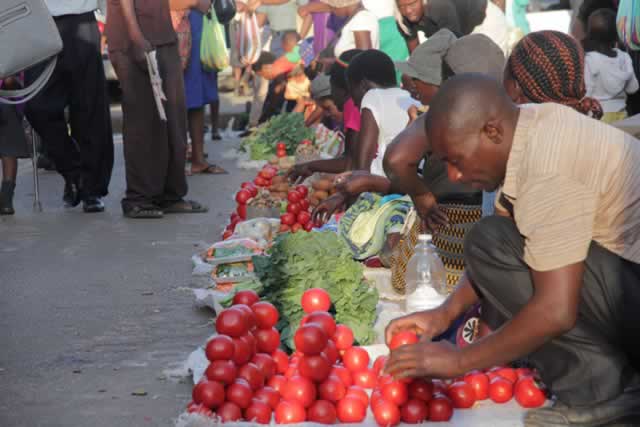
Potatoes, tomatoes, fruits and vegetables now flourish across provinces feeding both domestic markets and export chains.
Traditional grains have strengthened food security with 634 000 tonnes harvested in 2025. Horticulture exports of citrus and berries have expanded into European and Asian markets.
Livestock production has grown with beef and poultry industries supplying both domestic and regional demand.
Irrigation schemes have expanded to cover thousands of hectares ensuring year round production.
The Presidential Inputs Scheme has empowered millions of smallholder farmers.
Pfumvudza has transformed subsistence farming into productive enterprise.
Title deeds have given farmers security to invest in mechanisation and infrastructure. Youth empowerment programmes have brought a new generation into agriculture ensuring continuity and innovation.
Command Agriculture under the First Republic brought discipline and structure to production ensuring that strategic crops were prioritised.
The Second Republic has deepened these gains through Pfumvudza Intwasa conservation farming which has empowered smallholder farmers to maximise yields on limited plots.
Land tenure reforms and the issuance of title deeds have given farmers security and confidence to invest in their land.
The emergence of young farmers and youth cooperatives has injected new energy into agriculture.
The National Youth Empowerment Strategy 2026–2030 aligns with Vision 2030 projecting Zimbabwe as an upper middle income economy driven by a vibrant agricultural base.
Targets have been set for wheat self sufficiency, for expanded horticultural exports, for increased livestock production and for sustainable irrigation schemes that will shield the nation from climate shocks.
Heroes Day is not a ritual performed every August.
It is a reminder that sovereignty is sacred, that unity is non negotiable and that the sacrifices of the fallen demand vigilance from the living.
It is a day to proclaim that Zimbabwe shall never be a colony again, that the republic shall endure and that the vision of Nehanda and Kaguvi, of Nkomo and Tongogara, of Mugabe and Chitepo shall continue to animate the nation’s spirit.
The land is our blood and our future. The republic endures because the soil has been reclaimed. The covenant of Chimurenga remains unbroken.