dyton mupawaenda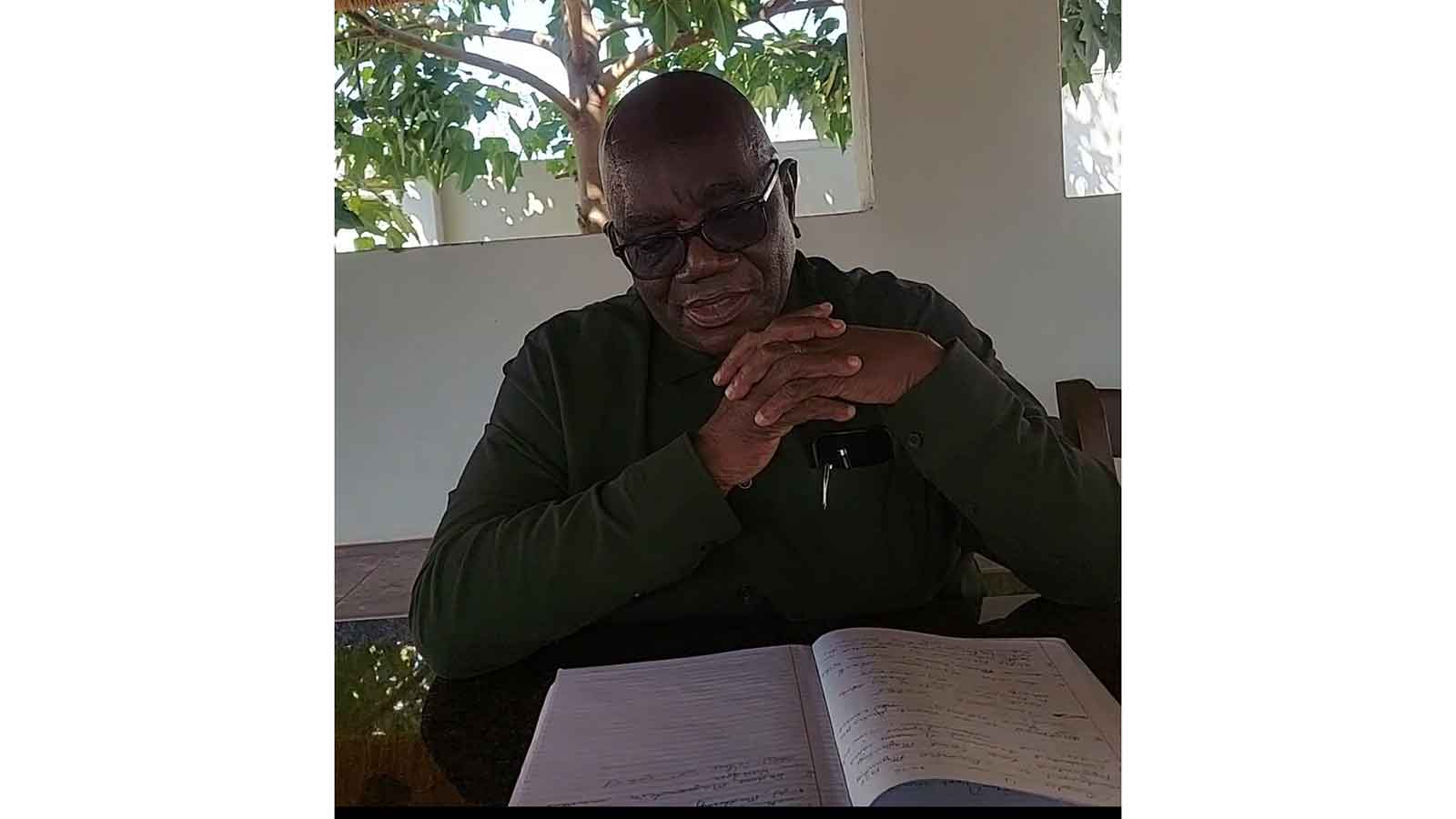
In his account this week, Lieutenant-General (Retired) MICHAEL NYAMBUYA, whose nom de guerre was Cde Mike Mutare, highlights how the masses were a vital cog in the quest for Zimbabwe’s independence. The distinguished politician, military officer and liberation war fighter also tells our Society Editor PRINCE MUSHAWEVATO how he played a role in supporting the unit that bombed the Rhodesian fuel tanks at the Salisbury fuel depot, which became a major turning point in the struggle against colonial rule.
***************
Q: You touched on your successes in battle following your deployment to the front. Could you explain how you coordinated activities with the masses?
A: One of our key priorities was educating the masses.
We made a point of never fighting without first securing local support.
The people fed and clothed us because they truly understood our cause; they stood with us every step of the way.
By 1977-1978, Hwedza had effectively become a liberated zone.
Many young people from Hwedza, Chiduku and Gandanzara stepped up to join the struggle.
With their complete backing, operating across the Tangwena Sector felt natural — we were, as the saying goes, like fish in water.
We felt entirely secure.
The locals acted as our intelligence network, alerting us whenever Rhodesian forces were approaching, including their exact numbers and estimated strength.
Q: With that degree of popular support, did you engage in any special missions?
A: Yes. Around 1978, two teams were dispatched from the rear with orders to strike the fuel storage tanks in Harare (then Salisbury).
One team travelled through the Tangwena Sector, but ours was delayed and could not make it in time.
It was ultimately the team coming through the Chitepo Sector that succeeded in hitting the tanks.
I personally escorted the Tangwena team — who were armed with M90s, bazookas and other heavy weapons — as far as Chihota.
While stationed with the Chihota detachment one night, we saw massive flames lighting up the sky, confirming the tanks had been hit.
It turned out to be one of the most spectacular operations ever carried out by the Zimbabwe African National Liberation Army (ZANLA).
Q: There have been reports claiming the bombing of the fuel tanks was actually a Zimbabwe People’s Revolutionary Army (ZIPRA) mission. Could you clarify this for us?
A: No, no, no! That was purely a ZANLA operation. Let us be very clear about that.
As I mentioned, two teams were sent: One came through Tangwena and the other through the Chitepo Sector.
It was the team from the Chitepo Sector that reached the tanks first and they executed the operation brilliantly.
That was the exact moment Ian Smith realised the war had arrived at his doorstep.
Fuel tanks critical to the nation were struck and massive supplies went up in smoke.
Remember, Mozambique had already closed its borders, forcing Rhodesia to rely on the much longer transport route through Durban for imports and exports.
It was a spectacular operation.
Following that, we maintained steady pressure on white farmers across Hwedza, Charter (now Chivhu) and Beatrice by carrying out a series of ambushes.
Beatrice served as a holding area for aircraft preparing to land at the Harare International Airport (now the Robert Gabriel Mugabe International Airport).
On one occasion, we opened fire on an aircraft descending over Beatrice and ambushed nearby Rhodesian forces.
This deeply shook the Rhodesian community; they realised there was nowhere left to hide and that we were closing in on Harare.
Around 1978, we targeted a white farmer named Bob Rutherford, who operated in the Igava area of Hwedza.
He owned about 500 Hereford beef cattle and we decided to make the farmers feel the weight of what their regime was doing to our people.
Q: What happened during that operation?
A: I led the operation myself.
We went to the paddocks, cut the perimeter fences and drove the entire herd out into the surrounding rural communities.
We pushed the cattle into Hwedza and down towards the Njanja area, telling the local villagers to slaughter the cattle and eat the beef, which they did.
Naturally, the Rhodesian response was very, very, very swift and heavy-handed.
They deployed forces in large numbers to terrorise the population and carry out reprisals.
Anyone found with beef in their home was severely harassed and tortured.
Despite their retaliation, we achieved our objective. The white Rhodesian farmers realised that Rhodesia was no longer safe and that the liberation war had reached a point of no return.
Q: Ultimately, what impact did these operations have on the overall armed struggle?
A: This was a key reason Ian Smith could no longer refuse when the Lancaster House talks were convened in 1979.
The Rhodesian forces were under immense pressure and we had inflicted heavy damage on them.
During our initial training programme, the instruction consisted of two core components.
The first was orientation.
In orientation, we were systematically taught the fundamental reasons we were fighting in Rhodesia — what we referred to as the grievances. We studied the injustices the Zimbabwean people suffered under Ian Smith, with land ownership being the single biggest grievance.
Q: Could you elaborate further on those core issues?
A: We were deeply bitter about being denied the right to vote, having our land seized and living under institutionalised racial discrimination.
Our freedom of movement was strictly curtailed. During orientation, we were also taught the Three Main Rules of Discipline and the Eight Points of Attention.
This military doctrine ensured that ZANLA soldiers had a clear ideological understanding of their mission.
The primary objective of training was to instil the proper political mindset, ensuring troops understood why they were fighting, recognised the mechanics of their oppression and embraced the responsibility to liberate themselves.
A cornerstone policy was that we are our own liberators.
While external support was welcome, the responsibility to free Zimbabwe ultimately rested on our own shoulders.
We also engaged heavily with political theory during that time, reading the works of Mao, Lenin and Karl Marx.
The second part of our preparation was direct military training, which was also split into two strategic phases.
First, we were trained to fight as guerrillas.
Guerrillas cannot operate in a vacuum; they live among the people, come from the people, fight within the population and rely on the masses for food, clothing and vital intelligence.
Strategically, guerrilla tactics relied on swift mobility: hit the enemy, move on; hit the enemy and move on.
Second, once we achieved control, the goal was to establish liberated zones, which we eventually did in areas like Gandanzara, Chiduku, Hwedza and Buhera.
From those secure bases, we then transitioned to mobile, semi-conventional warfare.
Lt-Gen (Retd) Michael Nyambuya will continue his narration next week, offering deeper insights into the strategies that ultimately led to Zimbabwe’s independence.


 Online Reporter