
Precious Manomano-Herald Reporter
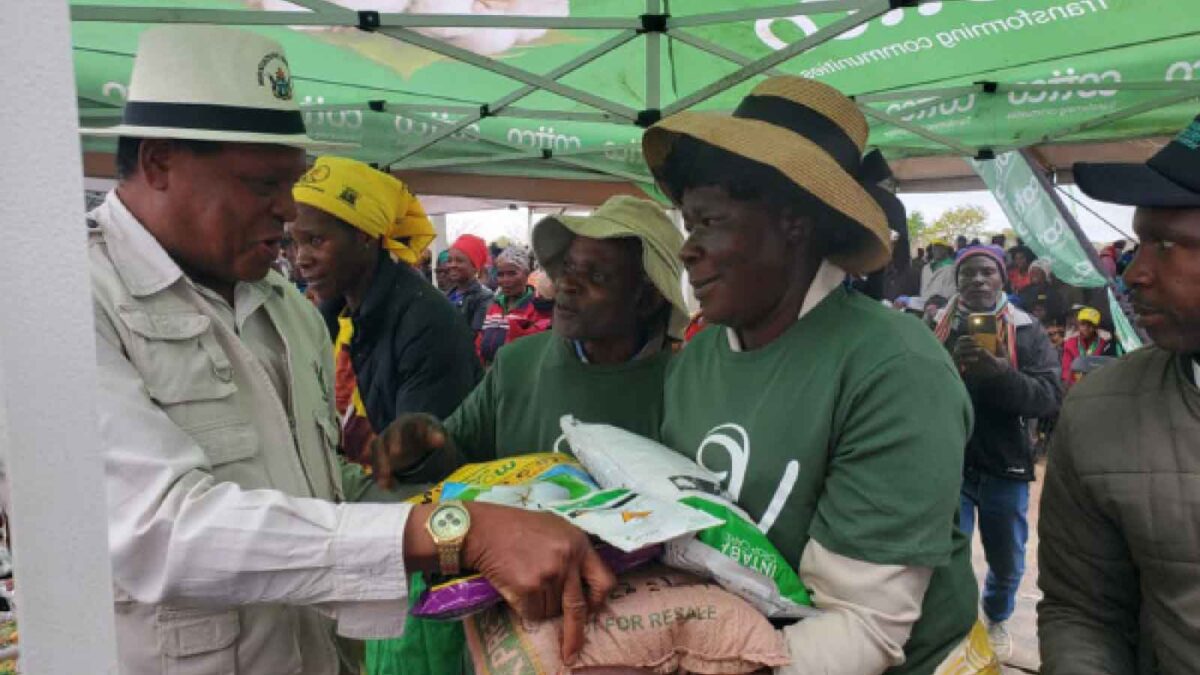
MORE than one million farmers have received agricultural inputs countrywide under Government’s Presidential Input Support Programme as the rollout of the expanded Pfumvudza/Intwasa programme gathers momentum, with 3,5 million beneficiaries expected to benefit this season.
The accelerated distribution exercise is targeting to ensure that inputs reach all wards by the end of this month, as Government moves to equip farmers ahead of the 2026/27 summer cropping season and strengthen national food security.
More than two million hectares have already been prepared under Pfumvudza/Intwasa, which is being expanded to one million hectares from 718 000 hectares previously, in a major push to promote conservation agriculture and build resilience against climate change.
The distribution of seed, fertiliser and other essential inputs comes as recent rains have renewed activity on farms, with farmers preparing planting stations, assessing soil moisture and positioning themselves to take advantage of favourable rainfall conditions.
Agriculture, Mechanisation and Water Resources Development Permanent Secretary Professor Obert Jiri said the distribution exercise was progressing well, with maize seed and top-dressing fertiliser distribution almost complete.
“Inputs distribution is well on course, about 100 percent maize seed and top-dressing fertiliser, just under 50 percent of basal fertiliser, and liquid lime we are beginning to get that and about 40 percent of the sorghum seed,” he said.
“We want every farmer to be able to use liquid lime. So the inputs have come through and we launched the national Pfumvudza/Intwasa programme in Masvingo last month.”
Government has deployed more than 6 000 agricultural extension workers across the country to provide technical support, guide farmers on appropriate agronomic practices and strengthen early warning systems.
The expansion of Pfumvudza/Intwasa reflects Government’s determination to increase agricultural productivity by promoting conservation agriculture, which enables farmers to maximise production from relatively small pieces of land while conserving soil moisture.
Under the programme, farmers are encouraged to prepare planting stations, apply appropriate fertiliser and follow recommended agronomic practices to improve yields, particularly in areas vulnerable to dry spells.
Prof Jiri said the programme was central to the country’s preparations for the coming season, which could be affected by a strong El Niño event.
“Farmers have expedited the preparation of Pfumvudza plots, which is critical. Farmers need to prepare accordingly because the season might not be good. Agro-matched input acquisition and land preparation must be on point,” he said.
He urged farmers to avoid rushing into planting after receiving the first rains, saying planting decisions should be guided by the amount of rainfall received and the availability of adequate moisture in the soil.
Farmers who have received sufficient rainfall should take advantage of the conditions, while those who have experienced isolated showers should wait for more consistent rainfall to reduce the risk of crop failure.
The Ministry has advised farmers to seek guidance from Agricultural Business Advisory Officers on local rainfall conditions and appropriate planting dates.
Rainfall exceeding 20 millimetres over three days may help inform planting decisions, although adequate soil moisture and the likelihood of follow-up rains remain critical.
Besides increasing the area under Pfumvudza/Intwasa, Government is encouraging farmers to diversify into traditional grains, particularly sorghum and millets, as well as sunflower and short-season crop varieties that can mature within a potentially shorter rainfall window.
Prof Jiri said the suitability of maize could become increasingly restricted in some parts of the country, making crop diversification an important part of the national agricultural strategy.
Government has engaged seed companies to ensure the availability of climate-smart varieties, including short and medium-season varieties suited to different agro-ecological regions and anticipated rainfall conditions.
“I am happy to say that we have met with most of the seed companies who have aligned to introduce and to deliver to our farmers the climate-smart varieties — short-season and medium-season varieties — which are appropriate for this season,” Prof Jiri said.
In Masvingo, where the national Pfumvudza/Intwasa programme was launched last month, farmers have welcomed the initiative, saying it has improved their farming practices and encouraged the adoption of drought-tolerant crops.
Mr Fanuel Munyikwa, a farmer who has prepared eight Pfumvudza plots, said the programme had transformed his agricultural production.
“I realised that farming using Pfumvudza method is beneficial because, since I started using this method, I have never gone wrong,” he said.
In a recent interview Zaka South legislator Clemence Chiduwa said more than 5 000 farmers in the area had received inputs under the programme and were being encouraged to prioritise traditional grains.
“Farmers are being encouraged to grow small grains, and here we have more than 5 000 farmers who got inputs, and all are advised to grow traditional grains,” he said.
Seed Co Africa head of agronomy and public relations manager Ms Wendy Madzura said farmers could reduce production risks by staggering planting dates and selecting varieties with different maturity periods. She said water harvesting and soil moisture conservation would remain critical, particularly if rainfall was poorly distributed.
With more than one million farmers already receiving inputs and the Presidential Input Support Programme targeting 3,5 million beneficiaries, Government is seeking to ensure that farmers are adequately prepared to turn the coming rains into productive harvests, strengthening household food security and the country’s overall agricultural output.


