Moffat Mungazi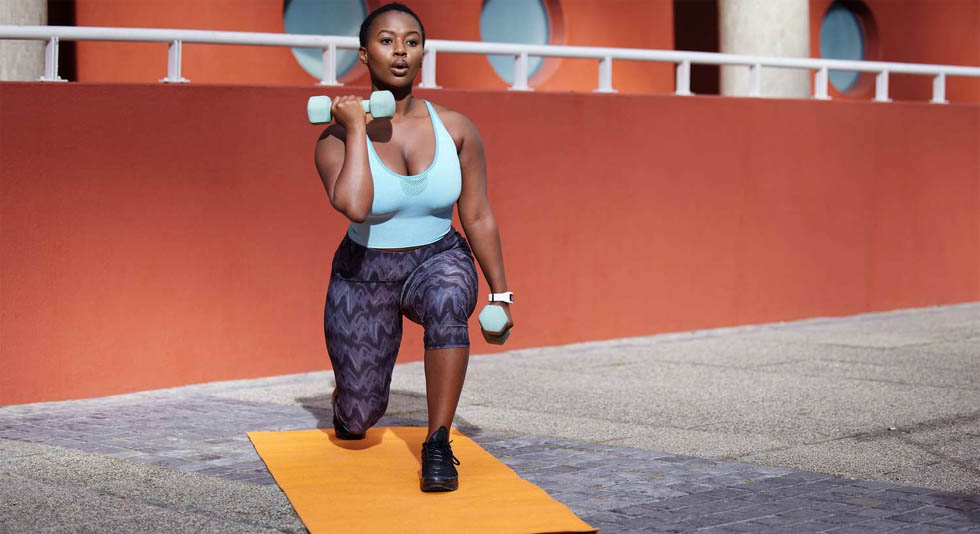
AS you age, staying active becomes crucial for maintaining health, improving mobility, and managing weight.
If you are over 50, you might find that high-impact exercises like running or jumping are not as easy on your joints, but that does not mean you cannot have a challenging and rewarding workout routine.
Low-impact exercises are the perfect solution, offering benefits like fat loss, improved cardiovascular health, and stronger muscles without putting unnecessary strain on your body.
Whether your goal is to increase flexibility, build strength, or boost endurance, low-impact workouts are key to creating a balanced fitness plan.
These exercises also help combat the natural effects of aging, such as muscle loss and reduced bone density, which can contribute to weight gain and decreased health.
Building lean muscle mass is especially important, as it helps boost your metabolism, increase energy, and support your weight-loss efforts.
Low-impact exercises like walking, and resistance training are also excellent for improving flexibility, balance, and joint health—essential for staying independent and active as you age.
To get the most out of your fitness routine, it is essential to mix up your exercises so that they remain engaging and effective.
Each exercise offers unique benefits, from walking and swimming to strength training and Pilates.
With the workouts and tips in this guide, you will have everything you need to start slimming down, boosting your metabolism, and improving your overall health—without putting unnecessary strain on your body.
The exercises;
Exercise #1: Walking
Exercise #2: Swimming
Exercise #3: Cycling (Stationary or Outdoor)
Exercise #4: Yoga
Exercise #5: Resistance Training (Dumbbells and Weight Machines)
Exercise #7: Rowing Machine
Exercise #1: Walking
Walking is a low-impact exercise that promotes fat loss, boosts metabolism, improves cardiovascular health, and increases bone density without straining the joints. It is highly adaptable and suitable for all fitness levels.
Different walking workouts offer various benefits: Steady-state walking improves endurance and consistently burns fat.
Interval walking alternates between brisk and slow walking to enhance calorie burn and cardiovascular fitness.
Incline walking targets the lower body, boosting strength and calorie burn.
Power walking increases intensity with a faster pace and arm movement, burning more calories and improving endurance.
How to do it: Maintain a brisk pace so your heart rate increases while you can still hold a conversation.
Focus on good posture—keep your shoulders back, core engaged, and arms swinging naturally.
Quick workout:
5-minute warm-up at a moderate pace.
20 minutes of interval walking: alternate 1 minute of brisk walking with 2 minutes of slower walking.
5-minute cooldown at a slow pace.
Exercise 2: Swimming
Due to the buoyancy of the water, swimming offers a full-body workout with minimal joint impact.
The resistance provided by the water strengthens muscles and improves endurance while promoting calorie burn and fat loss.
Swimming also aids in flexibility and cardiovascular health.
How to do it: Use a variety of strokes (freestyle, backstroke, breaststroke) to engage different muscle groups.
Focus on controlled breathing and smooth, continuous movements.
Quick workout:
5-minute warm-up: light freestyle swimming.
15 minutes of alternating 2 laps of fast swimming with 2 laps of slow, recovery swimming.
5-minute cooldown with gentle backstroke or breaststroke.
Exercise 3: Cycling (stationary or outdoor)
Cycling is a low-impact cardio exercise that helps improve heart health while strengthening the legs, hips, and core.
It burns calories effectively while putting minimal strain on the joints, making it ideal for those with knee or hip issues.
How to do it: Set the resistance at a level that challenges your legs, but does not strain them.
Keep your posture upright with a slight bend in your elbows, and avoid hunching over.
Quick workout:
5-minute warm-up at low resistance.
20 minutes of intervals: cycle hard for 1 minute, then pedal slowly for 2 minutes.
5-minute cool down at an easy pace.
Exercise 4: Yoga
Yoga increases flexibility, strength, and balance while lowering stress, which can improve eating habits and reduce cortisol levels that contribute to weight gain.
It can also improve joint mobility and alleviate aches and pains associated with aging.
How to do it:
Focus on properly aligning each pose, engaging your muscles, and breathing deeply.
Consider starting with basic poses like downward dog or warrior I to build strength and flexibility.
Quick workout:
· Sun salutations (5 rounds) for a gentle warm-up.
· Hold warrior II, chair pose, and plank pose for 30 seconds each.
· Finish with child’s pose and cat-cow stretches to cool down.
Exercise #5: Resistance training (dumbbells and weight machines)
Strength training increases lean muscle mass, which boosts metabolism and supports long-term weight loss.
Dumbbells improve functional strength and coordination, while weight machines provide controlled, safe movements to target specific muscle groups.
To enhance weight-loss efforts, you can modify your resistance training using straight sets and reps for focused muscle building, intervals to alternate between strength and rest for higher calorie burn or circuits to keep the intensity high and increase fat loss by minimising rest periods.
These variations can help boost metabolism, maintain muscle, and maximise calorie expenditure during and after workouts.
How to do it: Start with lighter weights and gradually increase as you get stronger.
Focus on proper form to avoid injury—always engage your core and avoid using momentum to lift the weights.
Quick workout:
5-minute warm-up: light dynamic stretches.
3 rounds of:
Dumbbell Squats: 12 reps
Chest Press (machine or dumbbells): 12 reps
Dumbbell Rows: 12 reps per side
Rest 1–2 minutes between rounds.
Exercise 6: Rowing machine
Rowing is a low-impact exercise that improves strength and cardiovascular fitness by engaging the entire body, including the legs, core, and upper body.
Its smooth and controlled motion is easy on the joints while delivering a powerful calorie-burning workout.
How to do it: Focus on proper rowing form: push with your legs, lean back slightly with your core engaged, and pull with your arms. Make sure each stroke is controlled and fluid.
Quick workout:
5-minute warm-up at a steady pace.
20 minutes of intervals: row hard for 30 seconds, then row gently for 1 minute.
5-minute cooldown at a slow pace. – https://www.eatthis.com/



 Online Reporter