Online Reporter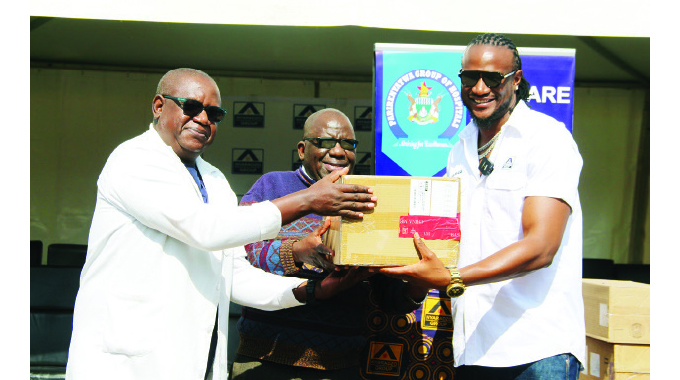
Rumbidzayi Zinyuke-Senior Health Reporter
MORE than 800 men are expected to benefit from a scaled-up Men’s Health Awareness campaign being rolled out this week at Parirenyatwa Group of Hospitals.
The campaign, launched in commemoration of Men’s Health Awareness Week, offers free prostate cancer screening, HIV testing and counselling, blood pressure and glucose monitoring, mental health and psychosocial screening as well as psychosocial support services.
It is being spearheaded by Parirenyatwa Hospital in partnership with the Adult Rape Clinic (ARC) and Nyaradzo Group.
The hospital is expected to sign a Memorandum of Understanding with Nyaradzo Group to support the roll-out of similar programmes across the country over the next five years.
Speaking at the outreach programme yesterday, Dr Lawrence Matanhike, a senior registrar in the urology unit at Parirenyatwa, said the programme aims to close the awareness and service gap that leaves many men vulnerable to late-stage diagnoses of preventable and treatable conditions.
“We noticed that men, most of the time, present late with diseases. Also, there is a lot of uneven balance between awareness programmes for women and those for men. So we realised that there was a gap. We want to increase awareness of men’s health especially prostate cancer, which is the commonest cancer in men. We want them to know that prostate cancer can be detected early and if that happens it can be treated,” he said.
According to the National Cancer Registry, prostate cancer accounts for nearly 30 percent of all cases among Zimbabwean men.
It is also the second most common form in the country after cervical cancer.
Prostate screening is recommended for men aged 45 to 70 years as it leads to early detection of disease and improved clinical outcomes.
Dr Matanhike said while the programme had initially been expected to reach between 40 to 60 men with free health services, the coming on board of Nyaradzo Group had ensured than more men would receive services.
“Originally, we sourced funds to reach 40 men. We started the programme yesterday (Wednesday) but had an overwhelming turnout with more than 120 people. That showed us the information had reached far more people than we anticipated. That is when Nyaradzo reached out to us and expressed their willingness to come in as partners, and they came in with resources to reach more people,” Dr Matanhike said.
Men’s Health Awareness week aims to highlight the health challenges men face and encourages conversations about mental health and wellbeing. It serves as a vital reminder for communities to support the health of men and boys.
Nyaradzo Life Assurance general manager Mr Patrick Mhuka said the campaign reflected the company’s commitment to improving men’s health and productivity.
“We are here to make sure we promote the lives of men, especially during June, the month we celebrate fathers. At Nyaradzo, we support many programmes to ensure men stay healthy and productive. When Parirenyatwa said they had a budget for 40 to 60 men, we felt that was too few considering how many men are suffering in silence.
“So we provided more resources to expand the reach, more than quadrupling the original target so that more men are tested and more men are saved,” he said.
He said while the partnership with Parirenyatwa would primarily focus on men’s health, it would also support programmes on women’s health.
Adult Rape Clinic representative Mr Timothy Mushambi said his organisation, which provides medical and psychosocial support to survivors of sexual violence, was concerned with the limited access to health services by men.
“It is very important for men to be checked on these health issues, because as men, we mostly suffer in silence, we don’t ask for health services. Sometimes we end up losing lives. This is why we entered this partnership with Parirenyatwa Group of Hospitals and Nyaradzo,” he said.
The campaign has been praised by beneficiaries, who shared personal experiences of the barriers men face in accessing healthcare.
Bishop Obert Zvaurira, from Norton, said many Christian men mistakenly spiritualise physical health issues.
“Most Christian men think everything is spiritual, even when it’s not. The body ages and needs medical help. This programme is important because it helped me understand the need for screening and treatment,” he said.
Mr Shine Kadungure (63) who was diagnosed with prostate cancer in 2002, said he had been unable to afford a follow-up screening until this week.
“I was told in March that I needed a prostate cancer test, but I didn’t have the money. Today, I finally got it done free of charge. This disease comes silently and many men die without knowing what’s wrong,” he said.
Mr David Sibanda from Chadcombe also welcomed the initiative.
“Medical aid is beyond reach for many of us. This programme gives men a chance to know their health status. I encourage others to come forward and get checked,” he added.
With growing interest and support, the Men’s Health Awareness initiative could mark a turning point in shifting health-seeking behaviour among Zimbabwean men, and potentially save hundreds of lives through early detection and care.