Online Reporter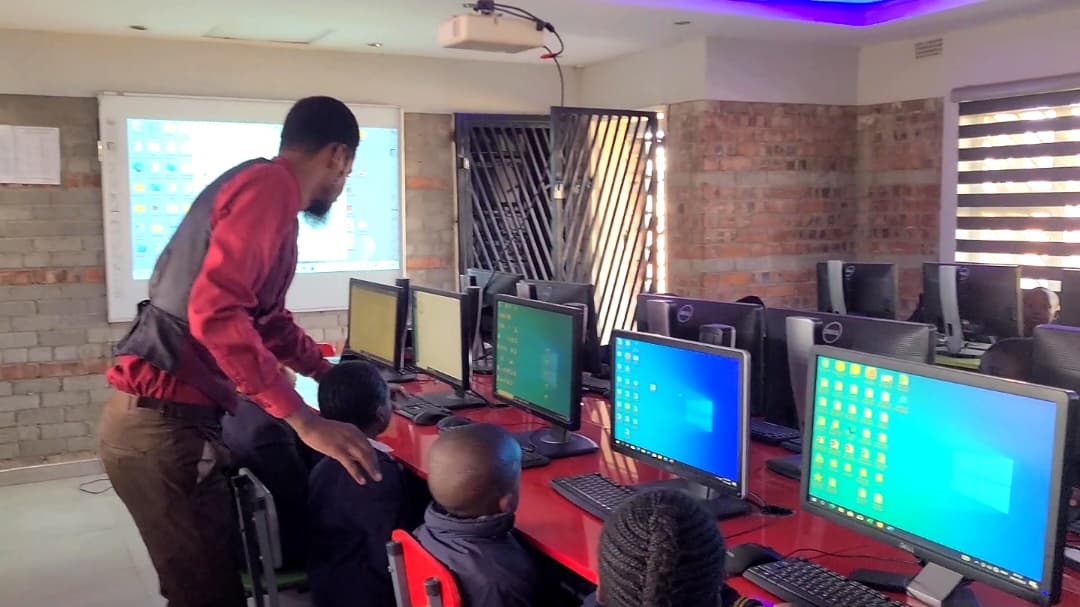
Obey Musiwa
Herald Reporter
Government’s push for digital literacy and inclusive education is paying off, with new national statistics showing that 91,5 percent of Zimbabweans who used artificial intelligence (AI) tools in 2025 did so for learning purposes.
This development follows the official launch of the 2025 ICT Access by Households & Use by Individuals Survey Report prepared by ZIMSTAT, indicating how policy support and investment in ICT access are reshaping classrooms and study routines towards attainment of an upper-middle-income society by 2030.
The report indicates how students and professionals alike are harnessing AI to expand knowledge, improve study outcomes, and access information more efficiently.
“Out of 1,767,550 individuals aged three and above who had heard of and used AI, the majority engaged with the technology for education,” said the report.
“Activities such as online research (80,7 percent), chatting with AI (51,8 percent), and text generation (35,9 percent) dominate usage patterns,” said the report.
It is the result of deliberate Government efforts to integrate ICT into national development strategies, ensuring that AI becomes a tool of empowerment rather than exclusion.
Information, Communication Technology, Postal and Courier Services Minister Tatenda Mavetera recently revealed artificial intelligence integration into the national school curriculum by 2027.
Speaking at the Zimbabwe CEOs Policy Roundtable held in Victoria Falls, Minister Mavetera said the development is part of a national strategy aimed at enhancing development, ensuring the country becomes a producer, not just a consumer, of cutting‑edge technology.
The initiative forms a core part of the newly launched Artificial Intelligence Strategy, a blueprint officially unveiled by President Mnangagwa two weeks ago.
Described by the Minister as a dynamic and historic blueprint for Zimbabwe, the strategy is designed to serve as a national growth accelerator while enhancing efficiency and competitiveness across key economic sectors.
The AI Strategy is built on six strategic pillars, with skills development and education taking centre stage.
“We have been speaking with the Minister of Primary and Secondary Education, and we want to make sure that AI is embedded in our national curriculum starting in 2027,” said Minister Mavetera.
She said the move was part of the Government’s commitment to preparing young Zimbabweans for the jobs and innovations of the future.
Academics demonstrated how digital tools and learner‑centred methods are reshaping education, aligning classroom practice with National Development Strategy 2.
Royal Junior School headmistress Mrs Naume Muchemwa said that education must shift from teacher‑centred lectures to learner‑centred approaches.
She said this way students actively research and use digital platforms beyond classroom walls.
“We are doing away with the traditional method of teaching; it is more learner-centred in education, where the learner plays an active role,” said Ms Muchemwa.
“The internet provides them with the skills to learn in classrooms without boundaries.”
ICT specialist teacher Mr Nyasha Danirai highlighted the importance of training learners from early childhood in digital skills, robotics, and e‑learning to prepare them for the Fourth Industrial Revolution.
“We are training our learners from ECD, making sure that these learners know how to use the computers,” he said.
“We also have the robotics clubs and the e‑sports clubs, pushing for the future of technology, artificial intelligence, and emerging technologies.”
One of the students at Royal Junior School, Panashe Mandiveyi, explained how students use computers and apps to research, create, and learn across multiple subjects with AI at the centre.
“We use computers for research, to create many things using the apps we get on our phones,” he said.
“We have artificial intelligence like Meta and Copilot, with teachers showing us how to use the internet,” she said.
Another student, Lance Mupanga, expressed pride in digitalisation opportunities. He noted how the internet supports research, formal writing, and learning across diverse subjects and sports.
“We use computers to research, to write formal letters, and many more. I am very proud of my school because it gives us opportunities to shine and also to learn more sports,” he said.