Online Reporter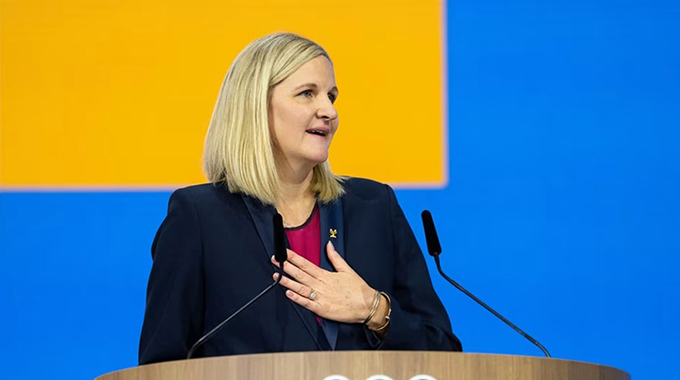
Stanford Chiwanga, [email protected]
KIRSTY Coventry’s ascension to the presidency of the International Olympic Committee (IOC) represents a landmark achievement, a source of immense pride not only for Zimbabwean sport, but also for the entire global Olympic community.
As the first woman and the first African to hold this prestigious office, she inherits a legacy forged by individuals who have fundamentally redefined the landscape of modern athletics.
Saturday Chronicle looks at the formidable challenges and weighty expectations that now rest upon her shoulders.
Coventry’s ascension positions her amongst an elite cohort, a succession of figures who have fundamentally altered the landscape of international sport. To grasp the enormity of her undertaking, a detailed examination of the legacies of her predecessors is indispensable.

The IOC’s history is punctuated by figures who have left enduring imprints. From its visionary founder, Baron Pierre de Coubertin, who resurrected the ancient Olympic Games, to more recent incumbents, each has confronted unique trials and opportunities.
The IOC has seen nine presidents since its inception in 1894. The first president, Demetrius Vikelas, served from 1894 to 1896 and was instrumental in the revival of the modern Olympic Games. His successor, Pierre de Coubertin, held the position for nearly three decades and is often credited with establishing the Olympic Games as a global event. Henri de Baillet-Latour navigated the IOC through the Great Depression and early World War II, while J Sigfrid Edström played a crucial role in the post-war revival of the Olympics.

Avery Brundage, a figure of both influence and controversy, presided over the Games during the tumultuous Cold War era, navigating political boycotts and the growing commercialisation of sport. His two-decade tenure was characterised by a staunch defence of amateurism, a principle that ultimately proved unsustainable in the face of evolving sporting realities.
Juan Antonio Samaranch, arguably the most transformative president since Coubertin, modernised the IOC, securing its financial bedrock through lucrative television contracts and sponsorship agreements. He also oversaw the dismantling of the amateur ideal, ushering in the era of professional athletes within the Olympic framework. His extended tenure wrought profound changes, both advantageous and disadvantageous, that continue to resonate within the Olympic movement. His successor, Jacques Rogge, continued to modernise the Games, focusing on youth and sustainability.

More recently, Thomas Bach led the IOC through a period of profound transformation, grappling with the proliferation of social media, the complexities of anti-doping initiatives, and the unprecedented challenges posed by the COVID-19 pandemic. His “Olympic Agenda 2020” sought to address the escalating concerns surrounding the cost and sustainability of hosting the Games, and address issues such as doping and corruption.

Coventry’s election heralds a new era for the IOC. As the first woman and the first African to occupy this esteemed position, she shoulders the weight of historical precedent. She must not only emulate the strengths of her predecessors but also forge her own path within an ever-evolving sporting milieu.
Coventry’s impressive sporting pedigree as a seven-time Olympic medallist, and her experience as a member of the IOC and Sports Minister provide a robust foundation. However, her true mettle will be tested by her ability to foster unity among diverse stakeholders, forge consensus, and guide the Olympic movement with unwavering vision and integrity.

Her election is seen as a victory for diversity and inclusion. Coventry’s immediate tasks will include continuing the reforms initiated by her predecessor, including strengthening the fight against doping and corruption, ensuring financial sustainability, and promoting gender equality and youth engagement.
She undoubtedly walks among giants, and the task before her is immense. Her ability to meet these challenges will be scrutinised by sporting enthusiasts worldwide. She has big shoes to fill, to match the success of the previous IOC presidents that have shaped the games to what they are today. Her success will depend on her ability to steer through the complex landscape of international sports, build on the achievements of those who came before her, and lead the Olympic movement into a new age of inclusivity and integrity.

Key challenges confronting Kirsty Coventry include:
Sustaining Olympic relevance: In an era of diverse entertainment options, the IOC must ensure the Games remain compelling and engaging for younger demographics.
Addressing ethical imperatives: Issues such as doping, corruption, and human rights violations continue to pose persistent challenges to the integrity of the games.
Ensuring financial viability: The escalating costs associated with hosting the Games and the need to balance commercial imperatives with the Olympic spirit present significant financial obstacles.
Navigating geopolitical complexities: The Olympics have consistently served as a stage for global politics, and Coventry must possess the acumen to navigate these intricate relationships, including political complexities surrounding games such as the 2028 summer games.
Embracing digital innovation: The IOC must adapt to the digital age, leveraging technology to enhance the fan experience and promote the core values of the Olympic movement.
@plainstan