dyton mupawaenda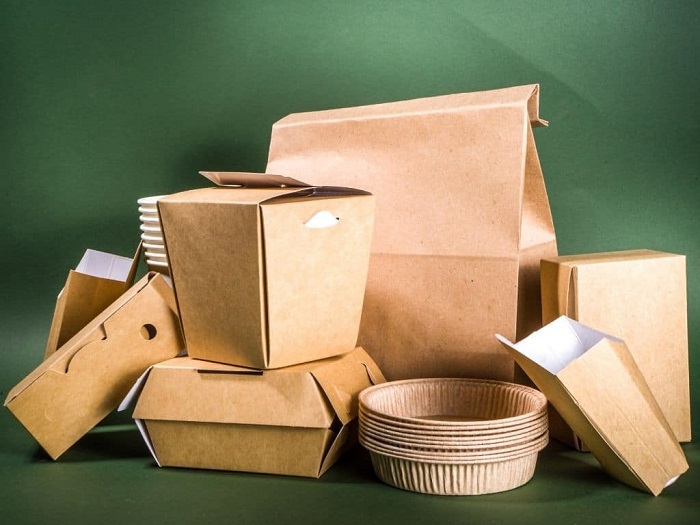
THE interest by Zimbabwean companies to venture into export markets has been growing over the past few years following rising demand for local products in regional and international markets, and the emergence of new markets.
Trade Focus
Allan Majuru
The Second Republic, under President Mnangagwa, has been making concerted efforts to improve Zimbabwe’s global footprint.
Unlike before, when the export business was thought to be a preserve of established companies, small businesses — including those led by women and youths — have also started participating in mainstream international trade.
When one considers the potential to grow the number of exporting companies, and the new product lines that are being prepared for markets outside the country, one is assured of sustained export growth in the coming years.
While companies are focusing on key issues such as quality and quantity, they also need to pay attention to packaging and branding, as these are the last “salespeople” when consumers have to select a product from several available options.
Packaging is usually the first thing that attracts their attention.
According to Apple co-founder Steve Jobs, packaging can be a theatre where stories are created.
Manufacturers across the globe are investing a lot in developing packaging.
Local manufactures are similarly developing designs that compete on the global export market.
Nowadays, packaging has evolved into a product in its own right.
What was once a protective cover has grown into a privileged interface between producers and consumers.
Packaging captures the attention of consumers and reassures them of the quality, thus, helping them in the decision-making process.
Previously, packaging was largely used to enclose and preserve a product.
However, with increased competition and changing global consumption patterns, the definition of packaging has changed.
Packaging has the potency to influence consumer behaviour, especially when they are faced with many options, but are supposed to make a purchase decision.
Due to globalisation, competition has become stiff and it is becoming increasingly difficult for products to stand out.
However, the more commonplace the product, the more the packaging must stand out and be disruptive.
Smart packaging
One way of disrupting the market is to have smart packaging solutions that offer even more value to the consumer.
For instance, some packaging now has diagnostic or indicator functions.
You can easily tell the temperature of a pint of beer or a box of pizza.
Because of these integrated functions, consumers and retailers can verify the integrity of the product before opening it or taking it off the shelf.
Intelligent packaging also fulfils information and marketing roles, and improves interaction between the manufacturer and consumer.
Such packaging may have bar codes or QR codes, and with the aid of a smartphone, consumers can get more information about the product and even trace the source of ingredients in that item.
Experts agree that, as consumers get more discerning, their demand for more information will continue to rise. Smart packaging offers new business opportunities because of the ability to disrupt and fit into the broader area of the Fourth Industrial Revolution.
Greener packaging
The world is going green and consumers are becoming more concerned about their carbon footprint.
The packaging sector is at the centre of this revolution, as consumers now prefer to use solutions that have less impact on energy consumption and pollution.
Many manufactures are now using responsible environmental stewardship as part of their value proposition.
Therefore, packaging that can easily compete on export markets, particularly in developed countries, should be recyclable, reusable and biodegradable, among other things.
Some companies have even started using edible packaging to reduce plastic waste.
A Thai retailer has grabbed global headlines by ditching plastics and using banana leaves as packaging for fresh produce.
These are some of the disruptive ideas that local companies can consider to set their products apart from the rest.
Packaging for e-commerce
Another interesting trend is the growth in e-commerce, where the internet has increased the reach of products and improved communication between the buyer and the seller.
Unlike previously, when manufacturers could only reach markets through distributors, nowadays e-commerce has made it easier to sell in markets where there are no distributors.
Businesses that have developed their model around e-commerce have to ensure their packaging is strong and secure.
This is because the responsibility for export packaging lies with exporters, who must ensure their products reach the intended recipient in the same form as they were packaged.
In most cases, securing products for e-commerce requires use of corrugated boxes, protective materials, labels and tapes, among other things.
However, more companies are developing unique boxes that make a good first impression.
These include engraved boxes, customised boxes and perfumed packaging that create better impressions than the ordinary stuff.
Packaging for convenience
When designing packaging, manufactures should also consider convenience.
Most consumers are willing to pay a little extra for a product that is easy to use.
Features used to add convenience include easy-to-open strips or perforations, handles for easier carrying and resealable closures.
The packaging should be easy to store in a refrigerator or stack on the shop shelf.
One may also consider how easy it is from a logistics perspective, for example, the stacking ability and use of space.
Packaging aesthetics
The aesthetic appeal of packaging can never be overemphasised.
Digital printing has revolutionised the world of packaging graphics, making it cheaper and easier than ever to add high-quality logos and images.
Consumers also value viewing a product and not just its container.
This has shaped packaging design, as manufactures are now using transparent or partially transparent materials to enable consumers to have a sneak preview of the product mid-aisle and allow them to access the product.
Packaging regulations
Exporters should be familiar with regulations affecting packaging in their targeted markets.
Of all the products, laws governing foodstuff are often less understood.
Most of the regulations cover aspects such as prohibition of contamination from the packaging, sanitary integrity and preservation of taste.
This may also include regulations on labelling and languages.
For instance, some countries like Mozambique prefer Portuguese on labelling of particular products.
Going forward
After everything has been said and done, exporters should know that the first sign of real value of a product/brand is packaging.
The user will initially see the value before they engage other senses to touch, feel, smell and taste it.
Therefore, producers must ensure packaging is of good quality, provides adequate information and is visually satisfying.
ZimTrade, the national trade development and promotion organisation, through its export packaging training programme, can capacitate current and potential exporters in developing their competitiveness through improved packaging.
The Marketing and Branding for International Competitiveness Training offered by ZimTrade also covers export packaging, packaging design, transport and distribution packaging, and labelling.
Allan Majuru is ZimTrade’s CEO



 Online Reporter