Patrick Chitumba, [email protected]
THE Judicial Service Commission (JSC) has rolled out the Integrated Electronic Case Management System (IECMS) in Midlands and Mashonaland West provinces, bringing Zimbabwe closer to its goal of fully paperless courts.
The system went live on October 1 following months of awareness campaigns, stakeholder meetings, consultations and preparations aimed at ensuring that courts, legal practitioners and members of the public were ready for the digital platform.
Preparations included the installation of court recording and transcription machines, as well as the distribution of laptops and computers to judicial officers and members of staff.
IECMS allows litigants, legal practitioners and other court users to file documents electronically, monitor cases and access court services without relying solely on physical records.
The digitisation programme began in 2022 when President Mnangagwa commissioned the country’s first paperless court during the opening of the Commercial Division of the High Court.
The system has since been extended to the Constitutional Court, Supreme Court, Labour Court and divisions of the High Court, with the JSC now extending it to Magistrates’ Courts, which handle a significant volume of litigation.
Six provinces had already been covered under the phased rollout, with Midlands and Mashonaland West becoming the latest to join the programme.
JSC Secretary Dr Walter Chikwana, who yesterday assessed the system at the Gweru Civil and Criminal Courts, said the province was well prepared for the transition.
“Following awareness campaigns, meetings and consultations, we have deployed IECMS today, on the 1st of October. It has happened. We are now live,” said Dr Chikwana.
He said his assessment focused on the courts’ preparedness, including electricity, internet connectivity, court officials’ ability to use the system and the effectiveness of e-filing facilities.
“I am quite happy with our level of preparedness, especially from our members of staff here in Gweru, both at the civil court and the criminal court. We are prepared, we are ready, members of staff are ready, they are motivated, they are excited, so I do not n’t foresee any problems at all,” he said.
Dr Chikwana said the Gweru courts had adequate power backup, with generators available during electricity interruptions, while internet connectivity was being supported through Starlink and NetOne.
The JSC had also deployed ICT personnel to provide technical support at both the civil and criminal courts as the system went live.
Magistrates had already begun handling matters through IECMS, with laptops being used in court and a testimony recording system capable of converting spoken evidence into text.
“We are using a testimony recording system which will then turn voice into text. So, the magistrate doesn’t need to write any notes,” he said.
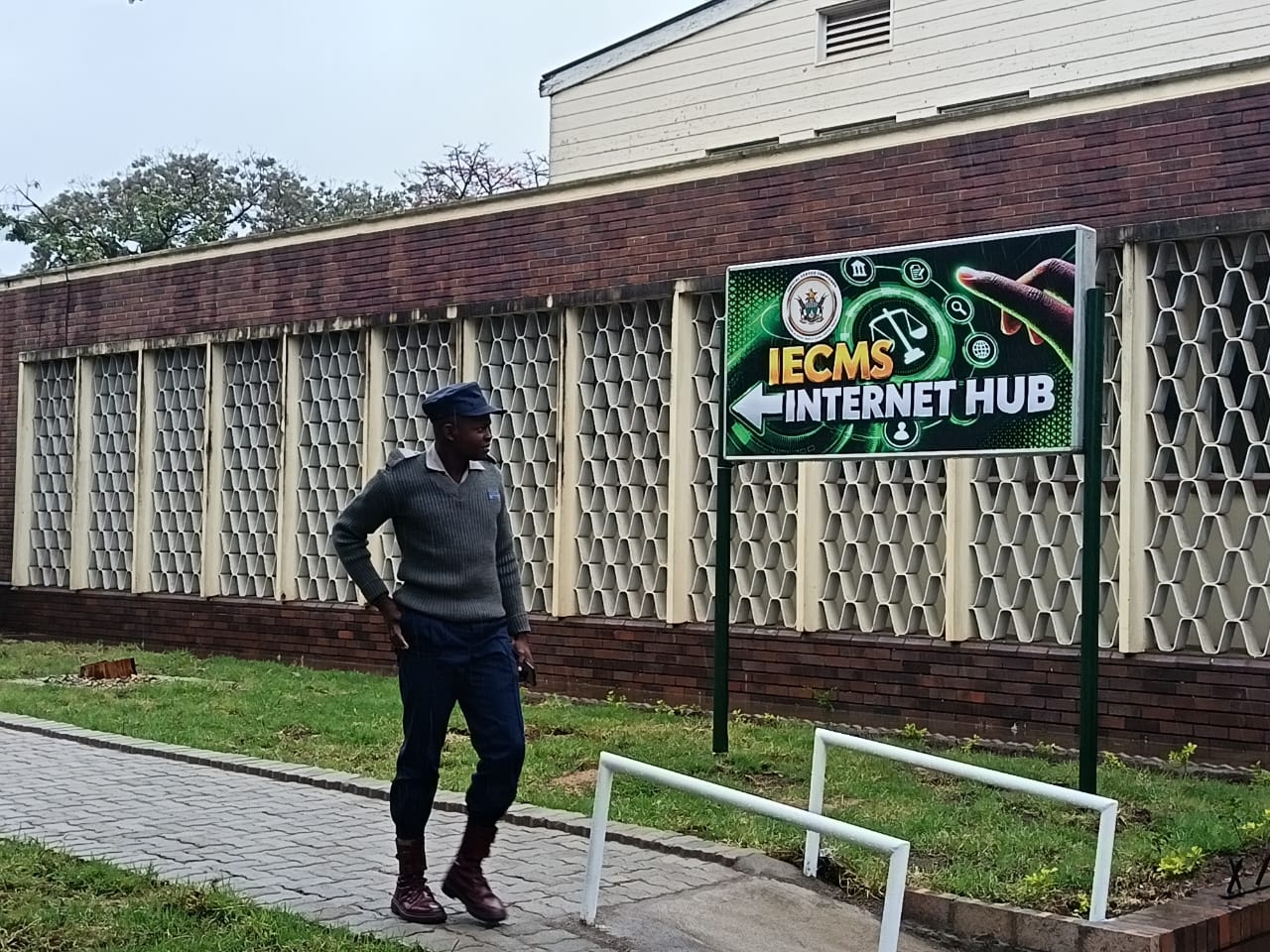
He said clerks of court were also processing matters successfully, while the e-filing office and internet hub were assisting members of the public to navigate the new system.
Two virtual hearings were being conducted when he inspected the e-filing office, while police officers were uploading Z69J forms, which are admission-of-guilty forms from the police.
“They come to court for confirmation and other documents for consideration, stamping and signing by magistrates.
“At the civil court, members of the public were also filing maintenance applications and domestic violence cases, with no queues observed,” he said.
Dr Chikwana said the system was designed to ensure that members of the public without internet access or technical skills were not excluded from the justice system.
The e-filing office allows members of the public to register as users, upload documents and file court papers with assistance from court officials where necessary.
Beyond convenience, Dr Chikwana said IECMS was already demonstrating its potential to improve the speed and efficiency of the courts.
“The system was first introduced in May 2022 on a court-by-court basis before being extended to magistrates’ courts last year,” he explained.
With the latest rollout, Dr Chikwana said eight provinces were now covered by the digitisation programme.
“Firstly, it is about efficiency. We have realised, and we have noticed with empirical evidence, that cases—the disposal of cases, the efficiency of our courts—is heightened. It improves,” he said.
He said digitisation had helped courts deal with case backlogs and improve the speed at which matters were disposed of.
The system will also allow litigants and members of the public with an interest in a case to monitor its progress without repeatedly visiting court offices.
“With the click of a button, you are able to monitor, you’re able to see where your case is, what is happening with your case, and you’re able even to communicate and interact with the court using that gadget,” he said.
Dr Chikwana said IECMS would also strengthen accountability within the justice delivery system because the digital platform leaves an electronic record, or “footprint”, of actions taken by court officials.
“For instance, if a judicial officer undertakes to deliver a judgment on a particular date, that undertaking is captured on the system, making it possible for supervisors to monitor compliance,” he said.
Similarly, timeframes for clerks of court to process summonses, applications and other documents are captured, allowing delays and non-compliance to be identified.
“The beauty about it is that it leaves footprints. So, whenever we do our checks and monitoring and evaluation, you’d see that there is some slowness with this clerk of court, there is some non-compliance with this judicial officer,” he said.
Dr Chikwana said such information would allow the JSC to identify challenges and assist officials where necessary.
He said the ultimate objective was to ensure that members of the public did not face unnecessary delays when seeking justice.
“Members of the public, when they go to court, they are not interested in anything but you go to court, you want your matter to be heard, you want a decision to be made. That’s all that they want, and that must be done without any delays,” he said.
Meanwhile, the JSC has started preparations to extend IECMS to Harare and Bulawayo provinces, with the system expected to be deployed there by December 31, 2026.
Dr Chikwana said preparations began on October 1, with stakeholder consultations in Bulawayo scheduled for October 13 to 15, followed by engagements in Harare from October 26 to 30.
A national training team will begin training stakeholders in Bulawayo on October 16.
The training will cover court officials, stakeholders and members of the media, with Dr Chikwana encouraging journalists to attend.
“You simply bring your phone or any gadget, smart gadget that you have, and you go through the training to make it easy for you to understand and appreciate the system,” he said.
Dr Chikwana said the JSC was targeting October 31 for the entire judiciary to be operating on a paperless basis.
The rollout is part of broader efforts to modernise Zimbabwe’s justice delivery system and improve efficiency, transparency and accountability through technology.