

 admin
admin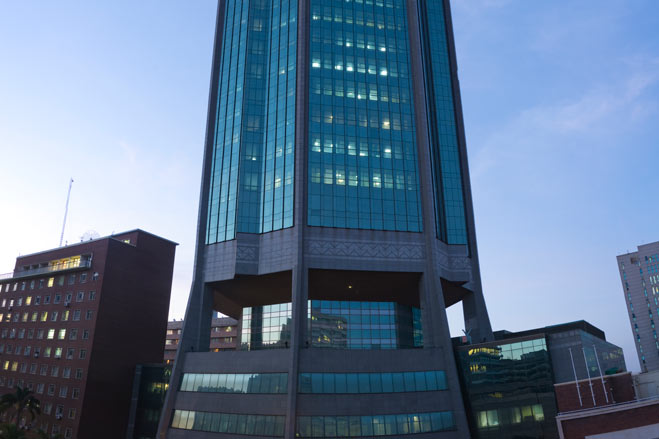
HARARE – The parallel market crisis that the government is battling with emerged nearly five years ago when the previous government began using more money than it actually had and created avenues, a top Reserve Bank of Zimbabwe (RBZ) official said on Thursday.
RBZ Deputy Governor, Dr Khupukile Mlambo said before 2014, government had no borrowings in the market as it lived within its means but broke this tradition when it started issuing treasury bills and borrowing more from the central bank to meet its ever growing expenses.
Zimbabwe dollarized its economy in 2009, after dumping its inflation ravaged local currency.
“Up to the end of 2014, you had more in Nostro balances than in RTGS but after 2015, you start to see RTGS balances really shooting up quickly while Nostro balances were actually stable at the beginning but they begin to decline significantly,” Dr Mlambo told a Brand Zimbabwe Summit.
“Today we have deposits of almost $10 billion, but most of those deposits are really electronic balances, they do not have a cash backing. It’s money, but it’s not cash.”
He said the growth in RTGS balances drove domestic demand and resultantly pushed up inflation and prices of goods and services.
With hard currency expenditures through imports outrunning earnings, mainly of exports and remittances, this has led to shortages of foreign currency, leading to the birth of the parallel market.
“The parallel market then begins to emerge. This has nothing to do with corruption, this is economics 101,” Dr Mlambo said.
“When you increase money supply but the goods are in short supply, you create rent seeking activities and in the area of currency, the main rent seeking activity is the black market which is what we are facing right now.”
The black market has become the defacto official market, with its unexplained changes in exchange rates, impacting on the whole economy.
To address the disparity in actual US dollar and RTGS balances, government last month directed banks to separate the two by opening new accounts for companies and individuals.
The official rate between the US Dollar and the bond note, however, remains at one to one.
Dr Mlambo said it was imperative that government keeps its borrowing level at the central bank within the legal limit.
The country’s new Finance and Economic Development Minister, Professor Mthuli Ncube has already signalled intention to cut issuance of TBs and borrowings from the central bank.
“Government will effectively limit the use of the RBZ overdraft facility and curtail RBZ advances to government in line with Section
11(1) of the Reserve Bank Act which states that borrowing from the Reserve Bank shall not exceed 20 percent of the previous year’s Government revenues at any given point,” Prof Ncube said last month.
As at the end of August, government overdraft at the RBZ stood at $2.3 billion, way above the legal limit of $763 million. On the other hand, it had borrowed $7.6 billion from the market through TBs.
President Mnangagwa, who came to power in November 2017, has said government will be introducing strong measures to tackle the parallel market, with police reporting that nearly 200 dealers had been arrested in a blitz. – New Ziana


 Online Reporter