

 admin
admin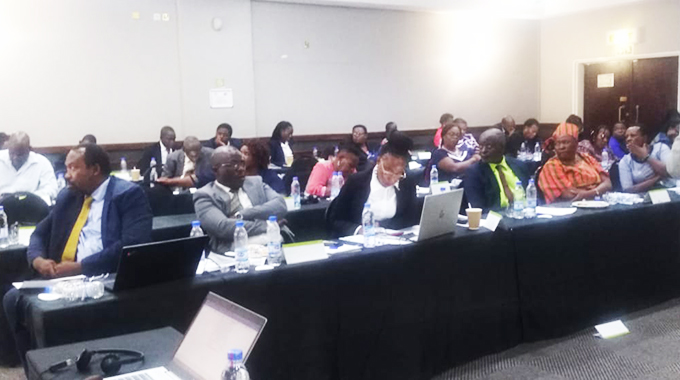
Yeukai Karengezeka Herald Correspondent
Parliament has endorsed a national strategy draft plan crafted by the Government and other stakeholders aimed at increasing the fiscal revenue base, which will see a transition from the informal to the formal economy as enshrined in the National Development Strategy 1 (NDS 1).
The national formalisation strategy and implementation plan validation workshop was conducted to interrogate the findings from the consultations done country-wide by the Ministry of Public Service, Labour and Social Welfare.
Some of the key elements of the strategy include the creation of an enabling environment for doing business by small to medium enterprises (SMEs) and simplification of registration procedures. Affordable fees, provision of social protection schemes and mainstream employment across all sectors of the economy are also part of the strategy.
Legislators said they were optimistic that once Cabinet approves the strategy, it would benefit all players operating in the informal sector and offer them security protection services.
“We are pleased with this programme that leaves no one and no place behind. Over 80 percent of the people are operating in the informal sector and they are not contributing to the fiscal of the economy.
“If everyone comes on board, this will transform our economy and informal workers when they registered their operations they will have access to loans and access to a decent working environment conducive for businesses to thrive,” said Midlands legislator Mrs Perseverance Zhou.
Hwange Central constituency legislator Mr Daniel Molokele said he was pleased that the strategy is incorporating the needs of women operating in the informal sector.
“I am pleased that concerns of women in the informal sector are encompassed in this strategy because most women operate in the informal economy. As a country, for us to move forward economically, we need to reduce the ever-growing gap between the informal sector and formal sector especially when we have an obligation of gender equality as a nation.
“We fully support this process and I hope that we will not waste this opportunity as Zimbabwe and to change our narrative,” he said.
Representing civil society, Mr Emmanuel Gasa, the country executive director for AIDs and Arts Foundation said the formulation of the informal sector strategy was long overdue and called upon the private sector to support this programme.
“We are happy that Zimbabwe has started this particular strategy and as civil society, we feel that this was long overdue. In terms of best practices, we can copy what has been done in Rwanda or Kenya. The Government has started moving the ball and I am calling on all the private players, and civil society organisations to rally behind this initiative.”
Addressing delegates at the workshop on behalf of the permanent secretary Mr Simon Masanga, the director of legal services in the Ministry of Public Service, Labour and Social Welfare Mr Fredson Mabhena said as espoused in the NDS1, Government is working to ensure that issues affecting the informal economy are addressed so that they can contribute to the economy’s revenue in a sustainable manner.
“The National Development Strategy (NDS1) seeks to promote the transition from informal to formal economy as a means of increasing the fiscal revenue base, regularising employment and ultimately growing the economy in a more sustainable manner,” he said.
He added: “Under NDS1, Strategies for Decent Work, the Government prioritised developing and implementing a national action plan to address pervasive decent work deficits in the informal economy. This is evidenced by the growth in the informal economy where over 70 percent of our labour force is employed according to the 4th quarter of 2021 Labour Force Survey Report compiled by Zimstat.”
Mr Mabhena said the ministry undertook a national wide consultation which has led to the draft document.



 Online Reporter