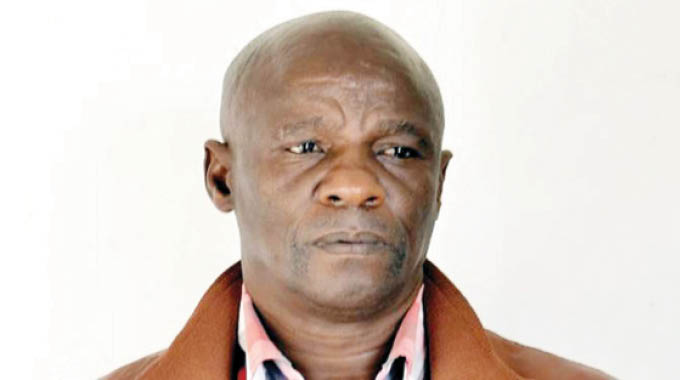
Thupeyo Muleya [email protected]
THE Parliamentary Portfolio Committee on Transport and Infrastructure Development has launched a nationwide oversight exercise to assess how local authorities are utilising funds and fuel allocated by the Zimbabwe National Road Administration (Zinara) for road rehabilitation projects.
The committee, which visited Beitbridge Rural District Council (RDC) on Wednesday, said its findings so far showed that while some councils were making commendable progress in improving road infrastructure, challenges such as delays in project implementation, equipment breakdowns and poor-quality workmanship remained a cause for concern.
Members of the committee stressed that local authorities must not only spend the allocated resources on time but also ensure that roadworks meet required standards so that communities, farmers and businesses benefit from durable transport infrastructure that reduces the need for constant repairs.
Committee chairperson Mr Tawanda Karikoga said the exercise forms part of Parliament’s constitutional oversight role and seeks to verify whether public resources are being used for their intended purpose.
“We are carrying out one of our constitutional mandates as the Parliament Portfolio Committee for Transport and Infrastructure Development. We are in Beitbridge where we visited Beitbridge
Rural District Council to ensure that they utilised Zinara funds and fuel which was allocated to them on projects that benefit the people,” he said.
Mr Karikoga said the committee had so far visited four local authorities, with most demonstrating that they had put the allocated funds to productive use.
“What we have realised is that most of the councils, to some extent, they’ve perfectly utilised the funds. We commend them for that, but in some instances not much was done and as Parliament we also go further to check on actually what transpired,” he said.
He urged road authorities to move quickly when funds are disbursed, warning against keeping resources idle or diverting them from their intended purpose.
“Once funds are given to the local authority or to any road authority, we expect them to utilise those funds. Not keep them in their accounts or misuse them,” he said.
Mr Karikoga said the committee was particularly concerned about the quality and lifespan of completed roadworks, noting that poorly executed projects often result in higher costs for councils and taxpayers in the long run.
The nationwide assessment will culminate in a report containing recommendations to both Zinara and local authorities aimed at improving the efficiency, accountability and sustainability of road rehabilitation programmes across the country.
Local authorities have been receiving Zinara allocations under the Emergency Road Rehabilitation Programme, with the funding earmarked for road maintenance, repairs and related drainage works.
Beitbridge RDC chief executive officer Mrs Kiliboni Mbedzi welcomed the parliamentary visit, saying oversight exercises played a crucial role in promoting transparency and accountability in the management of public resources.
“The importance of this kind of visit by the Parliamentary Portfolio Committee, especially this one which was here, the Parliamentary Portfolio Committee on Transport and Infrastructure Development, is that they come for the verification process of the utilisation of Zinara funds and fuel disbursement,” she said.
Mrs Mbedzi said the monitoring exercise also provided an opportunity for the council to evaluate its own performance and ensure compliance with financial and operational requirements.
“So that monitoring on its own, it checks on how we do service delivery. It also ensures that there’s compliance within council on the utilisation of the funds and fuels,” she said.
She said one of the key recommendations made by the committee was for the council to develop a comprehensive maintenance policy and plan for its road construction equipment.
“They recommended that we should have a maintenance plan for our equipment and a maintenance policy. That will ensure that if a grader breaks down, it doesn’t take long to get back to service our roads. So we are going to implement that,” she said.
The committee also recommended that councillors undergo refresher orientation programmes to strengthen their understanding of their responsibilities and oversight duties.
Mrs Mbedzi said ageing equipment and recurring breakdowns had hampered the council’s ability to fully utilise some of the resources allocated for road rehabilitation projects.
“We have had some challenges in utilising the funds on the ground because of grader breakdowns and the life of our grader, which is a bit long, which is now giving us problems,” she said.
The oversight exercise comes at a time when Government is investing significant resources into road rehabilitation across the country, with Parliament seeking to ensure that increased expenditure delivers visible, lasting and value-for-money improvements to Zimbabwe’s road network.