Online Reporter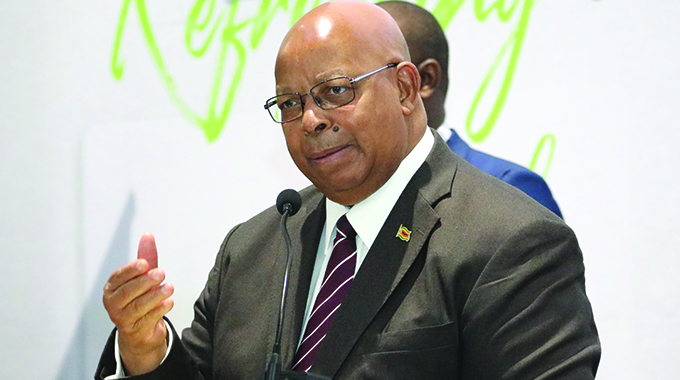
Nqobile Bhebhe, Zimpapers Business Hub
SPEAKER of the National Assembly, Advocate Jacob Mudenda, has added his voice to growing calls for Zimbabwe to harness its vast natural resource endowment to settle its ballooning external debt and build long-term national wealth.
The total Public and Publicly Guaranteed (PPG) debt stock as at the end of June 2025 amounted to US$22,6 billion (43,2 percent of GDP), comprising an external debt stock of US$13,7 billion and domestic debt stock amounting to US$8,8 billion.
External debt arrears amounted to US$7,7 billion.
The country is at a pivotal moment in its economic journey, with the Second Republic working diligently to clear the US$22,6 billion debt obligations.

This debt has posed significant challenges to the country’s economic growth and development; thus, the Second Republic initiated a Structured Dialogue Platform with all its creditors and Development Partners.
Speaking during a panel discussion at the Parliament of Zimbabwe’s 2026 Pre-Budget Seminar in Bulawayo last week, Advocate Mudenda said the idea of using mineral resources to offset public debt, once suggested by Finance, Economic Development and Investment Promotion Minister Professor Mthuli Ncube, was a “bright idea” that deserved urgent implementation.
“At one stage, the Minister (Prof Ncube) indicated that we might use our natural resources. I thought that was a bright idea,” said Adv Mudenda.
“For example, we put aside five rich gold concessions and allow some external investors to do extensive exploration and give them a tax break of, say, 30 years — they do not pay any royalties but pay in advance the value of what that concession is,” he said.

He explained that such a model could unlock billions of dollars in upfront payments to ease Zimbabwe’s debt burden while creating space for sustainable investment and wealth creation.
“If, for example, that mining concession area is going to be mined for 50-70 years, we can come up with a figure, say, of US$20 billion and ask them to pay,” he said.
“Some of these Asian or Arab countries can raise such money and whether we are able to pay our public debt and then balance it as part of our sovereign wealth fund,” added Adv Mudenda.
He questioned why such resource-backed strategies were not being actively pursued, given the country’s immense mineral wealth.
“Why is this not being pursued? The Great Dyke stretches from Beitbridge right down to Kanyemba and has not been fully explored. There is an estimation arising from historical records from De Beers that on the Great Dyke we have at least 40 different types of minerals,” he said.
“Why don’t we go the route that the Minister suggested weeks ago so that we can extinguish our public debt?” queried Adv Mudenda.
Zimbabwe’s public debt has been cited as a major constraint to economic growth and investment inflows. Analysts have long argued that the country’s rich mineral base — including platinum, lithium, gold, and chrome — could serve as a strategic foundation for innovative debt settlement mechanisms and long-term fiscal stability.
Advocate Mudenda’s remarks reinforce the ongoing national debate around leveraging natural resources to boost fiscal sustainability while ensuring transparency, value retention, and intergenerational equity.
Zimbabwe is endowed with abundant critical minerals that are in high demand for the global energy transition, including lithium, platinum group metals (PGMs), manganese, cobalt, copper, chromium, nickel, and rare earth elements.
The dual strategy of leveraging natural resources while engaging multilateral and bilateral creditors is seen as a pragmatic approach to addressing Zimbabwe’s debt overhang, which has constrained access to concessional financing for decades.