

 Online Reporter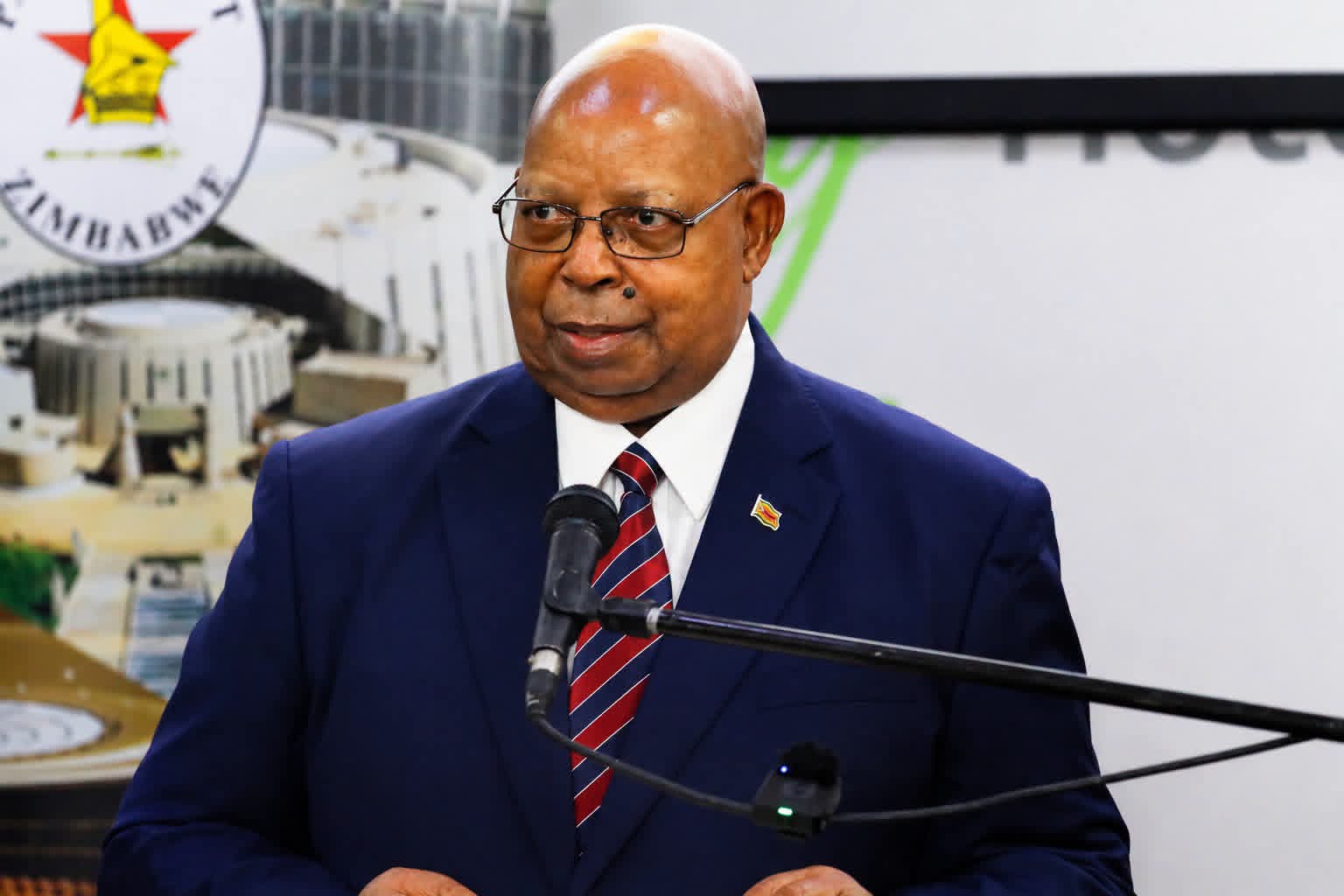
Peter Matika [email protected]
SPEAKER of the National Assembly Advocate Jacob Mudenda has challenged legislators to embrace artificial intelligence (AI) and other emerging digital technologies to transform Parliament’s oversight of public finances.
Adv Mudenda said the adoption of modern technology has become indispensable in strengthening scrutiny of Government expenditure, improving transparency and accountability and ensuring every public dollar is spent efficiently to improve the lives of Zimbabweans.
Speaking during a recent four-day capacity-building workshop on budget analysis for legislators in Bulawayo, Adv Mudenda said the rapid evolution of digital technologies presents Parliament with an opportunity to modernise its oversight role through the use of AI, public expenditure tracking systems, data analytics and performance dashboards capable of detecting inefficiencies, exposing wasteful expenditure and supporting evidence-based decision-making.
He said the era of relying solely on traditional methods of budget oversight was coming to an end as Governments across the world increasingly adopted technology-driven approaches to strengthen fiscal accountability and improve service delivery.
The workshop, held in Bulawayo last week, brought together members of the Portfolio Committees on Energy and Power Development, Environment, Climate and Wildlife, Information and Communication Technology, Postal and Courier Services and Media, Information and Broadcasting Services.
The programme was aimed at equipping legislators with advanced skills in budget analysis to enable them to effectively scrutinise Government expenditure and monitor the implementation of national development programmes.
Adv Mudenda said Parliament occupies a strategic position in Zimbabwe’s constitutional democracy and therefore has a duty to ensure that public resources are allocated prudently, managed transparently and utilised in ways that deliver meaningful socio-economic transformation.
“The role of Parliament in budget oversight is not a matter of political convenience, executive benevolence or mere happenstance. It is a categorical constitutional mandate etched into the very juridical foundation of the budgetary architecture,” he said.
Adv Mudenda said the constitution does not merely permit parliament to scrutinise public expenditure as a courtesy.
“It commands you to do so because you must ensure that public resources are deployed on programmes designed to advance the livelihoods of the citizenry with the greatest attainable equity, efficiency and developmental impact,” he said.
Adv Mudenda reminded legislators that Sections 119, 298 and 299 of the Constitution require all State institutions and Government agencies to remain accountable to Parliament while obliging legislators to continuously monitor and oversee public expenditure.
He said the constitutional provisions empower portfolio committees to question accounting officers, demand financial reports and ensure that taxpayers’ money is managed responsibly and in accordance with the principles of accountability, transparency and value for money.
Adv Mudenda said strengthening Parliament’s analytical capacity had become increasingly important as national budgets continue to grow in complexity, making it necessary for legislators to embrace modern technologies capable of processing large volumes of financial data within a short period.
“To answer that question with robust precision, your committees must harness the power of Artificial Intelligence, public expenditure tracking systems, data analytics and performance dashboards to unravel the political economy that shapes people’s daily lives,” he said.
Adv Mudenda said AI-driven analytical tools would enable committees to identify spending trends, compare budget allocations against actual expenditure, measure programme performance and generate evidence-based recommendations capable of improving Government service delivery.
He said technology should never replace parliamentary oversight but instead strengthen legislators’ ability to make informed decisions based on credible data and measurable outcomes.
Adv Mudenda said budget analysis should ultimately focus on determining whether public expenditure translates into improved healthcare, education, infrastructure, food security, energy development and better livelihoods for citizens.
“The primary objective of budget analysis is to identify concrete opportunities to optimise the quality, reach and developmental impact of public spending in counterbalance to the available revenues,” he said.
Adv Mudenda challenged legislators to abandon superficial examinations of budget allocations and instead undertake comprehensive forensic analysis capable of exposing inefficiencies, preventing abuse of public resources and strengthening Parliament’s role as guardian of the national purse.
“Fulfilling this sacrosanct responsibility compels you to move beyond a perfunctory examination to a penetrating, forensic analysis of the national budget across every dimension,” he said.
Adv Mudenda noted that for many years Parliament had largely been a passive recipient of budget proposals, adding that legislators must now assume a far more proactive role in shaping national fiscal policy through rigorous and informed scrutiny.


 Bongani Ndlovu